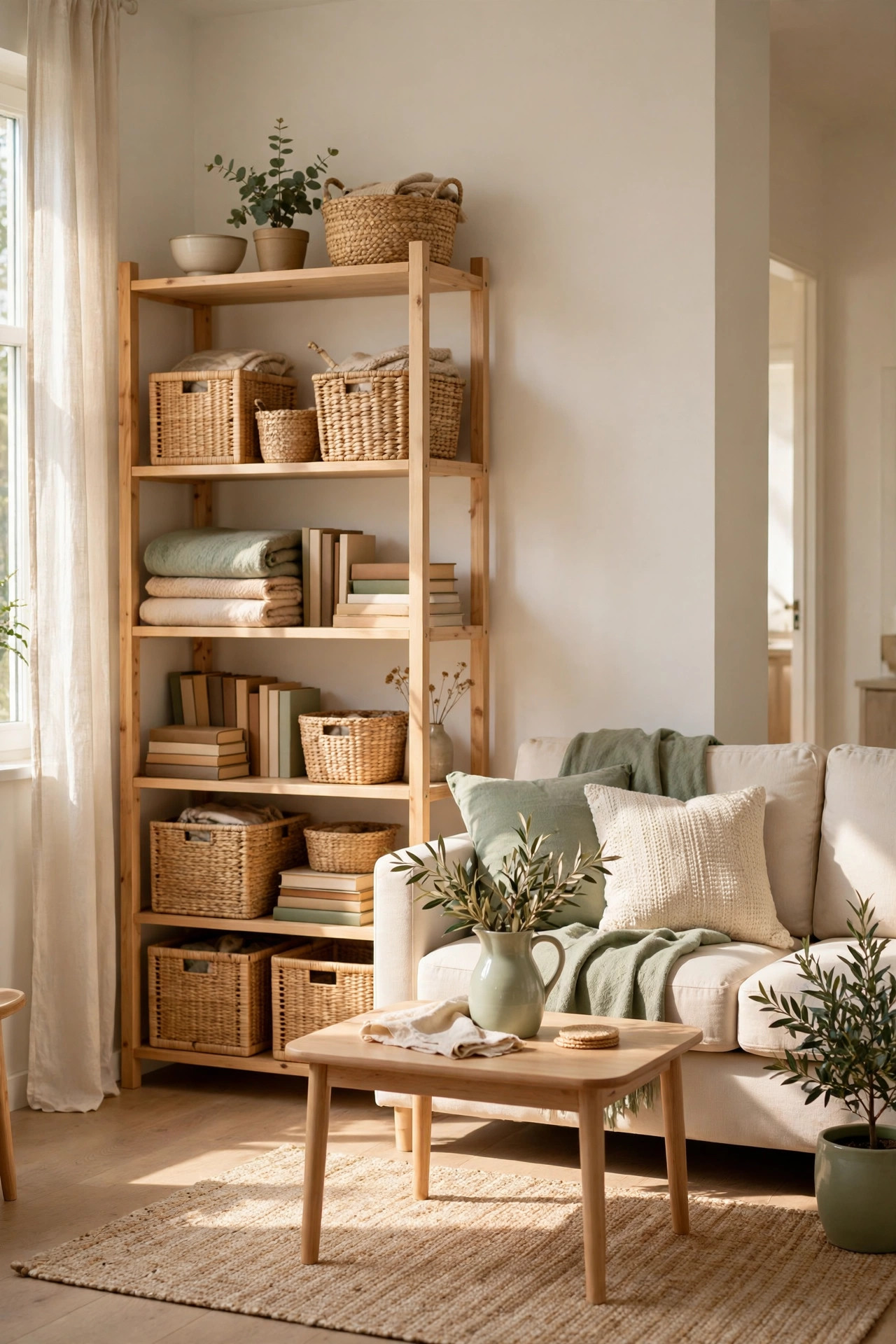
Every home has a spot that standard shelves and dressers do not fit: a ceiling that slopes down to 3 feet, a shallow alcove, or a corner too deep to reach. These storage ideas for odd spaces start with the shape itself, then match it with low, stepped, or narrow storage that uses the space instead of fighting it.
Measure first in three places: width, depth, and height at both the tallest and shortest points. Write the numbers down before shopping. Most of the fixes below take 20 to 45 minutes, need no tools, and work for renters as well as owners.
1. Storage Ideas for Odd Spaces With Sloped Ceilings
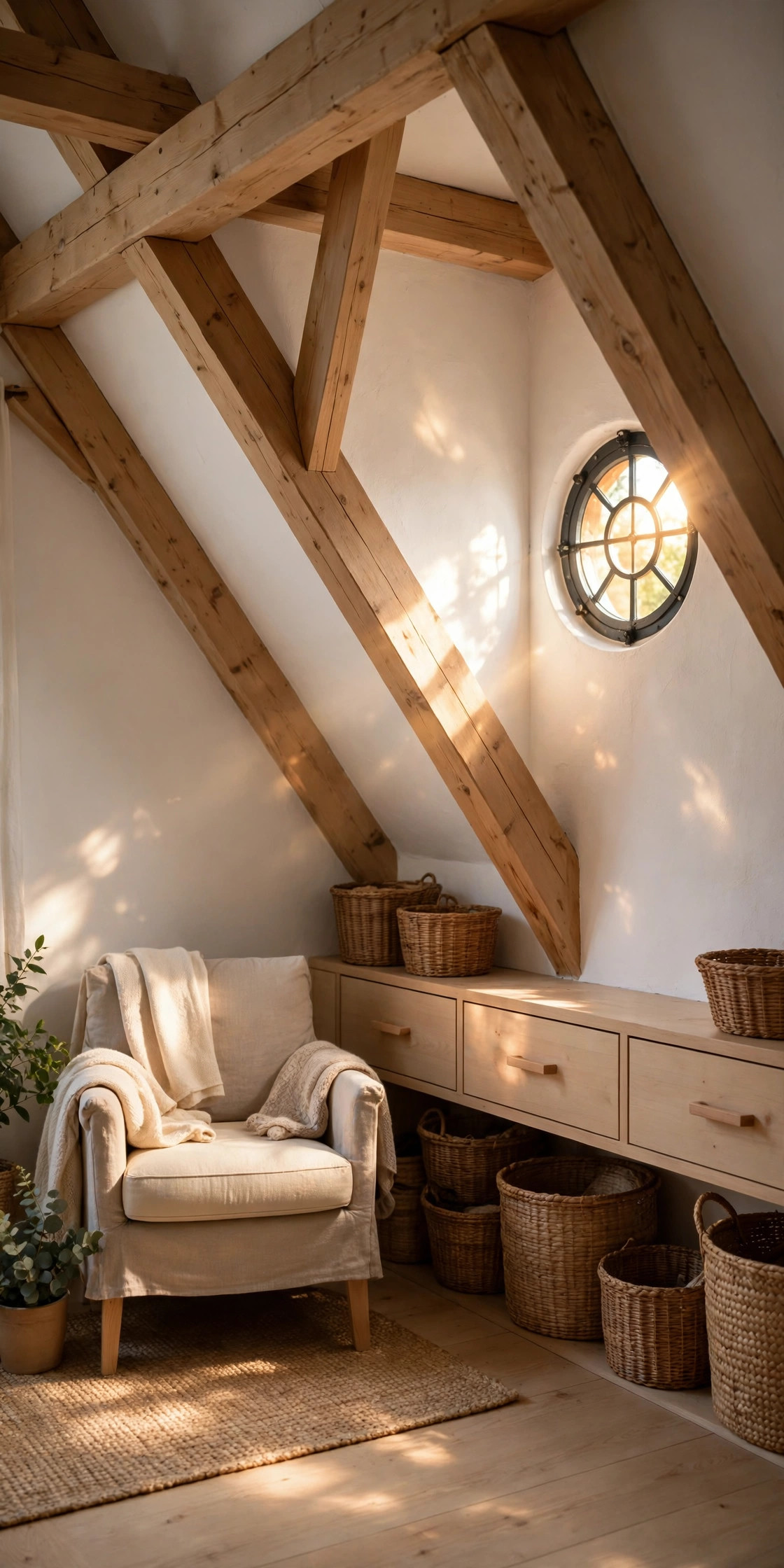
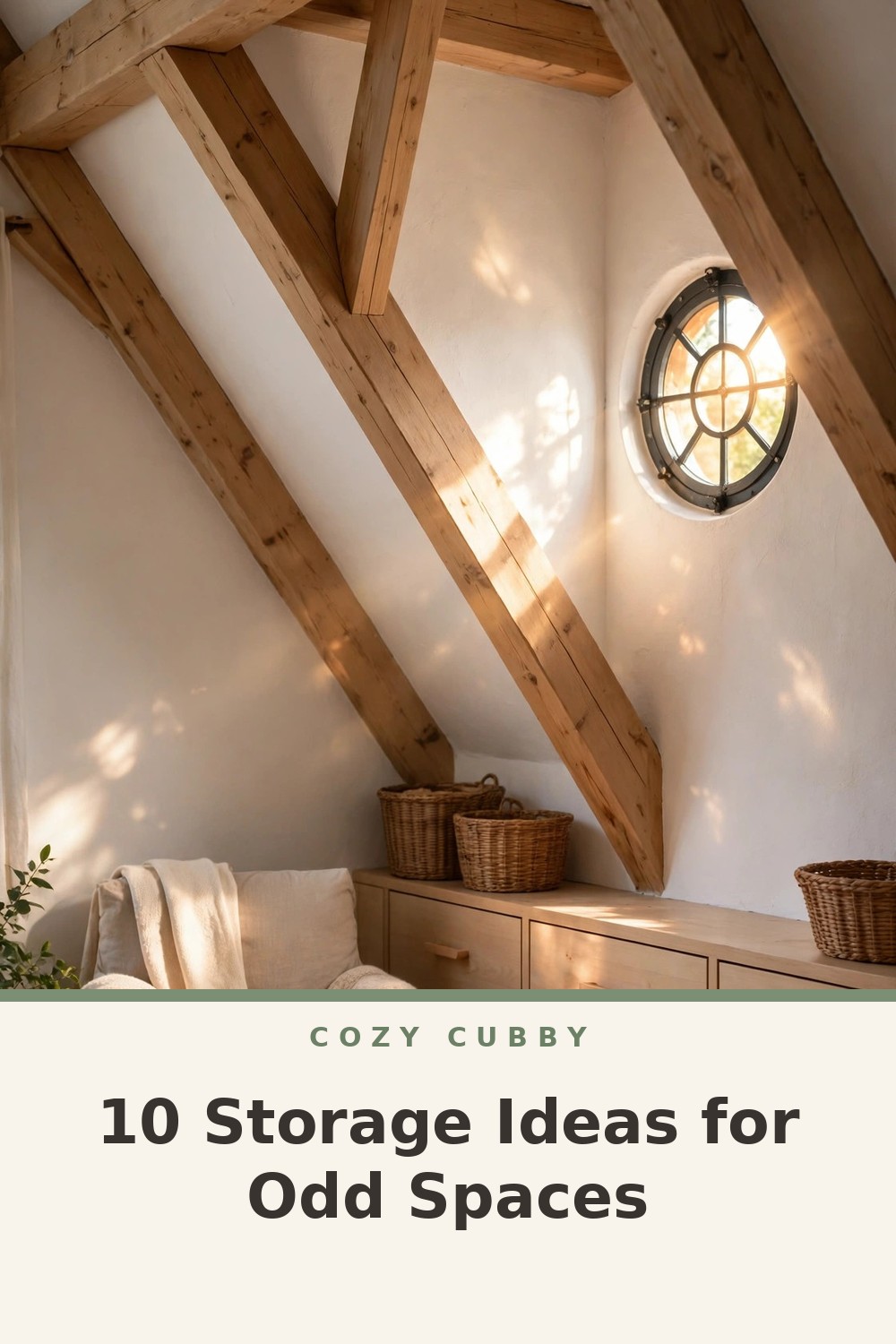
1. Place a low-profile dresser on the low wall. Where the ceiling drops to 36 to 48 inches, a dresser or chest under 30 inches high fits with room to open drawers. Use the drawers for folded clothes, linens, or toys, and keep the top clear for a small basket.
2. Line the slope with short bins. Bins about 11 to 13 inches high slide under the lowest part of a slope where a shelf cannot go. Label each bin by category, such as winter hats or extra bedding, and keep the heaviest bin closest to the door.
3. Build a stepped shelf look. Place a taller cube unit near the high side, a shorter unit next to it, then a single low bin at the end. The step pattern follows the ceiling line and looks intentional, with no custom cutting needed.
2. Turn Alcoves Into Working Zones
4. Make a desk nook. Many alcoves are 36 to 60 inches wide and 18 to 24 inches deep, which fits a wall-mounted or narrow desk. Add one shelf 12 inches above the desk for supplies, and use a slim cart beside the chair for extras.
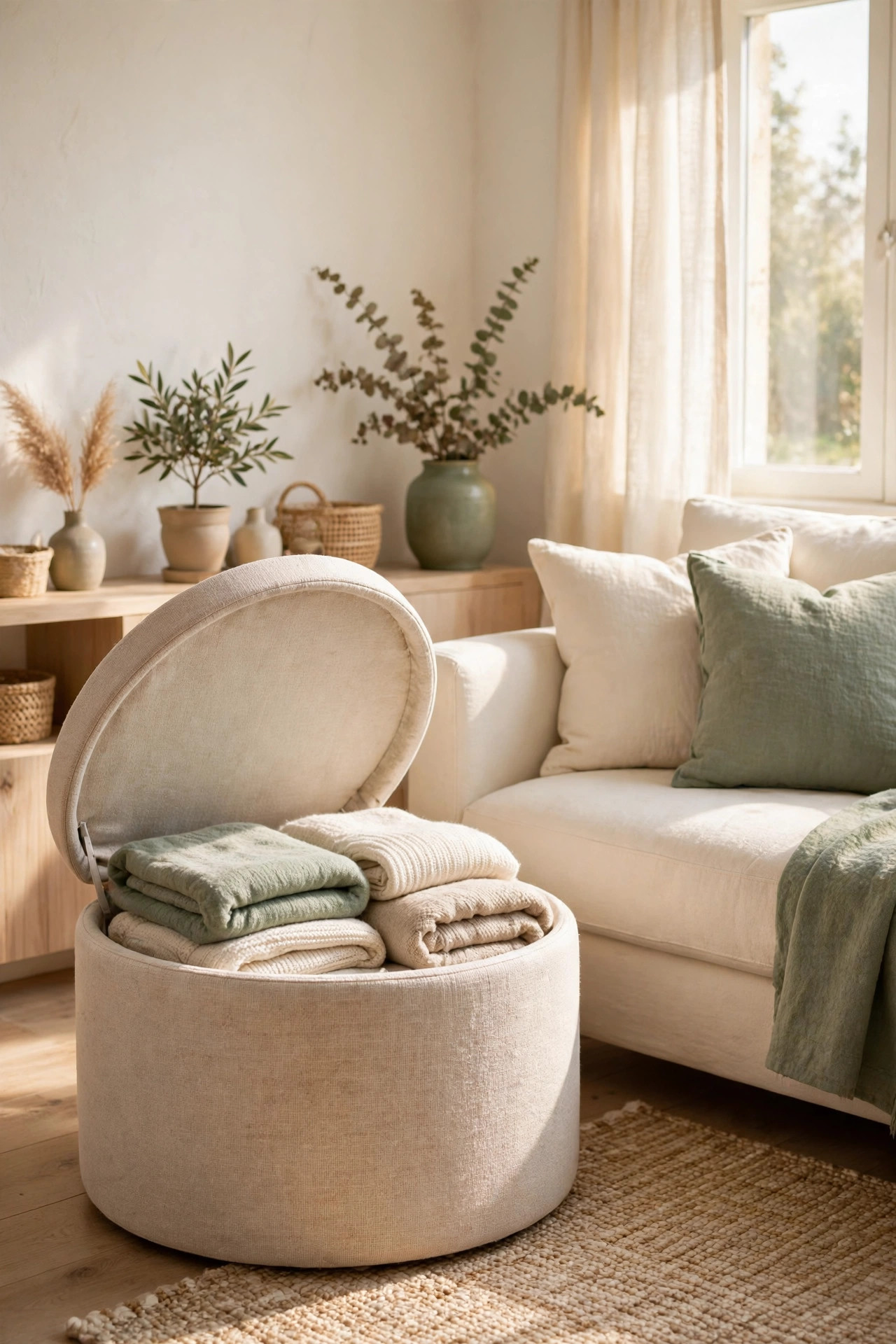
5. Add a reading corner with a storage seat. A bench or storage ottoman about 36 inches wide and 16 to 18 inches high fits most alcoves. Store blankets or books inside, add one cushion on top, and keep a small wall light above instead of a floor lamp.
6. Create a mini closet behind a curtain. Fit a tension rod across an alcove 30 to 48 inches wide, hang a curtain, and place bins or a short garment rack behind it. This suits entry alcoves for coats and bags, or bedroom alcoves for off-season clothes.
3. Use Triangles, Bay Windows, and Soffit Dead Zones
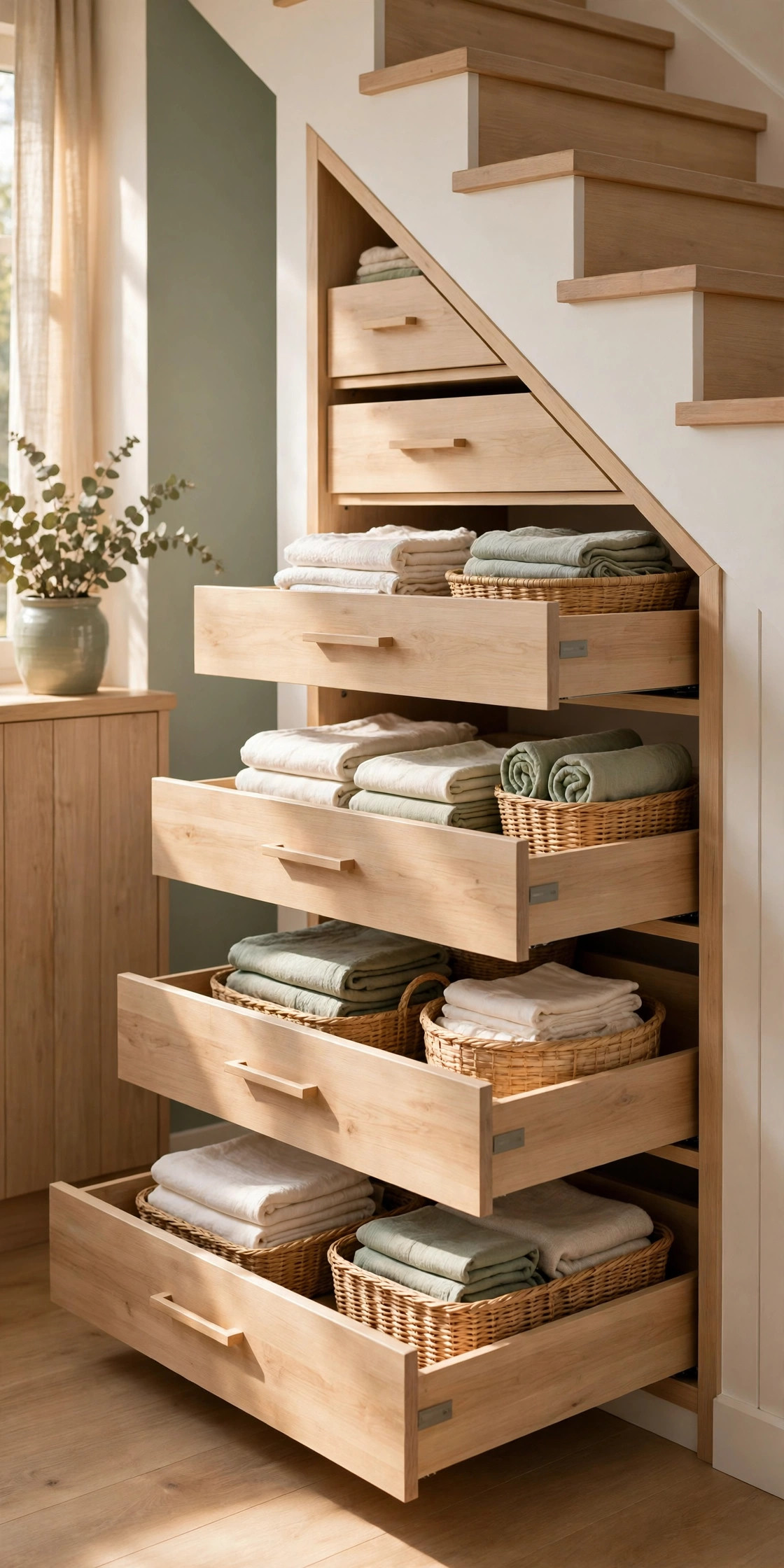
7. Fill the under-stair triangle in layers. Put tall items like a vacuum at the high end, medium bins in the middle, and short bins or shoe boxes at the low tip. The front-to-back depth is often 30 to 36 inches, so keep a clear pull-out path and nothing loose on the floor.
8. Add a bay-window seat with cubbies below. A low bench 14 to 18 inches high follows the window angle and adds seating without blocking light. Use open cubbies or fabric bins underneath for throws, games, or pet supplies, sorted one category per cubby.
9. Claim the soffit dead zone in kitchens. The boxed area above cabinets often leaves 12 to 18 inches of unused height. Store labeled bins there for rarely used items only, such as holiday dishes or a large roaster, and keep a sturdy step stool nearby for safe access.
10. Slide a slim cart into a dead corner. Corners beside a fridge, washer, or dresser are often 6 to 10 inches wide. A narrow rolling cart uses that gap for cleaning bottles, pantry extras, or laundry supplies, and pulls out fully so nothing gets lost at the back.
What to Buy
Cube storage organizer, 6-cube works well for stepped layouts under slopes and in alcoves because the cubes can be split or stacked to match the height. The trade-off is depth, at about 12 inches, so skip if the space is shallower than that. Typically $25–$40.
Slim rolling cart, 3 to 4 tiers fits gaps 6 to 10 inches wide in kitchens, laundry areas, and dead corners, and moves easily for cleaning. Skip if the floor is uneven, since narrow wheels can wobble under a heavy load. Typically $20–$35.
Zippered linen storage bags, 3-pack suit low slopes and under-stair tips because the soft sides flex to fit angled spaces and protect bedding from dust. The con is no structure, so overfilling makes stacks slump. Typically $18–$28.
Fabric folding bins give alcoves and bay-window cubbies a uniform look and fold flat when not in use, which suits renters. Skip if storing very heavy items, since the sides can bow over time. Typically $20–$30.
Tension rods for alcove curtains need no screws and adjust to fit openings about 30 to 48 inches wide, making them a simple cover for a mini closet. The limit is weight, so use a light curtain, not a heavy drape. Typically $8–$15.
Mistakes to Avoid
- Measuring only the tallest point of a sloped ceiling and buying furniture that hits the low side.
- Blocking light or heat vents with bins, benches, or cube units in alcoves and bay windows.
- Storing daily items in the hardest spot, such as above a soffit or at the back of an under-stair triangle.
- Filling every inch with no pull-out or walk-in path, which makes the space hard to use.
- Buying custom-size pieces before testing the layout with boxes or tape on the floor.
Frequently Asked Questions
How do you measure a sloped ceiling space?
Measure height at the wall and again 12, 24, and 36 inches out from the wall. The lowest height decides the furniture height, and the full set of numbers shows where a stepped layout should drop down.
What can fit in a very shallow alcove?
An alcove 12 to 18 inches deep suits flat storage best: hooks, a narrow shelf, folded linens in bins, or a curtain-front mini closet. Avoid deep dressers, which will stick out into the room.
How can renters use odd spaces without drilling?
Use tension rods, cube units, slim carts, and fabric bins, none of which need screws. Test the layout first, keep loads light on rods, and check that doors and drawers still open fully.
What should not go under the stairs?
Avoid items needed every day, heavy boxes stacked with no path, and anything that blocks access to pipes, wiring, or a shut-off valve. Reserve the deepest, lowest tip for seasonal items in labeled bins.
Odd spaces work best when the storage matches the shape: low pieces under slopes, flat systems in alcoves, and layered bins in triangles. Start with one spot, measure in inches, and test the layout before buying. Save this post to your small-space storage board on Pinterest, so the measurements and checklist are ready when you start.