A small kitchen can feel crowded even when clean. Cups end up near the stove, spices hide behind cereal boxes, and the good knife is never where you need it. A simple kitchen reset fixes that by giving every item a home based on how it is used, not just where it fits.
The zone method is easy: divide the kitchen into five areas — prep, cooking, food storage, cleaning, and serving — then move each item to where its task happens. No remodel is required.
Plan on about 3 to 4 hours. Work one zone at a time: empty it, wipe it down, and put back only what belongs. A trash bag and donation box are all you need.
1. Start Your Kitchen Reset With the Prep Zone
The prep zone is where food gets washed, chopped, and mixed. It belongs near the sink and your largest counter stretch, even if that is only 24 to 36 inches.
Keep daily tools here. Cutting boards, chef knives, mixing bowls, measuring cups, and a colander should live in the cabinets and drawers around this counter. Stand cutting boards on their sides to save flat space.
Clear the counter to the basics. Keep out only what is used every day, like a knife block or utensil crock. Move weekly appliances, such as a blender, into a cabinet to free real prep room.
Add a scrap bowl. A small bowl during chopping catches peels and ends, saves trips to the trash, and keeps the area clean.
2. Build a Cooking Zone Around the Stove
The cooking zone covers the stove and the drawers and cabinets beside it. Anything used while food is on the heat belongs within one step of the burners.
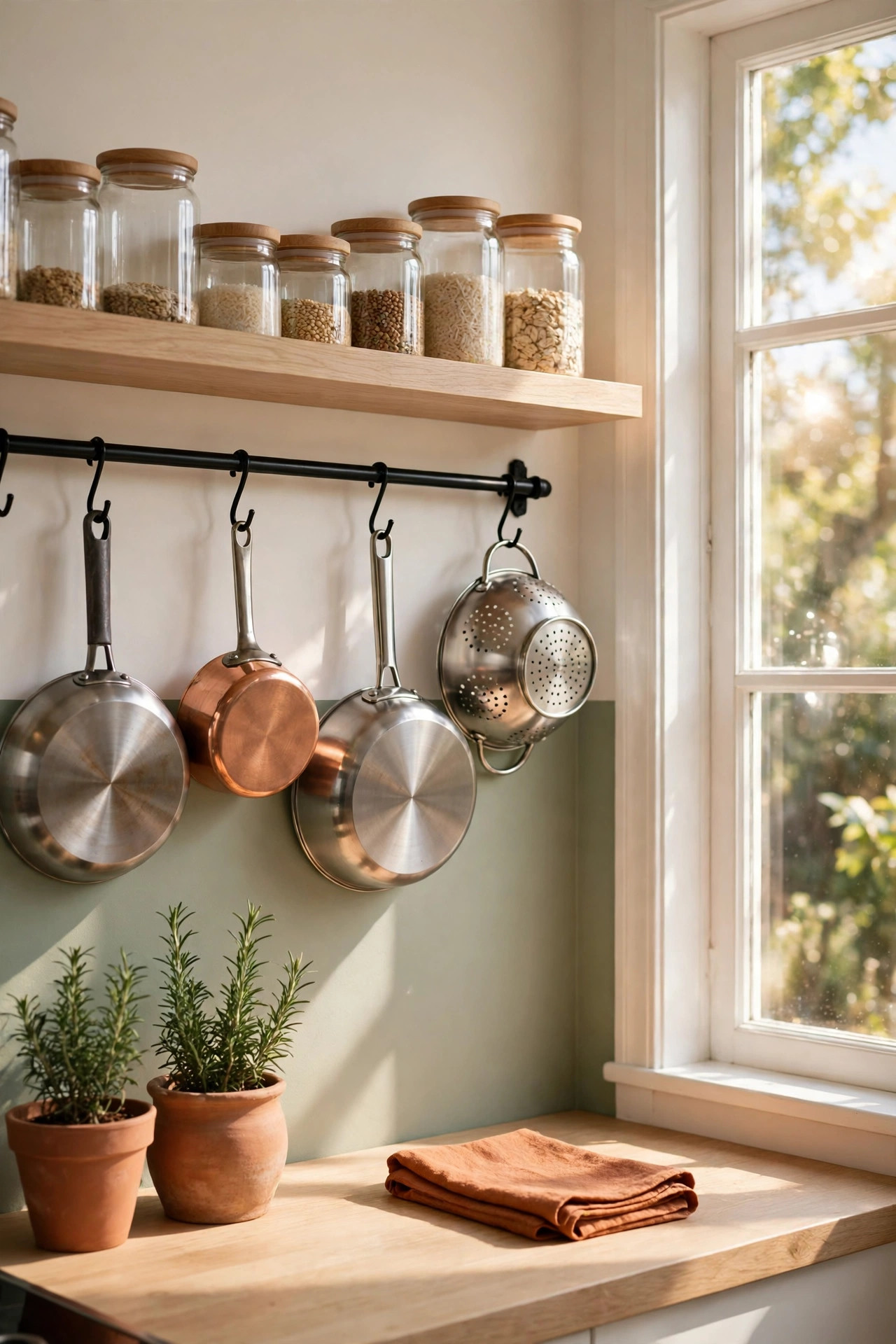
Store pots by use. Keep one large pot, one saucepan, and one 10- or 12-inch skillet in the easiest spot. Rarely used pans can go up high. Nest pots and stand lids in a rack.
Group cooking tools together. Spatulas, tongs, wooden spoons, and a ladle belong in one drawer or crock next to the stove. If a tool has not been used in 6 months and a second tool does the same job, it is a good donation candidate.
Keep spices close, but not over the heat. Steam and heat break down flavor over time. A drawer, a door rack, or a small turntable in the next cabinet works better than a shelf above the burners.
3. Set Up a Food Storage Zone You Can See
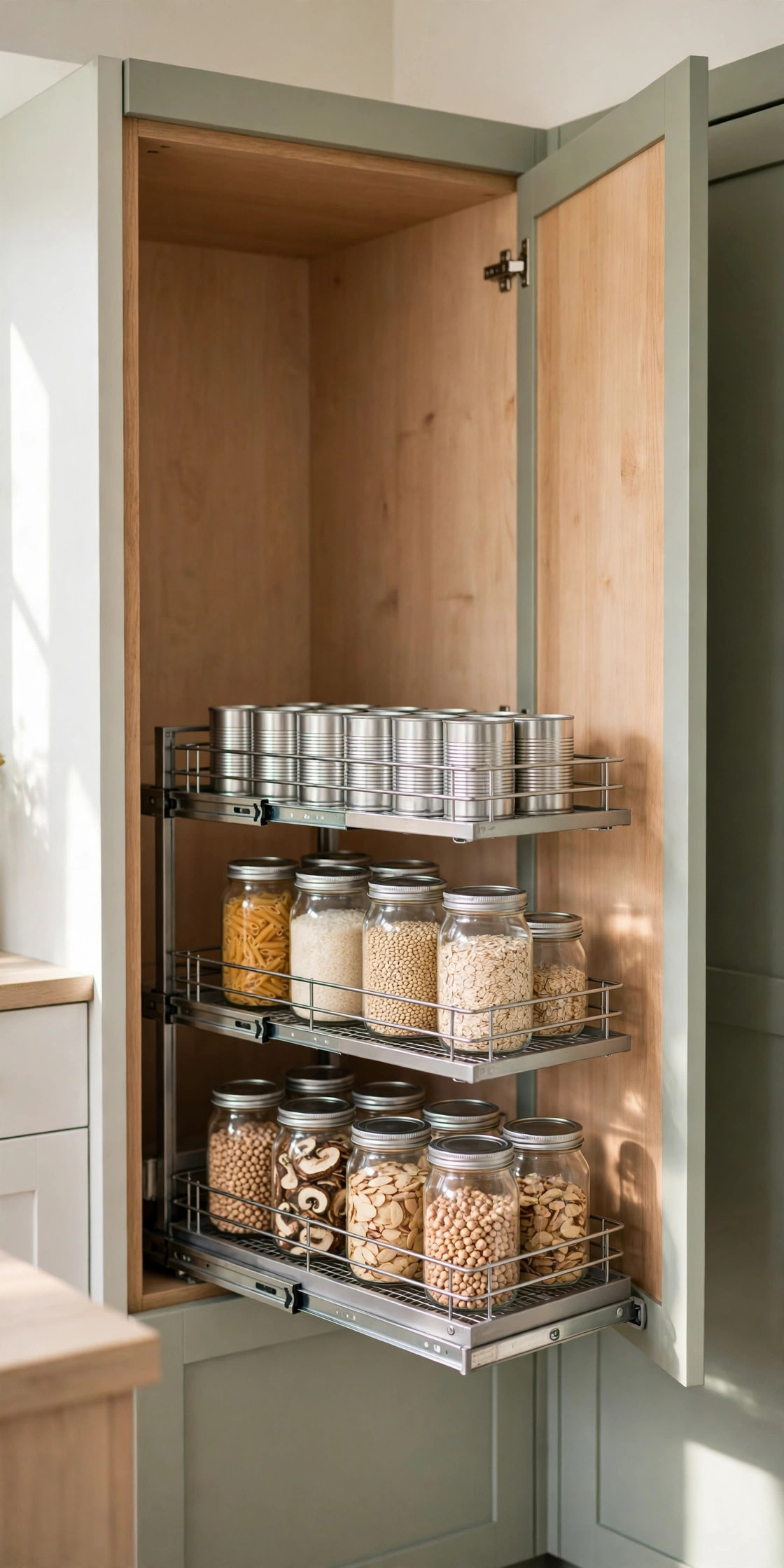
This is the pantry zone, even if the pantry is just one or two cabinets. The goal is to see everything at a glance so food gets used before it expires.
Group food by type. Make groups for canned goods, pasta and grains, baking items, snacks, and breakfast foods. In deep cabinets, put tall items in back and short ones in front.
Use the height and the door. Many cabinets waste 4 to 6 inches of air above short items. A shelf riser turns that space into a second level, and slim door racks can hold wraps, bags, or spice packets.
Do a fast date check. Move the oldest items to the front as each group goes back. This cuts waste and stops duplicate buying, since you can finally see the cans you already own.
4. Make the Cleaning Zone Work Hard
The cleaning zone lives under and around the sink. It is often the messiest spot, mostly because bottles of every shape get pushed in without a system.
Limit what lives under the sink. Dish soap, dishwasher pods, sponges, trash bags, and one all-purpose cleaner cover most daily tasks. Extra cleaners can move to a hall closet, which frees a surprising amount of room.
Contain the small stuff. Loose pods, brushes, and gloves are easier in one bin or caddy. A tension rod placed high in the cabinet can hold spray bottles by their handles.
Give dishes a clear path. Keep towels in the drawer nearest the sink, and everyday plates and glasses in the cabinet closest to the dishwasher or drying rack. Putting dishes away should take under 5 minutes.
5. Finish With a Serving Zone Near the Table
The serving zone holds plates, bowls, glasses, silverware, and napkins. It often overlaps the cleaning zone, which is fine if items sit closest to where you eat.
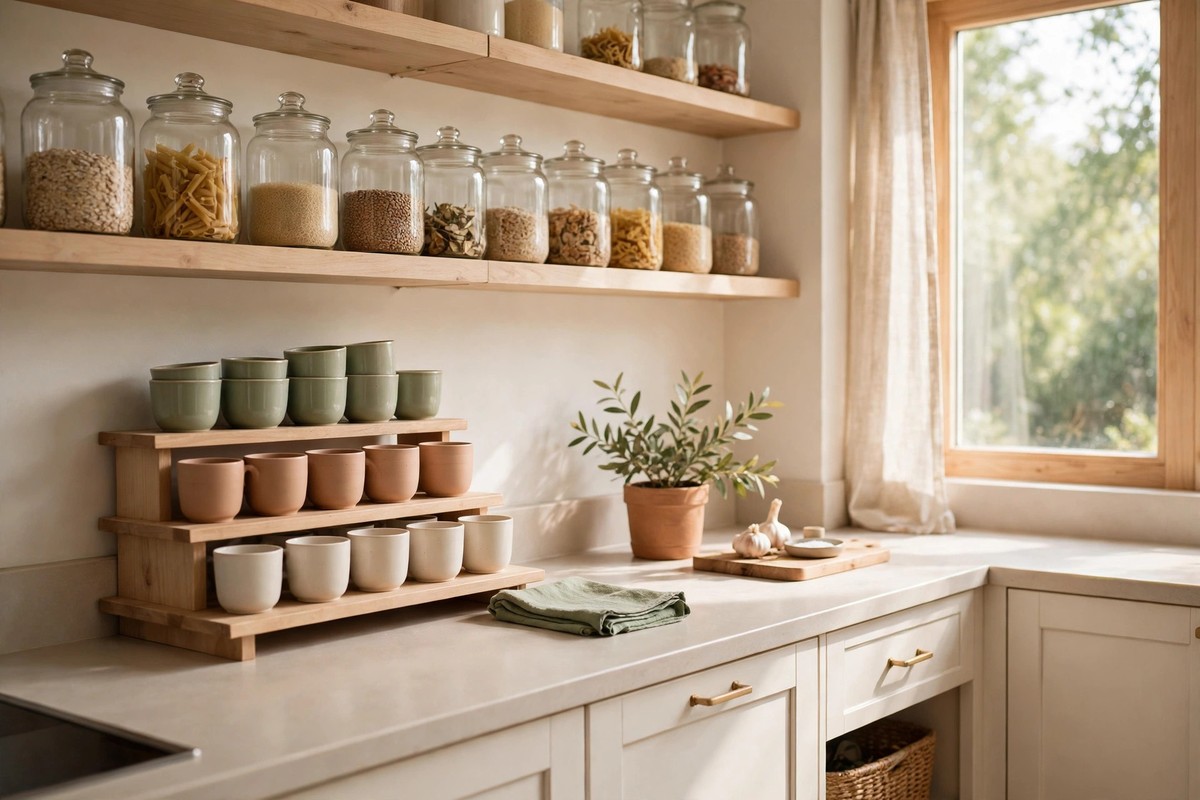
Store everyday dishes together. Daily plates, bowls, and glasses should share one cabinet. Holiday dishes and extra mugs can go on the highest shelf, since they are used the least.
Cut mug and container clutter. For most small homes, 6 to 8 mugs and 8 to 10 food containers with matching lids are plenty. Containers that lost their lids never get used, so recycle them during this reset.
Test the whole kitchen reset with one meal. Cook a simple dinner and notice every time you cross the room for something. That item is in the wrong zone, so move it on the spot.
What to Buy for Your Kitchen Reset
Nothing here is required, and the zones work without buying anything. If one area still needs help, these products solve the most common problems.
Cabinet shelf risers. They double usable space in tall cabinets and make short jars easy to see. The con: they work best in cabinets at least 12 inches tall, so measure first. Typically $15–$25.
8-pack stackable clear bins. Clear bins keep pantry groups together and stop small packets from spreading. Skip them if shelves are under 10 inches deep, since full-size bins may not fit. Typically $18–$28.
Small lazy Susan turntable. One spin brings the back of a deep cabinet within reach. The trade-off is that a round shape wastes a little corner space in square cabinets. Typically $10–$20.
3-tier can organizer. Tiered rows keep cans visible so nothing hides and expires in back. It is less useful for boxes and bags, which tip over on the steps. Typically $12–$20.
15-piece clear drawer bin set. Small bins turn one messy drawer into neat sections for tools and lids. Skip this if drawers are already divided or very narrow. Typically $10–$16.
Mistakes to Avoid
- Buying organizers before sorting. Measure first, and buy only for spots that still need help after the reset.
- Storing items where there is empty space instead of where the task happens. Zones only work if items live near their job.
- Keeping duplicates of rarely used tools. A few extra gadgets per drawer add up fast in a small kitchen.
- Rushing without breaks. Three focused hours with short pauses beat a tired marathon.
Frequently Asked Questions
How long does a kitchen reset take in a small kitchen?
Most small kitchens take about 3 to 4 hours, zone by zone. A very full kitchen may take closer to 5 hours. Two sessions of 2 hours each also work well.
What if there is no pantry at all?
Use one or two cabinets as the food zone and group food in bins by type. A rolling cart or a shelf in a nearby closet can hold overflow cans and paper goods.
How often should the zones be reset?
A quick check every 3 months keeps the system working. Move back anything that drifted and check food dates. A full reset once or twice a year is enough.
Should heavy items go in upper or lower cabinets?
Lower cabinets are safer for heavy items like cast iron pans. Keep upper shelves for lighter things like glasses and plates.
A zoned kitchen will not stay perfect, but it is far easier to keep tidy when every item has an obvious place. Start with the zone that frustrates you most, and save this post to your kitchen board on Pinterest for the next refresh.