Two cabinets can feel impossible when a stockpot, three skillets, and a pile of lids all need a home. Learning how to store pots and pans in a tight space is less about buying more storage and more about using every inch well. Stacking everything in one deep pile wastes height and hides what is at the bottom.
The 15 methods below use the cabinets, doors, walls, and overlooked corners of a small kitchen. Most take 15 to 30 minutes, need no tools beyond a tape measure, and work in rentals.
1. Sort First Before Learning How to Store Pots and Pans
1. Keep only the daily workhorses in the cabinets. Most small kitchens rely on five or six pieces: a 10-inch skillet, a 12-inch skillet, a 2-quart saucepan, a 4-quart pot, a stockpot, and one sheet pan. Pieces used less than once a month are the first to move out.
2. Relocate the rarely used pieces. A roasting pan, wok, or holiday stockpot can live on a closet shelf, in a lidded bin under a bed, or above the refrigerator in a shallow basket. This can free 30 to 40 percent of cabinet space in about 20 minutes.
3. Measure before buying anything. Record the inside width, depth, and height of both cabinets in inches. Most base cabinets are about 22 inches deep and 28 inches tall inside, but shelves and hinges reduce usable space.
2. Store Pans Upright Instead of Stacking Them
4. File skillets on their sides. Standing frying pans upright, like files in a drawer, lets each pan slide out on its own. Four skillets filed this way need about 10 to 12 inches of width, and handles no longer tangle.
5. Nest only what truly matches. Saucepans of graduated sizes nest well, but nesting different coatings invites scratches. Limit stacks to two or three pieces, place a cloth between surfaces, and never nest heavy cast iron on top of a nonstick pan.
6. Put the most-used pan at the front. Arrange cookware by how often it is used, not by size. The everyday skillet belongs at the front edge near the stove. Weekly pots go behind it, and the stockpot sits at the very back.
3. How to Store Pots and Pans Using Doors and Walls
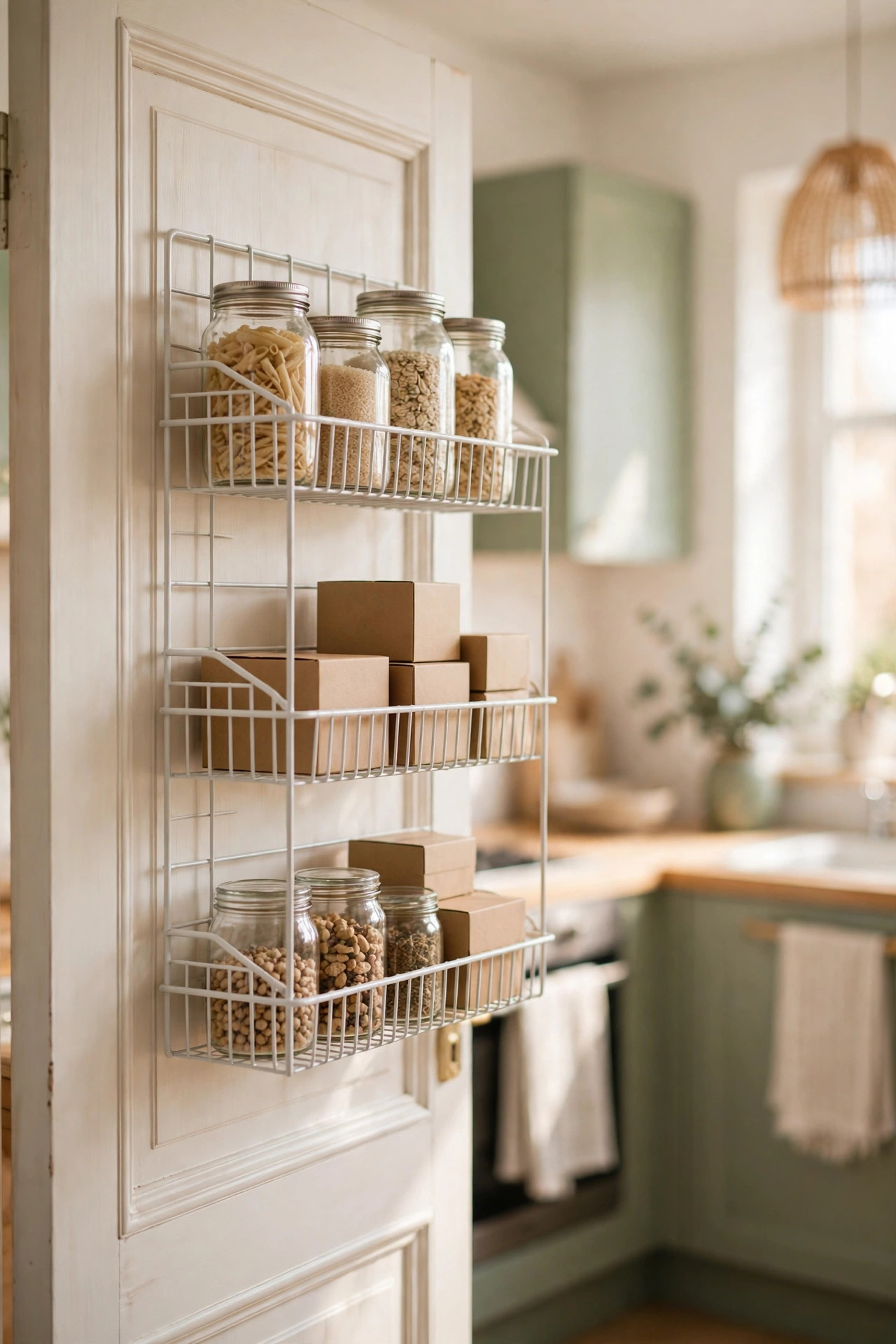
7. Move lids to the cabinet door. Lids are thin but wide, and they waste shelf space. A door-mounted holder keeps four to six lids upright and visible. Check clearance first: lids should clear the shelf edge by at least half an inch.
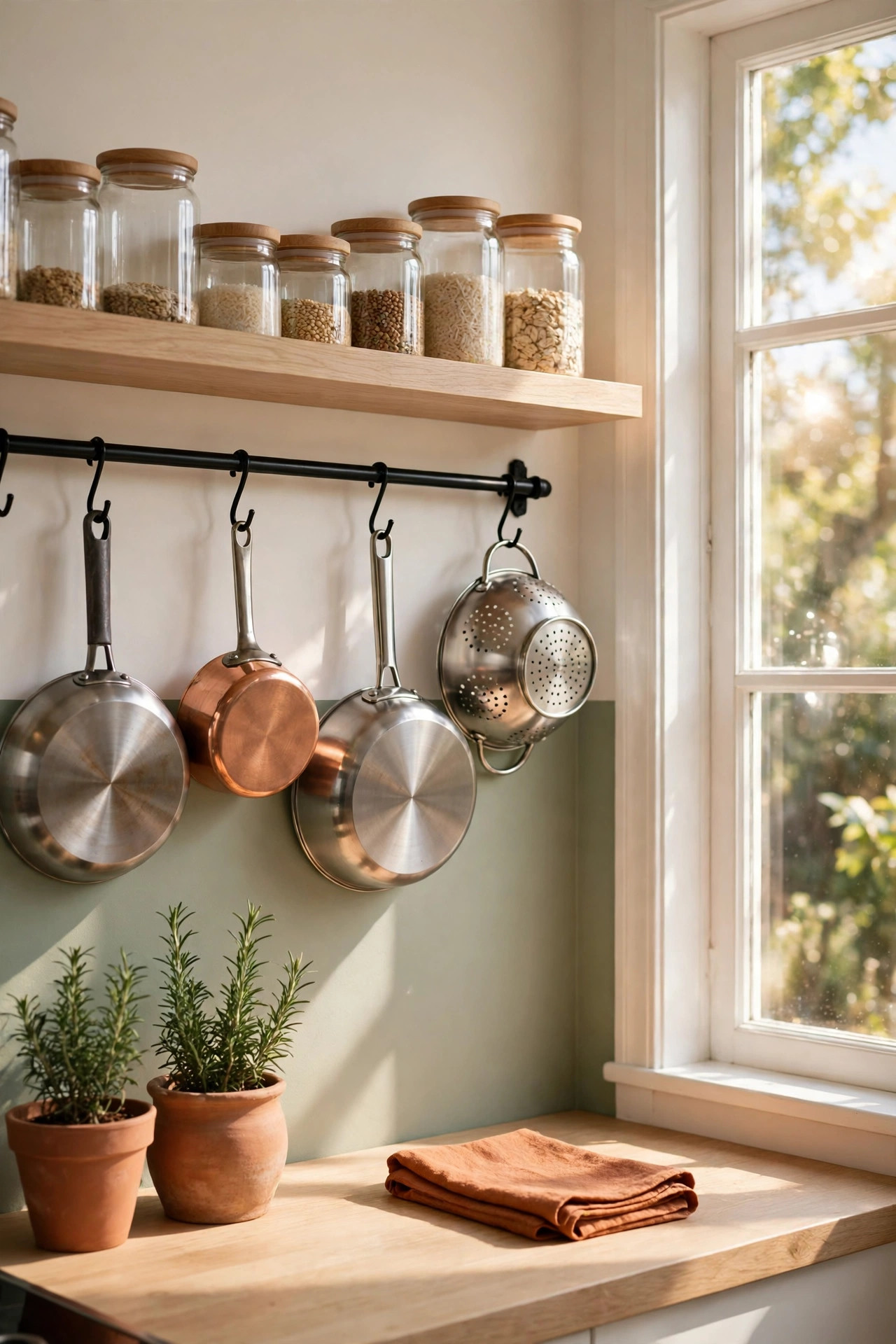
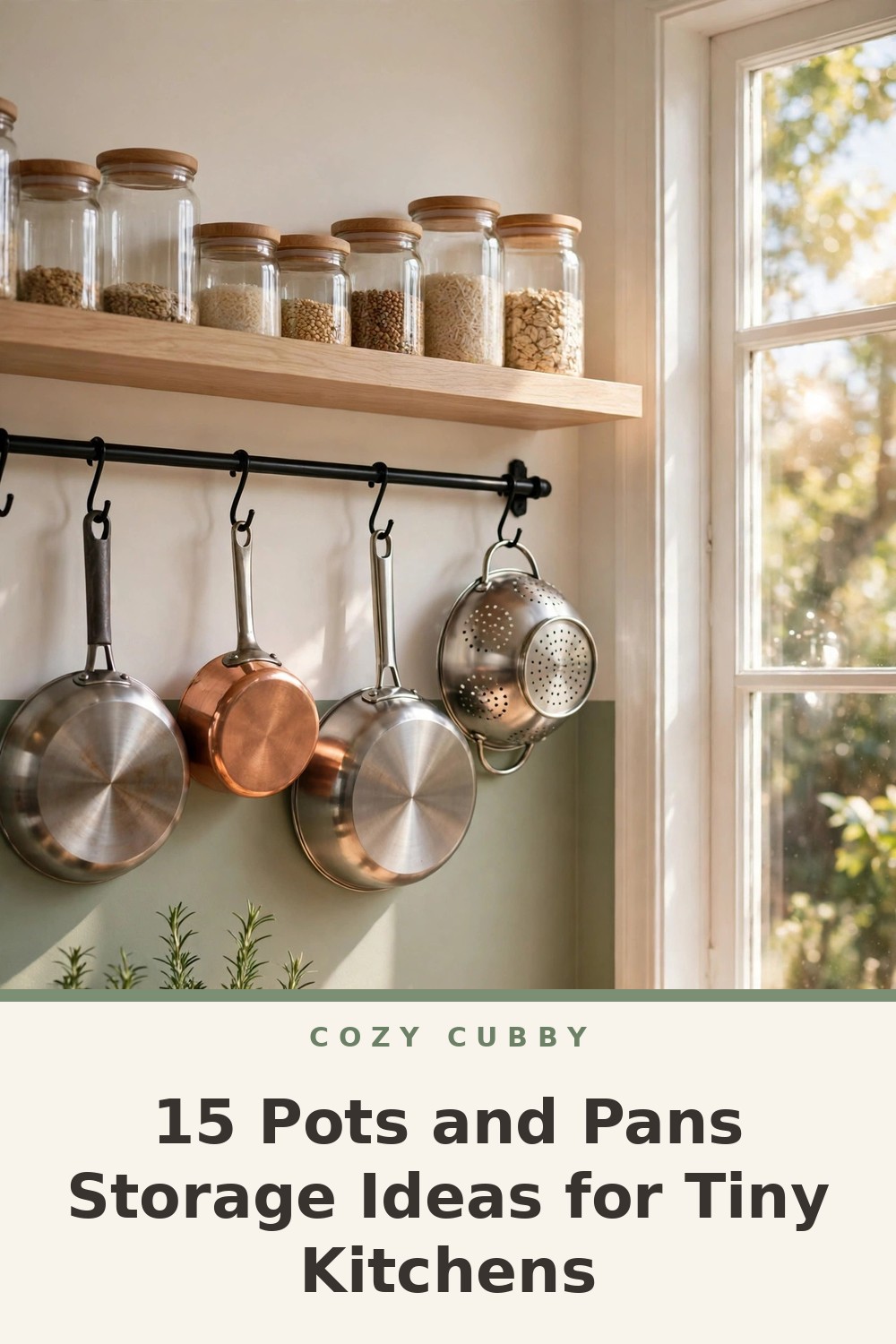
8. Hang two or three pans on a wall rail. A rail 24 to 36 inches long, mounted into studs, can hold the daily skillet, a saucepan, and utensils on hooks. This frees a full shelf. Renters should confirm with a landlord first, since rails need screws.
9. Try the side of a cabinet or the refrigerator. The blank end panel of a cabinet run is often wasted. Strong adhesive hooks rated for 3 to 5 pounds can hold a lightweight skillet or lid there. Keep hung items at least 12 inches from direct stove heat.
4. Split the Two Cabinets by Job
10. Give one cabinet to pots, one to pans and lids. Mixing everything creates the daily dig. With a clear split, one door opens for saucepans and stockpots, the other for skillets and lids. The system only works if items go back in the same cabinet every time.
11. Use high storage for light, rare items only. If an upper cabinet holds overflow, store light pieces up top: a colander, mixing bowls, or a stockpot lid. Heavy cast iron should never go overhead, because lifting it down at arm's length is unsafe.
12. Claim the corner and the stove drawer. Put the least-used pot in the deep back corner, inside a low bin that pulls forward. The shallow drawer under many ovens, if the manual allows storage, fits sheet pans, cooling racks, and flat lids well.
5. Small Add-Ons That Make Cabinets Hold More
13. Add a shelf riser to double a short stack. A riser about 10 inches wide and 6 inches tall creates a second level. Short saucepans sit below, lids or a small skillet rest above. Measure pot height first so the door still closes.
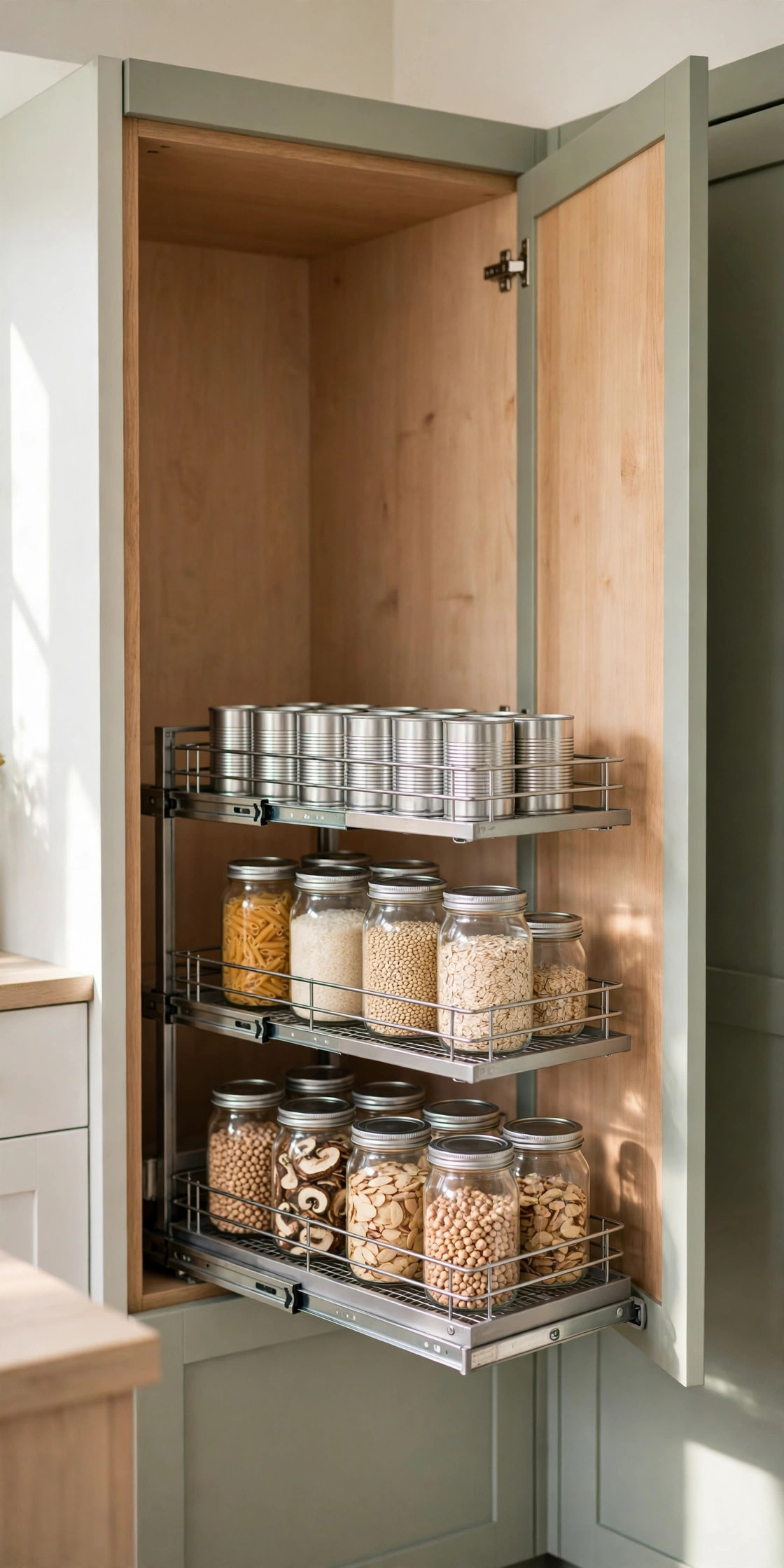
14. Use a pull-out organizer for the deep cabinet. A slide-out frame brings back pots forward, so nothing gets forgotten. Installation usually takes 20 to 30 minutes with a screwdriver, and the frame must be 1 to 2 inches narrower than the opening.
15. Corral lids in one upright rack. A rack near the front of the pan cabinet keeps lids sorted by size, largest at the back. Five lids in a rack take about 6 inches of width, versus a pile that can sprawl across a whole shelf.
What to Buy
Pull-out cabinet organizer / slide-out shelf — typically $25–$45. Pros: brings back-of-cabinet pots into reach and makes heavy items easier to lift. Con: needs measuring and installation, so skip if plumbing blocks the frame.
Vertical pan divider rack — typically $15–$25. Pros: files skillets upright so each pan comes out alone and coatings stay separated. Con: tall pans may not fit, so skip if cabinet height is under about 12 inches.
Pot lid organizer rack — typically $15–$25. Pros: holds lids upright in a few inches and sorts them by size. Con: deep dome lids can wobble in shallow racks, so check slot depth first.
Cabinet shelf risers — typically $15–$25. Pros: add a second level for short pots and lids with no tools. Con: a too-tall riser wastes space below, so skip if pots already nearly touch the shelf above.
Over-cabinet-door lid holder — typically $10–$20. Pros: uses dead door space and usually needs no screws. Con: it can rattle and stop tight doors closing fully, so skip if door gaps are very narrow.
Mistakes to Avoid
- Buying organizers before sorting and measuring — most returns happen because a rack is half an inch too wide.
- Stacking heavy cast iron on nonstick pans, which damages coatings and makes the pile hard to lift.
- Storing heavy pots in high cabinets, where lifting them down is a safety risk.
- Keeping duplicate sizes, such as three similar saucepans, when two cabinets cannot hold extras.
Frequently Asked Questions
How do you store pots and pans without scratching them?
Store pans upright in a divider when possible, since separated pans do not rub. If stacking is the only option, place a cloth, paper towel, or felt pad between each piece. Avoid sliding pans across each other when pulling them out.
Where should lids go in a very small kitchen?
Lids store best upright: in a rack inside the cabinet, in a holder on the door, or filed beside the pans they match. Flat storage wastes the most space. Group lids by size, largest at the back.
Is it safe to hang pots and pans on a wall?
Yes, when the rail is fixed into studs or proper anchors and the total weight stays within its rating. Keep hung pans away from direct heat and steam where possible. Lightweight pans are safest for adhesive hooks.
How long does it take to reorganize two cabinets?
Sorting and measuring usually takes 30 to 45 minutes. Adding one or two organizers takes another 20 to 30 minutes. A quick five-minute reset each week keeps the system working.
Two cabinets are enough when cookware is sorted, pans stand upright, and lids get their own slim spot. Pick two or three ideas, measure once, and the daily dig ends. Save this post to your kitchen board on Pinterest so the ideas are handy on shopping day.