Deep base cabinets and tall pantry corners often become black holes where cans, lids, and small appliances disappear. Learning how to organize kitchen cabinets with these awkward corners starts with a simple rule: if an item cannot be seen, it will not be used. The fix is to bring everything forward and group it clearly.
Deep corners do not need custom carpentry or a remodel. Bins, risers, and slide-out shelves do most of the work and install in 15 to 45 minutes. Plan 1 to 2 hours for one cabinet, and work on one cabinet at a time so the kitchen stays usable.
1. How to Organize Kitchen Cabinets by Emptying and Sorting First
Empty the whole cabinet. Pull out every item, including anything in the far corners. A full reset takes 15 to 20 minutes and reveals duplicates and expired food that quick tidying always misses.
Sort into four groups. Make piles for keep, move elsewhere, donate, and toss. Be strict with items unused for a year, since deep corners refill fast once sorting ends.
Wipe and line the shelf. Crumbs and sticky rings collect where no one looks. A quick wipe and a washable liner make later cleaning faster and help bins slide smoothly.
2. Measure the Dark Corners Before Buying Anything
Record width, depth, and height. Many base cabinets are about 24 inches deep, which is why items get lost. Measure the door opening too, since it is often 2 to 3 inches narrower than the inside.
Check pipes and hinges. Under-sink and corner cabinets rarely offer a clean rectangle. Note obstructions, and choose organizers with at least 1 inch of clearance on each side.
Test with cardboard. Cut cardboard to the size of a planned bin and slide it in and out a few times. This 5-minute test catches fitting problems before any money is spent.
3. How to Organize Kitchen Cabinets So Nothing Gets Lost in Back
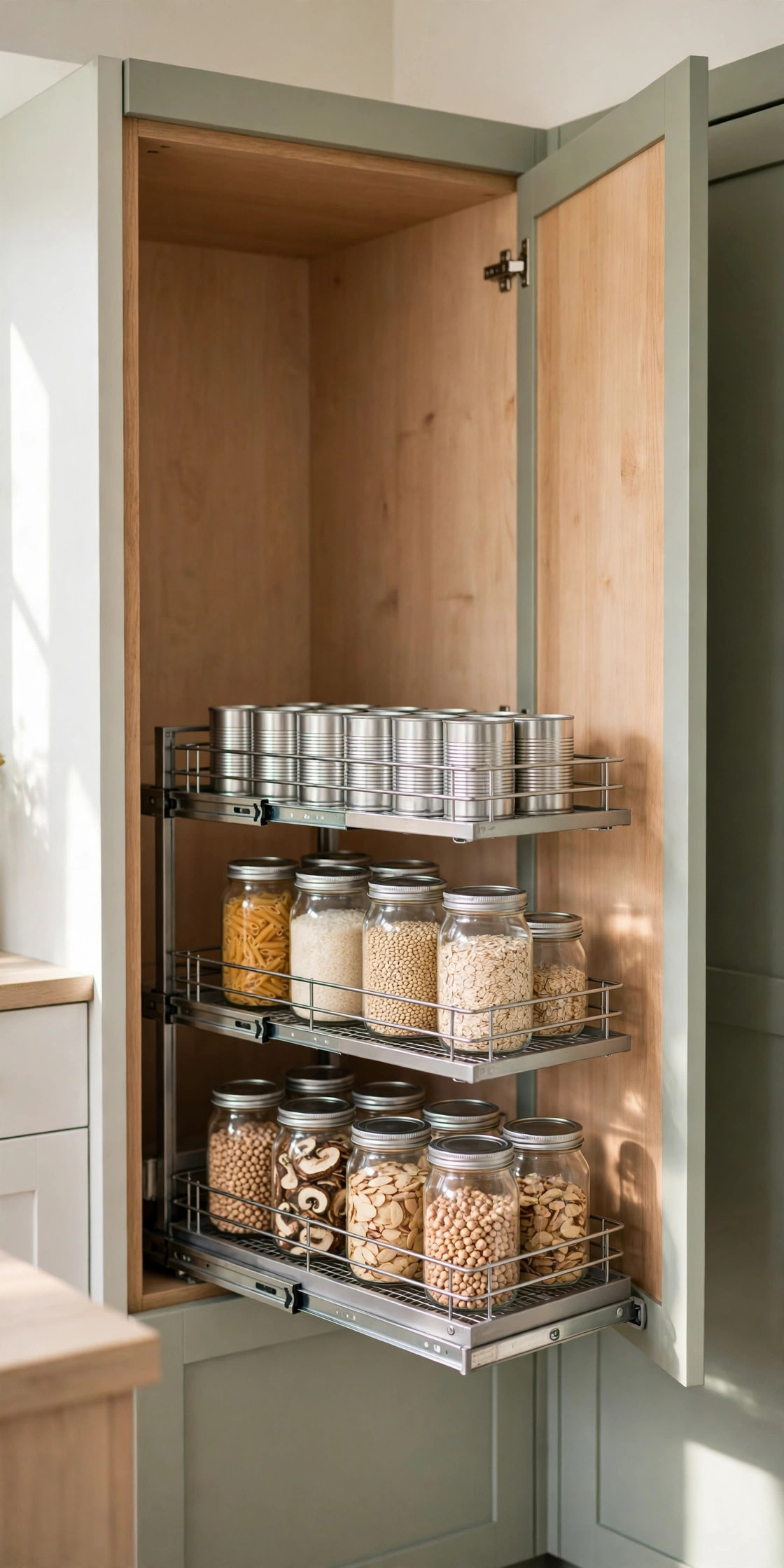
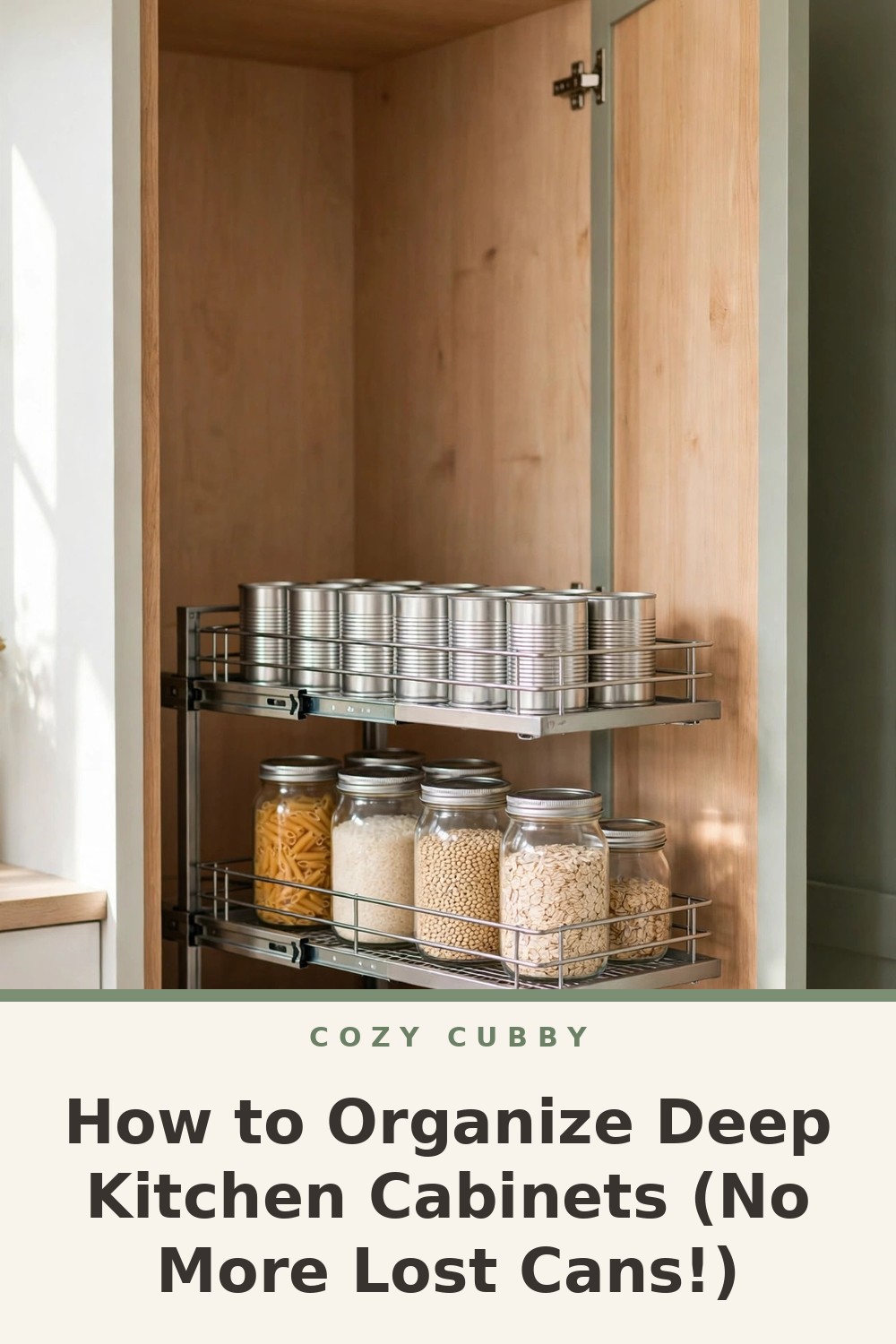
Put the deepest zone on slides. A pull-out shelf turns a 24-inch reach into a simple pull. Reserve slides for the darkest cabinet first, instead of buying them for every shelf at once.
Use clear bins as drawers. Group one category per bin, in bins about 12 to 15 inches long. Clear walls show contents from above, and the whole category lifts out in seconds.
Ban loose items from corners. Loose lids and small tools drift and tangle in deep spaces. Every small item needs a bin, a door rack, or a drawer, with no exceptions.
4. Light Up and Label the Deep Zones
Add a small stick-on light. A battery light inside a tall or dark corner makes labels readable. Keep expectations modest, since one small light helps spotting but will not brighten a whole cabinet.
Label bin fronts plainly. Short labels such as Pasta, Baking, and Lids beat detailed lists. Place each label on the front face, at eye level when the door is open.
Match tall items to tall space. Cereal boxes and oil bottles are often 10 to 12 inches tall. Give them the section with the most clearance, since bottles stored on their sides can leak.
5. Give Every Category a Clear Home Zone
Keep daily items front and center. Weekly foods and tools belong between knee and shoulder height, near the door. The deep back should hold only binned or sliding storage, never loose daily items.
Send rare items to hard spots. Holiday platters and bulk backups can live on the highest or lowest shelf. Tape a short note inside the door listing what is stored there.
Store heavy items low. Cast iron pans and full flour bins are unsafe to lift from high, deep shelves. A low front spot, ideally on a sturdy slide-out shelf, is safer for everyone.
6. A 10-Minute Weekly Reset That Keeps Corners Clear
Pull each bin forward weekly. A pull-and-scan takes about 1 minute per bin and catches items tossed in the wrong place. Return strays at once, before small drift becomes a full mess.
Check back-row dates monthly. Cans and jars at the back expire quietly. A monthly 5-minute check, moving older items forward, cuts waste with very little effort.
Hold a one-in, one-out gadget rule. Deep corners invite unlimited gadget storage. When a new small appliance arrives, one old item should leave, which protects corner space better than any single organizer.
What to Buy
Pull-out cabinet organizer / slide-out shelf is the strongest fix for a deep base cabinet, since it brings the full depth within reach for pots, cleaners, and staples. The con is cost and install time, and adhesive models carry less weight than screwed-in versions. Typically $25–$45.
Small lazy Susan turntable suits upper cabinets and pantry corners for sauces and spices, since one spin shows every label. A size around 10 to 12 inches fits most shelves. Skip if the shelf holds tall, heavy bottles that can tip. Typically $10–$20.
8-pack stackable clear bins turn a deep shelf into removable zones and stop small items from drifting. The con is access, so stack no more than two high in deep cabinets, or the bottom bin becomes hard to reach. Typically $18–$28.
Cabinet shelf risers add a second level so short jars are not hidden behind tall ones, with no tools needed. Skip if the door opening is very narrow, since a wide riser may not fit through it. Typically $15–$25.
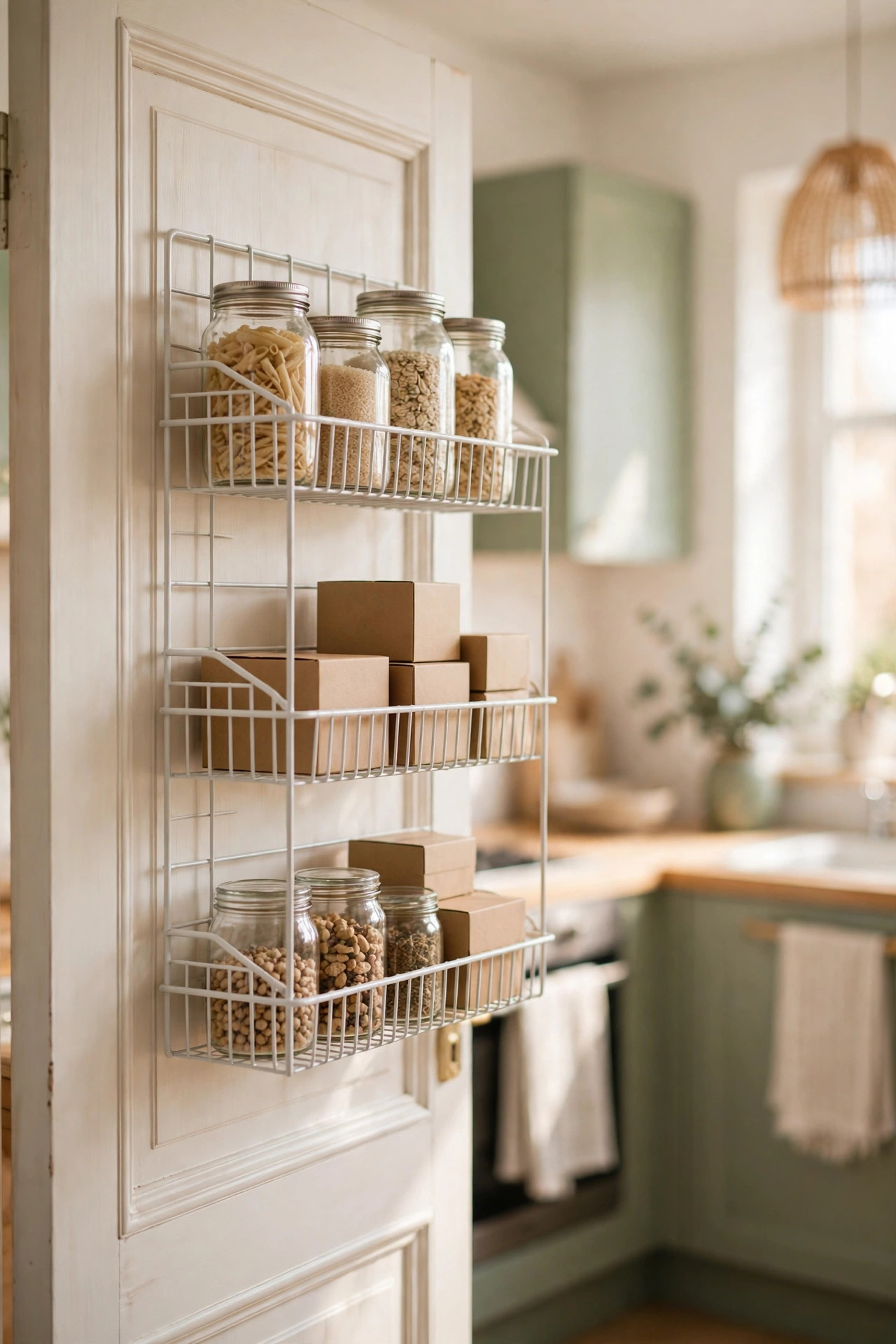
Back-of-cabinet-door rack reclaims flat space for lids, wraps, or cloths that otherwise vanish into corners, and most fit in about 5 minutes. The trade-off is depth, since a rack over 3 inches deep can stop the door closing. Typically $15–$25.
Pro Tips
- Store the least-used category deepest, but only inside a handled bin that pulls out in one motion.
- Leave 1 inch of empty space in each bin, so items lift out without unpacking everything.
- Photograph the finished cabinet, so the intended layout is easy to restore after a busy week.
- Store lids vertically in a rack or bin, which saves space and stops sliding piles.
Frequently Asked Questions
What is the best organizer for a blind corner cabinet?
A pull-out shelf or a handled clear bin is usually most practical, since both bring contents through the narrow door. Measure the door opening first, because it limits every option.
Are pull-out shelves worth it for just one cabinet?
For the deepest cabinet, one pull-out often gives the biggest daily improvement. Start with one, live with it for a month, and then decide whether other cabinets need slides.
How deep are standard kitchen base cabinets?
Most base cabinets are about 24 inches deep inside, with a narrower door opening. Upper cabinets are usually around 12 inches deep. Always measure, since older and custom kitchens often differ.
How can deep cabinets stay organized over time?
Zones, labels, and a short weekly reset do most of the work. Every item needs a bin, a shelf zone, or a door spot, with no loose storage allowed in corners.
Deep, dark corners stop being a problem once everything inside can slide, spin, or lift out and every category has a clear zone. Start with one cabinet, measure carefully, and finish with light and labels. Save this guide to a kitchen board on Pinterest for later, so the steps are handy on organizing day.