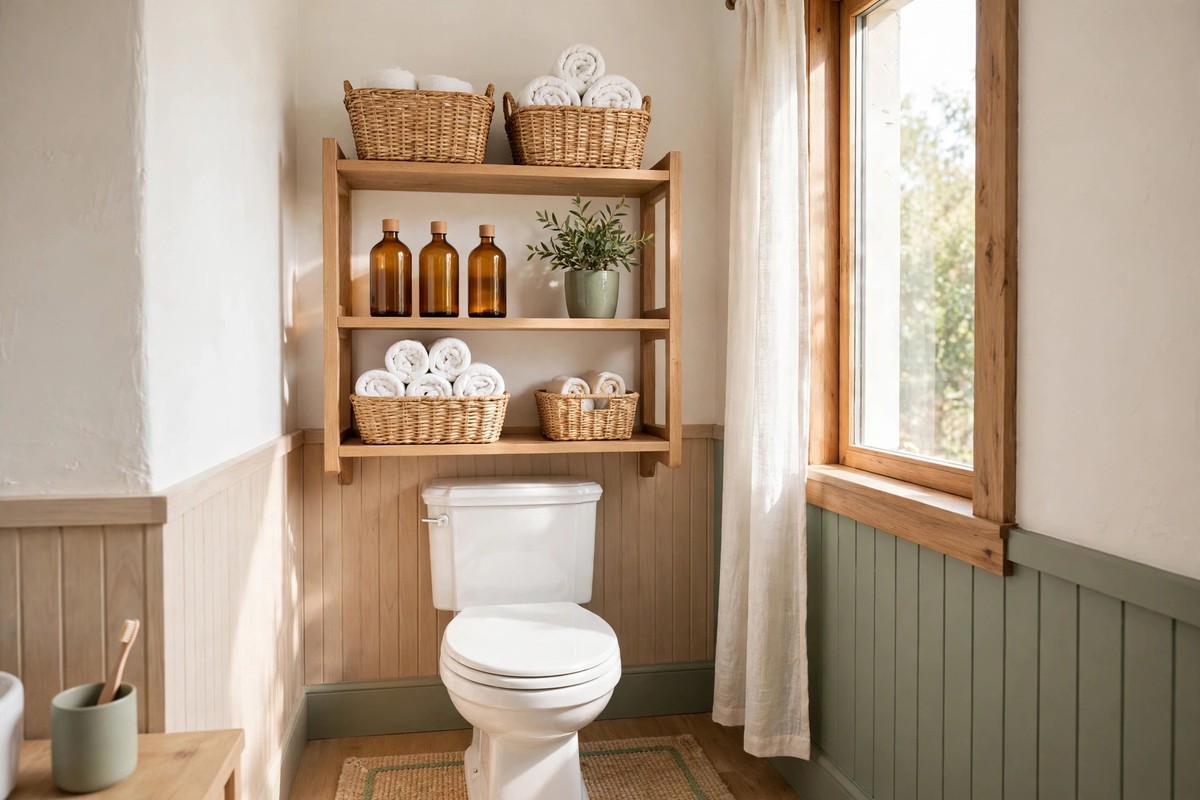
A closet laundry space can feel cramped and hard to keep tidy, but it can work well with the right layout. The best laundry closet organization ideas focus on vertical space, narrow gaps, and simple zones, so washing, drying, and folding each have a place. Even a closet only 5 to 6 feet wide can hold supplies, baskets, and cleaning tools without piles on the floor.
Most closet setups leave little floor space once the doors open. Detergent sits on top of the machines, and clean clothes have nowhere to land. The 15 ideas below, grouped into five sections, can be done in about 2 to 3 hours, with no remodel.
1. Measure First and Use Every Inch Above the Machines
Idea 1: Measure the closet in three places. Write down width, depth, and ceiling height in inches, plus the space above the machines. Many closets have 24 to 36 inches of empty wall there. That number decides shelf depth and basket size.
Idea 2: Add one shelf above the washer and dryer. A shelf 10 to 12 inches deep holds detergent and stain remover in one row. Place it about 18 inches above the machines so bottles are easy to reach and lids have room to open.
Idea 3: Use the back of the doors. Slim racks or hooks inside the doors can hold lint rollers, brushes, and mesh wash bags. Keep door storage under 4 inches deep so doors still close fully.
2. Create Zones for Washing, Drying, and Folding
Idea 4: Set up a wash zone on one side. Keep detergent, stain treatment, and sorting baskets by the washer. In a space about 60 inches wide, one job within arm's reach saves constant crossing.
Idea 5: Give drying its own small zone. Reserve a short wall section for hangers and a small rack. A fold-out rack that opens to about 24 inches wide and folds flat to 2 inches deep beats a large standing rack.
Idea 6: Create a folding spot, even a small one. The top of a front-load machine can be a folding surface if it stays clear. Aim for at least 24 by 24 inches. For top-load machines, use a folding board.
3. Laundry Closet Organization Ideas for Storage in Tight Gaps
Idea 7: Slide a slim cart into the side gap. The gap beside a washer is often 6 to 10 inches wide and fully unused. A slim rolling cart turns it into storage for refills, spray, and cloths, and pulls out in seconds.
Idea 8: Use baskets that fold flat. A large basket helps on laundry day and blocks the floor every other day. A foldable basket that folds to about 3 inches thick can lean on the wall or hang on a hook when empty.
Idea 9: Store cleaning tools on the wall. Brooms and mops often lean in a corner and fall over. A wall-mounted holder keeps handles upright in a strip only 12 to 16 inches wide and keeps the floor clear for baskets.
4. Laundry Closet Organization Ideas That Keep Supplies Easy to Reach
Idea 10: Keep only daily supplies on the main shelf. Limit that shelf to five or six daily items, in one row, so nothing hides behind something else. Bulk refills can live up high or in the slim cart.
Idea 11: Sort with two small hampers, not one big one. Two narrow hampers, each about 12 to 14 inches wide, can separate lights and darks without eating the floor. Sorting as clothes are added saves about 10 minutes on laundry day.
Idea 12: Keep a lost-and-found cup on the shelf. Coins, buttons, and single socks appear in almost every load. One small cup, about 4 inches wide, gives those items a home. Empty it once a month so it stays helpful, not messy.
5. Finish With Systems That Make Laundry Day Faster
Idea 13: Add clear labels to shelves and bins. Simple labels help everyone put things back in the same place. They matter most for look-alike bottles and bins stored above eye level. A basic label set takes about 15 minutes.
Idea 14: Keep a small trash spot in the closet. Lint, tissues from pockets, and used dryer sheets need somewhere to go right away. A tiny bin or a small bag on a hook, emptied weekly, stops waste ending up on the machines.
Idea 15: Do a 5-minute reset once a week. Wipe the shelf, return stray items, and check detergent levels. Five minutes weekly beats a full clean-out every few months.
What to Buy
Slim rolling laundry cart that fits beside the washer, typically $30–$50. Pro: turns a 6- to 10-inch gap into real storage. Pro: wheels ease cleaning behind machines. Skip if the gap is under 6 inches wide.
Over-washer floating shelf, typically $30–$50. Pro: uses empty wall space with no floor room lost. Pro: a 10- to 12-inch depth fits most bottles in one row. Con: it must be fixed to studs or strong anchors.
70L foldable laundry basket that folds flat, typically $12–$18. Pro: holds a full load, then folds thin and can hang on a hook. Con: soft sides are less sturdy for heavy, wet loads.
Wall-mounted broom and mop holder, typically $12–$22. Pro: keeps long handles upright in a narrow wall strip and holds three to five tools. Skip if there is no clear wall or door space at least 12 inches wide.
Small 4-tier rolling utility cart, typically $20–$35. Pro: four levels sort supplies by job, and the cart can roll out for extra support. Con: it needs about 16 to 18 inches of floor width, so measure carefully in the smallest closets.
Pro Tips
- Keep the top of the machines clear except during folding, so the space always feels calm and ready.
- Place the tallest bottles on the shelf first, then fit smaller items around them to avoid wasted gaps.
- Leave at least 2 inches behind baskets and carts so air can flow and damp items do not sit on the wall.
- Take a quick phone photo after organizing and use it as a guide when putting supplies back.
Frequently Asked Questions
How wide does a laundry closet need to be?
Many setups work in a space about 5 to 6 feet wide and 30 inches deep, fitting standard machines side by side. A stacked unit needs less width but more height. Measure before buying shelves or carts.
What is the best way to add folding space in a laundry closet?
The top of front-load machines is the simplest surface if it stays clear. For top-load machines, a folding board or nearby table can work. Even 24 by 24 inches is enough for shirts and towels.
How can a laundry closet stay tidy with no floor space?
Move storage up and sideways instead of down. Shelves above the machines, a slim cart in the side gap, and holders on walls or doors hold most supplies. A 5-minute weekly reset then keeps the system from filling up again.
Are floating shelves safe above a washer and dryer?
Yes, when fixed to studs or anchors rated for the load, with heavy bottles close to the wall. Keep the load modest and check fixings yearly. If fitting feels uncertain, a freestanding rack is safer.
A laundry closet will never have room to waste, but it can have a clear place for everything it holds. Start with the shelf and the side gap, then add zones one at a time. Save this post to your laundry board on Pinterest so all 15 ideas are ready for your next organizing afternoon.