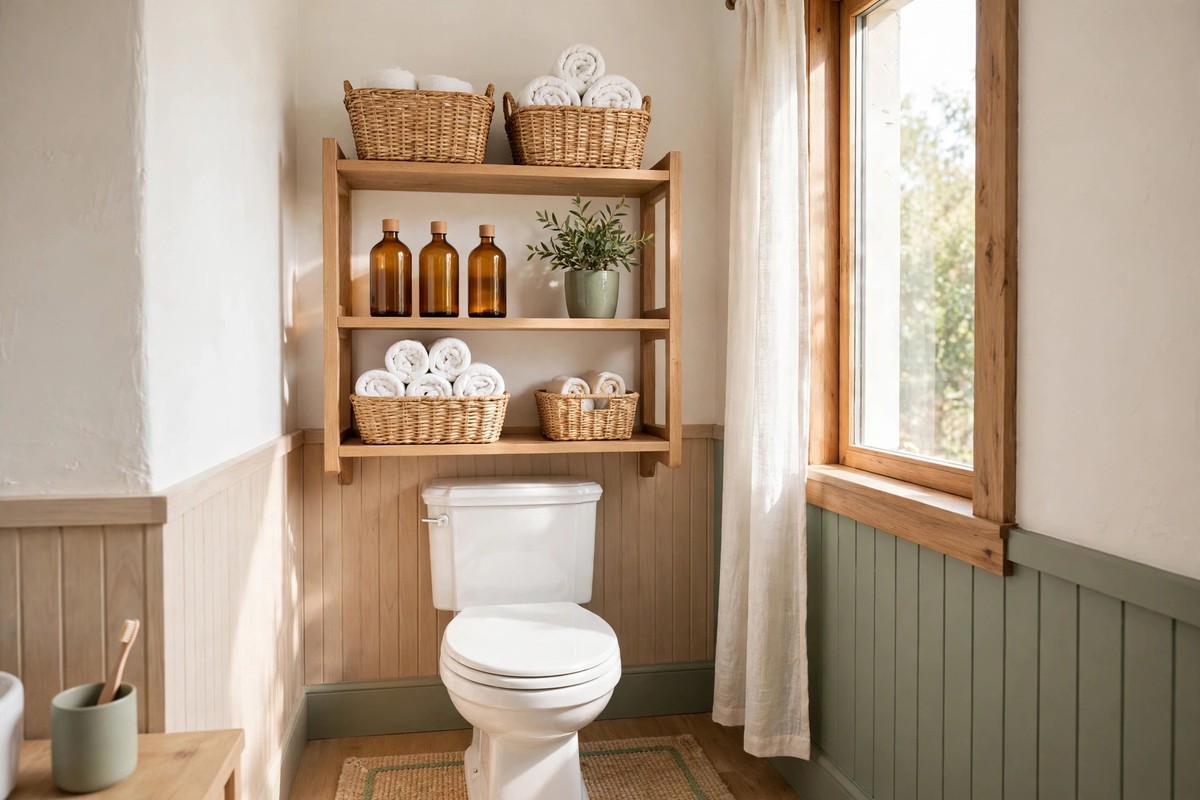
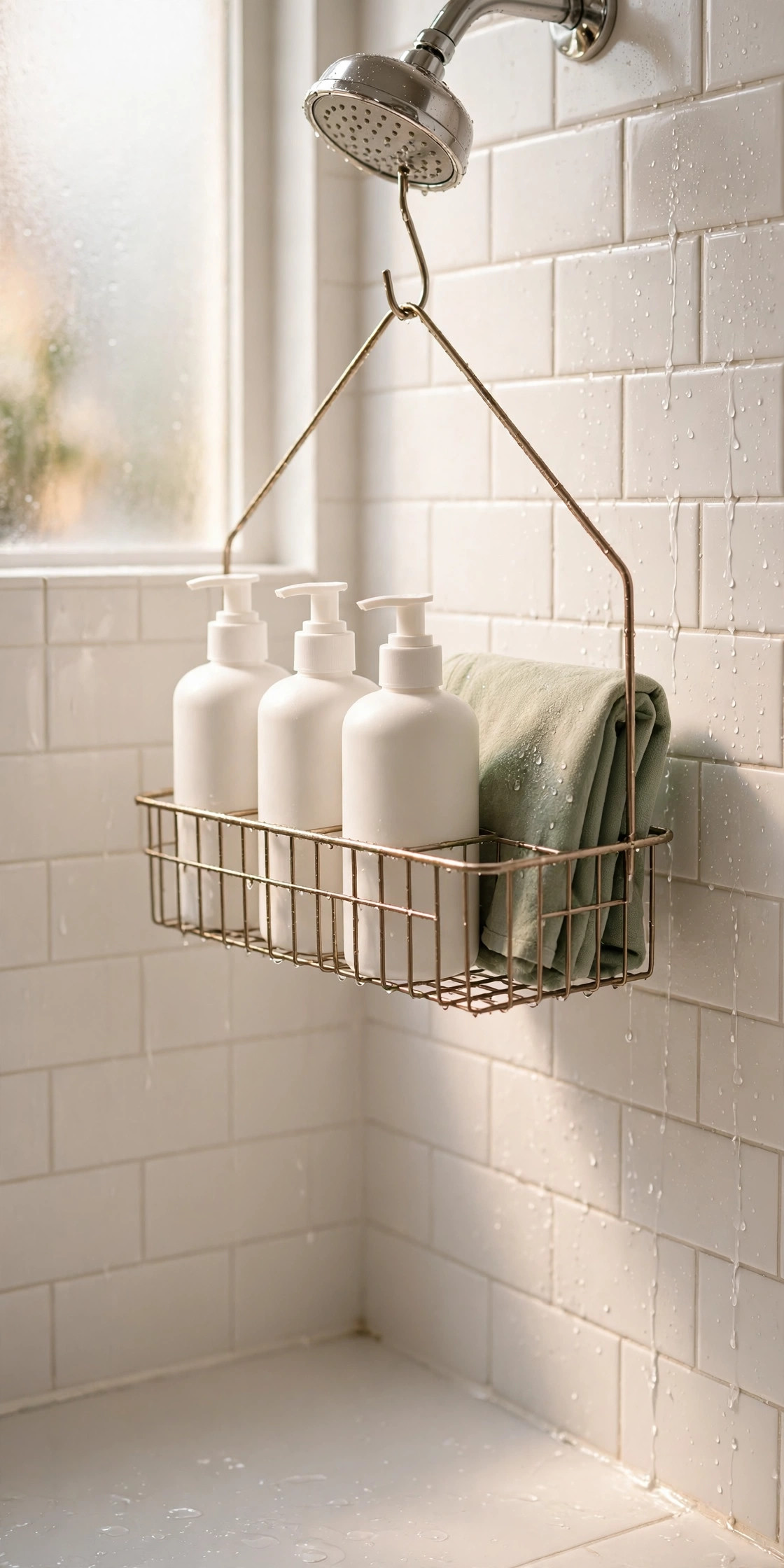
It can be hard to store cleaning supplies in a small bathroom without crowding the sink cabinet or leaving bottles on the floor. Spray cleaners, brushes, sponges, and backup products all compete for the same few inches. A clear system keeps the room easier to clean and much safer.
Safety comes first in this space. Cleaning chemicals should stay away from children and pets, in original labeled containers, and products should never be mixed, since mixing items like bleach and ammonia can create dangerous fumes. The 10 ideas below keep everyday tools close while moving stronger chemicals up high, locked away, or out of the bathroom.
Most of these setups use space that already exists: a top shelf, the back of a door, or the 12 to 15 inches of height under a sink. Each idea takes about 10 to 20 minutes to set up, and most need no tools.
1. How to Store Cleaning Supplies in a Small Bathroom Safely
1. Lockable box for chemicals under the sink: Place bleach, drain cleaner, and other strong products in one lockable box, about 12 by 8 by 6 inches, at the back of the cabinet. A lock adds a key barrier if young kids use the bathroom. Keep the box dry and check the lid closes fully.
2. High shelf storage, out of reach: A shelf at least 60 inches from the floor, or the top shelf of a linen cabinet, keeps chemicals where small children cannot reach them. Use one bin with a handle so products go back up right away. Never store chemicals above a tub edge where a child might climb.
2. Make the Under-Sink Cabinet Work Harder
3. Tiered clear organizer for everyday items: A two- or three-tier organizer, often about 15 inches tall, uses vertical space around sink pipes. Clear sides make bathroom cleaner, wipes, and sponges easy to spot. Keep only daily items here, and store strong chemicals in the locked box instead.
4. One leak-proof tray in original containers: A shallow tray, about 14 by 10 inches, catches drips and keeps bottles upright in one zone. Products stay in original labeled containers, so warnings stay visible. Wipe the tray every week or two, since residue builds up fast.
3. Use Doors and Walls to Store Cleaning Supplies in a Small Bathroom
5. Over-the-door clear pocket organizer for tools: Clear pockets on the back of a door hold sponges, gloves, brushes, and cloths in plain view. Pockets about 5 to 6 inches wide fit most hand tools. Keep the lowest pockets for safe items only, like cloths, so children do not grab bottles at their level.
6. Back-of-cabinet-door rack: A slim rack or adhesive bins, no more than 3 to 4 inches deep, add storage without taking shelf space. This spot suits scrub pads and a roll of small trash bags. Check that the door still closes fully before adding anything thicker.
7. Wall-mounted holder for a broom, mop, or brush: A holder behind the door or beside the tub keeps long handles upright and off the floor. Most holders grip 3 to 5 handles and need about 12 to 16 inches of wall width. Dry handles before storing them to limit moisture and odor.
4. Hang, Carry, and Contain the Rest
8. Tension rod to hang spray bottles: A tension rod across the top front of the under-sink cabinet, usually 12 to 20 inches long, lets spray bottles hang by their trigger handles. That frees the cabinet floor for bins and the locked box. Push each bottle back after use so the door does not hit the triggers.
9. Portable caddy that lives outside the bathroom: A handled caddy holds a full cleaning set and can be stored in a hall closet, then carried in for a 15- to 20-minute clean. This removes most chemicals from the bathroom day to day, a safe option for homes with young kids. Return the caddy right after cleaning.
5. Keep the Supply Small and Separated
10. Limit backup stock and keep groups apart: Keep only one backup of each key product in the bathroom, and store extras elsewhere. Keep chemicals in a separate bin from personal care items like toothbrushes and towels, so there is no mix-up. A quick 5-minute check once a month helps remove empties and expired products, following label directions for disposal.
What to Buy
Lockable storage box for chemicals: Gives strong products one secure home and adds protection in homes with kids or pets, and it fits most under-sink cabinets. Skip if there are no strong chemicals, since a plain bin may be enough for gentle cleaners. Typically $15–$30.
2-pack 3-tier clear under-sink organizers: Clear tiers use vertical space and make small items easy to find. Two units can split tools from cleaners. The tiers can be tight for tall spray bottles, so measure bottle height first. Typically $28–$40.
Over-the-door clear pocket organizer: Adds many small pockets for brushes, gloves, and cloths with no drilling, in about 5 minutes. Skip if the door does not close well with hooks, or if pockets would sit within reach of young children. Typically $10–$18.
Portable cleaning caddy: Keeps a full set together and lets supplies live outside the bathroom, which saves space and improves safety. It holds a limited number of bottles, so oversized products may not fit. Typically $10–$18.
Wall-mounted broom and mop holder: Keeps long handles tidy behind a door and off a wet floor, freeing a corner for bins. Skip if walls cannot take screws and no adhesive option is suitable. Typically $12–$22.
Pro Tips
- Keep every product in its original container with the label readable. Never pour chemicals into drink bottles or unlabeled spray bottles.
- Never mix cleaning products, especially bleach with ammonia or vinegar-based cleaners. Use one product at a time and air out the room.
- Store chemicals away from heat where possible, and dry the under-sink area if a leak appears.
- Do a short monthly sort: remove empties and check that the lockable box still closes fully.
Frequently Asked Questions
Where is the safest place for chemicals in a small bathroom?
The safest spots are up high, at least 60 inches from the floor, or inside a locked box or cabinet. Both keep products away from young children and pets. If neither is possible, store chemicals in a caddy outside the bathroom.
Can cleaning supplies be stored under the bathroom sink?
Yes, if the cabinet stays dry and products are grouped in trays or organizers. Strong chemicals belong in a lockable box, especially when children use the room. Check for leaks often, since moisture can damage labels.
How many cleaning products does a small bathroom really need?
Most small bathrooms need only four or five core items: a bathroom cleaner, a toilet cleaner, a glass cleaner, cloths, and a brush. Extra products can live in a caddy or closet. Fewer bottles mean less clutter and fewer risks.
Should spray bottles be stored on their sides to save space?
No. Bottles should stay upright so they do not leak and labels stay readable. Use height instead, with tiered organizers or a tension rod for hanging triggers. Upright storage also makes the right product faster to spot.
A small bathroom can hold cleaning supplies safely when each item has a set, upright, and separated home. Start with the lockable box and one organizer, then add door or wall storage only if needed. Save this post to your bathroom board on Pinterest so the safety checklist is close by for your next tidy-up.