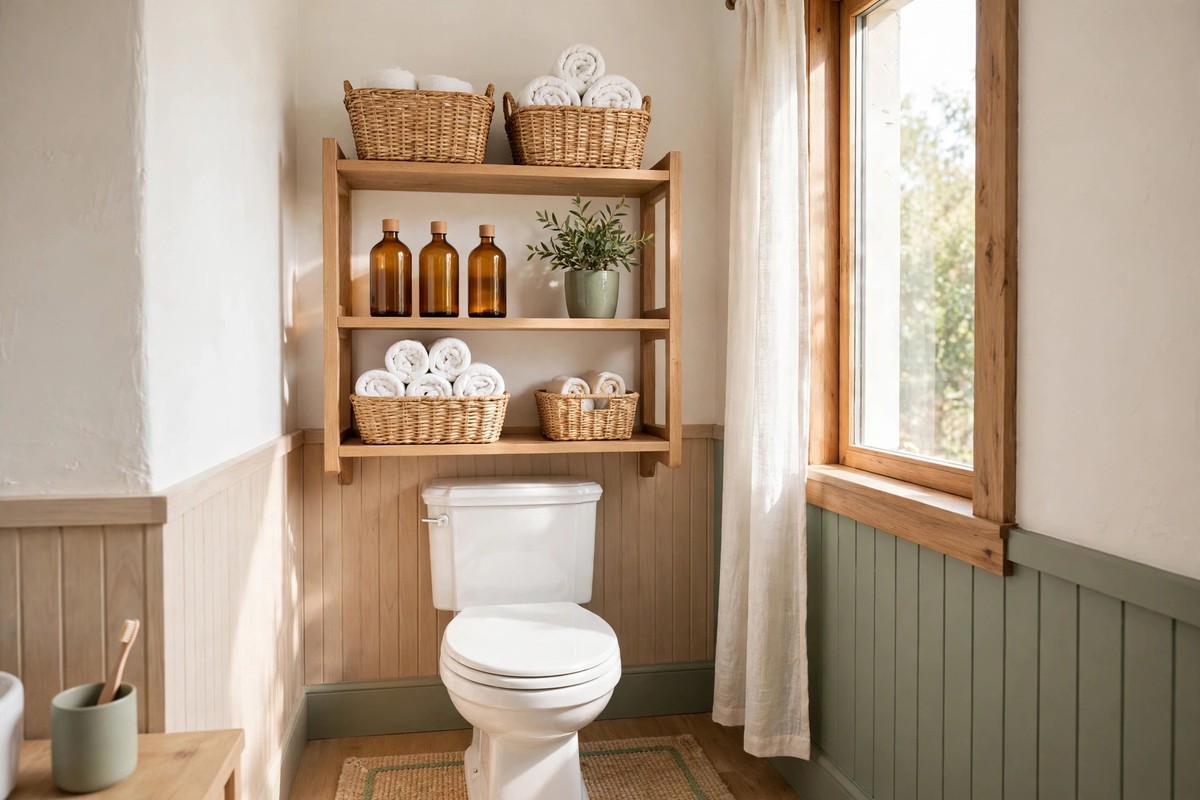
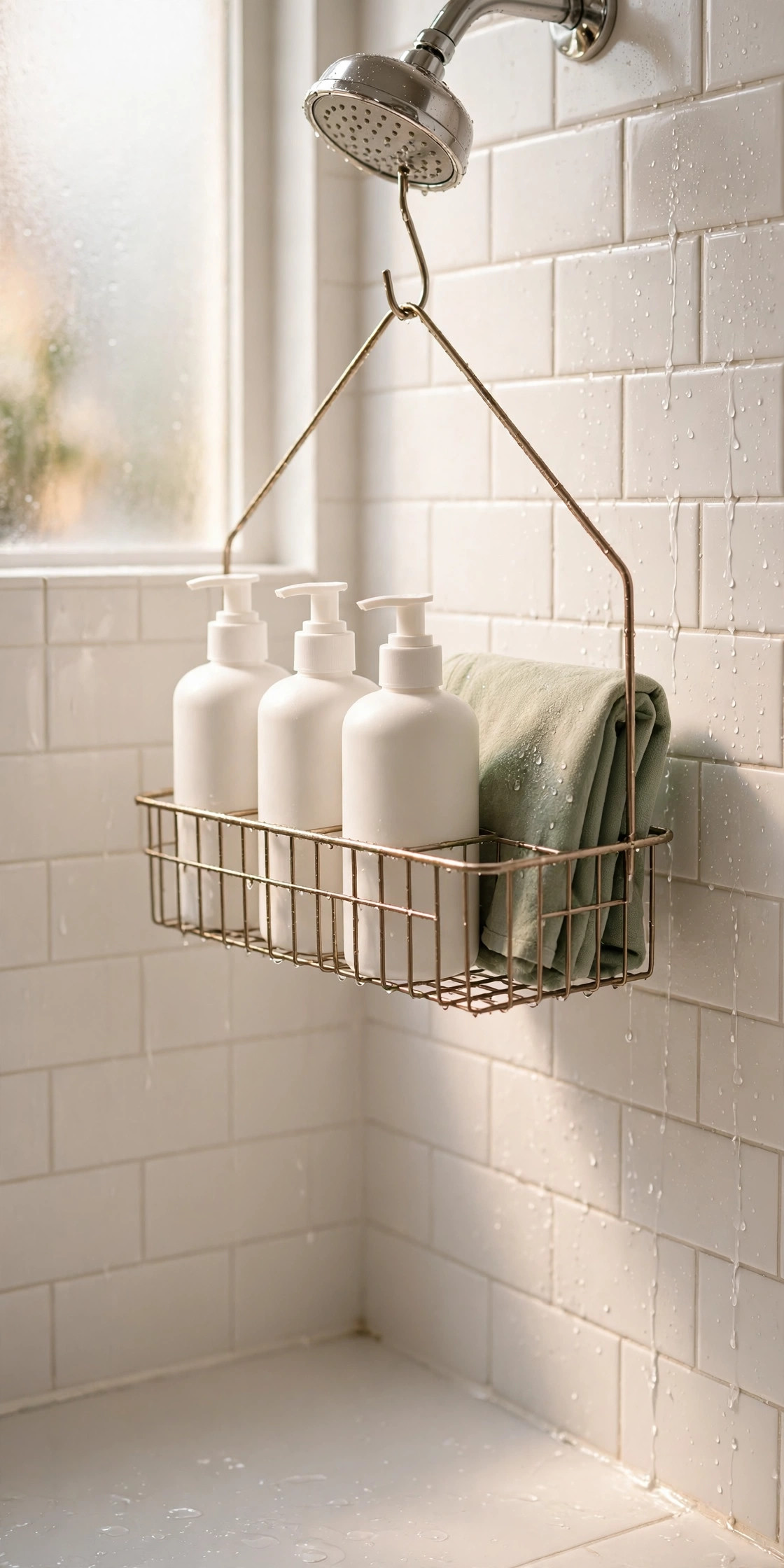
The cabinet under the bathroom sink is awkward by design. Pipes sit right in the middle, the space is dark, and bottles tend to slide to the back. Good under sink bathroom organization does not fight that layout. It works around the pipes, uses the narrow spaces on each side, and keeps everything easy to pull out and put back.
The 13 fixes below fit most standard vanity cabinets, including common 24-inch, 30-inch, and 36-inch widths, and most take 30 to 60 minutes total.
1. Start Your Under Sink Bathroom Organization With a Clean Slate
1. Empty and measure the whole cabinet. Take everything out, wipe the base, and measure the inside width, depth, and height. Note the pipe positions too. A typical cabinet is about 20 to 22 inches deep, but the usable space on each side of the drain pipe may be only 6 to 10 inches wide.
2. Sort into keep, move, and toss piles. Keep only items used in this bathroom. Move extras, like bulk refills, to a closet or hall bin. Toss empty bottles, dried-out wipes, and expired products.
2. Work Around the Pipes, Not Against Them
3. Use two narrow zones instead of one wide bin. One big bin rarely fits beside a drain pipe and a water line. Two slim bins, each about 5 to 7 inches wide, can sit on the left and right sides. Use one side for cleaning supplies and the other for personal care items.
4. Choose U-shaped or split storage. Split organizers, or ones with a cutout in the middle, leave room for the trap, the curved pipe under the drain. Leave at least 1 inch of clear space around pipes so parts can be reached if a leak needs attention.
5. Hang spray bottles from a small tension rod. Fit a short rod across the top of the cabinet, usually 12 to 18 inches long. Hang spray bottles by their trigger handles. This lifts them off the cabinet floor and frees space below for a small bin.
3. Add Height With Under Sink Bathroom Organization That Stacks
6. Stack clear drawers instead of loose piles. Two or three clear drawers stacked on one side turn dead vertical space into usable storage. Keep each stack under about 12 to 14 inches tall so it clears the underside of the sink basin.
7. Use pull-out tiers for the back row. Items at the back of a 20-inch-deep cabinet are easy to forget. A tiered organizer with a sliding lower drawer brings those items forward. Put taller bottles, up to about 8 to 9 inches, on the open top level.
8. Store tall and short items in different spots. Short jars and tubes belong in shallow drawers. Tall cleaners belong on the open floor of the cabinet, where the full height is available. Mixing them in one bin wastes space and causes tipping.
4. Keep Small Items From Getting Lost
9. Corral tiny items in shallow trays. Hair ties, nail tools, tweezers, and cotton swabs disappear in deep bins. A shallow tray, about 1 to 2 inches deep, keeps them in one layer.
10. Give each category one home. Group items by job: hair care, first aid, cleaning, and daily basics. When each group has one bin or drawer, restocking takes minutes and duplicate buying drops. Simple tape labels help in shared bathrooms.
5. Protect the Cabinet and Spot Leaks Early
11. Line the base with a waterproof mat. Cut a mat to fit the cabinet floor, working around the pipes. A mat catches drips from bottles and small plumbing leaks before they soak into wood or particleboard.
12. Leave the pipes visible on purpose. Do not pack bins tight against valves or connections. A clear view makes a slow drip easy to notice. Check the area every few weeks; a quick look takes less than a minute.
6. Make the Front Row Do the Daily Work
13. Put daily items at the front, backups at the back. The front 6 inches of the cabinet is prime space. Keep items used every day there: toothpaste refills, contact solution, or a hairbrush. Move rarely used items to the back or to another room entirely.
What to Buy
2-pack 3-tier clear under-sink organizers with pull-out drawers — The sliding drawers solve the deep-cabinet reach problem, and the clear sides show contents at a glance. The tiers can be too tall for low basins, so measure height first. Typically $28–$40.
Acrylic drawer organizer trays — Shallow trays keep small items in a single, visible layer and fit in drawers or on a shelf. They hold only small items, so they work best as a partner to a larger bin. Typically $15–$25.
Slim rolling storage cart — A narrow cart, often 5 to 7 inches wide, can slide into the gap beside the pipes and roll out for access. Skip if the cabinet floor is uneven or the gap is under 5 inches. Typically $20–$35.
Stackable clear storage drawers — Stacking adds height without new furniture, and drawers open without moving the whole stack. Deep stacks can hide items, so keep stacks to two or three high. Typically $20–$30.
Small tension rod for spray bottles — A simple, low-cost way to use empty space at the top of the cabinet. It only works for bottles with trigger handles, and heavy bottles may slip. Typically $8–$15.
Mistakes to Avoid
- Buying organizers before measuring the pipes, basin depth, and door swing.
- Packing bins tight against valves, which hides leaks and blocks repairs.
- Storing bulk backups under the sink when they fit better in a closet.
- Using one deep bin for everything, so small items sink to the bottom.
Frequently Asked Questions
How do you organize under a bathroom sink with pipes in the way?
Measure the clear space on each side of the pipes and treat the cabinet as two narrow zones. Use slim bins, split organizers, or a U-shaped setup that leaves at least 1 inch around the plumbing. Keep the pipes visible so leaks are easy to spot.
What should not be stored under a bathroom sink?
Avoid paper goods that can get damp, spare towels in an unsealed pile, and anything ruined by a small leak. Electronics and important documents also belong elsewhere. If towels must go there, seal them in a closed bin with a lid.
How tall can under-sink storage be?
It depends on the basin. Many cabinets allow about 12 to 15 inches of clear height beside the basin, and less in the center. Measure from the cabinet floor to the lowest part of the sink and pipes, then choose stacks at least 1 inch shorter.
How often should the cabinet be reset?
A quick reset every 2 to 3 months is enough for most homes. Empty one side at a time, wipe the mat, toss empties, and check the pipes for drips. The job usually takes 15 to 20 minutes.
A tidy under-sink cabinet does not need a perfect fit or a big budget. It needs clear zones, the right height, and daily items within easy reach. Save this post to your bathroom board for later, and use the measurements checklist before the next shopping trip.