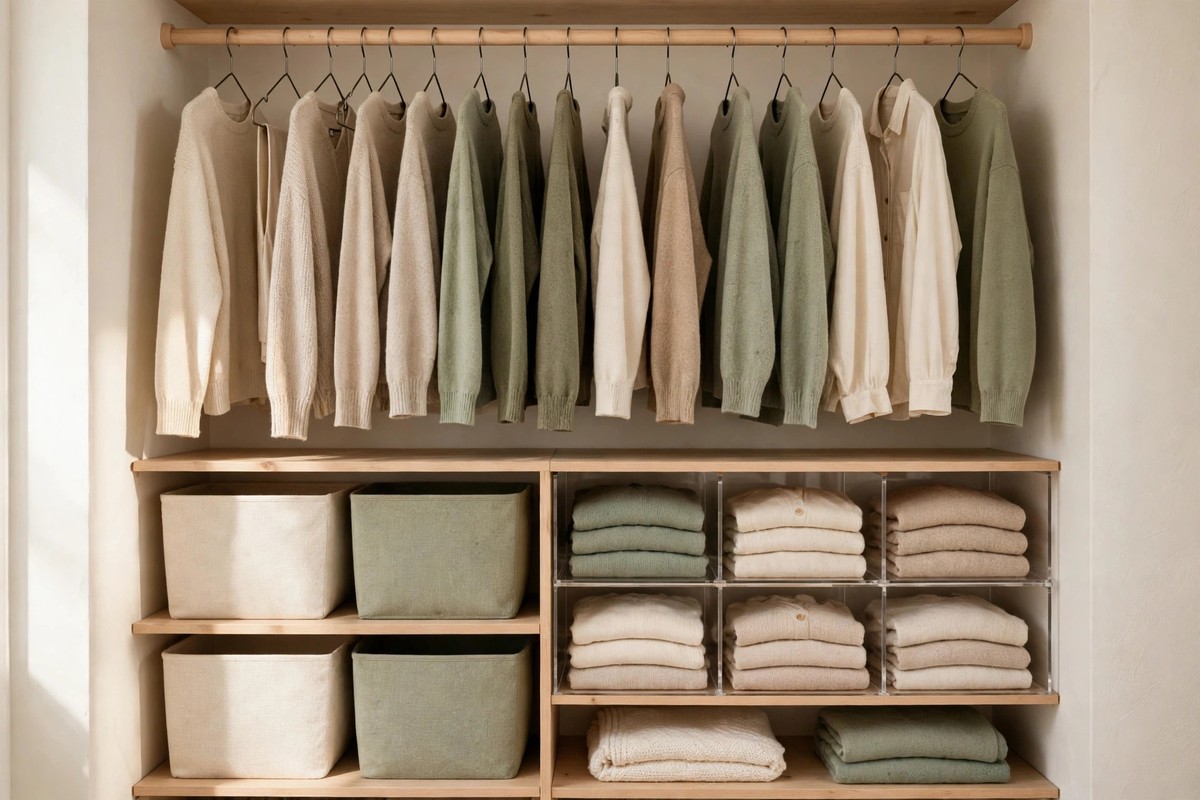
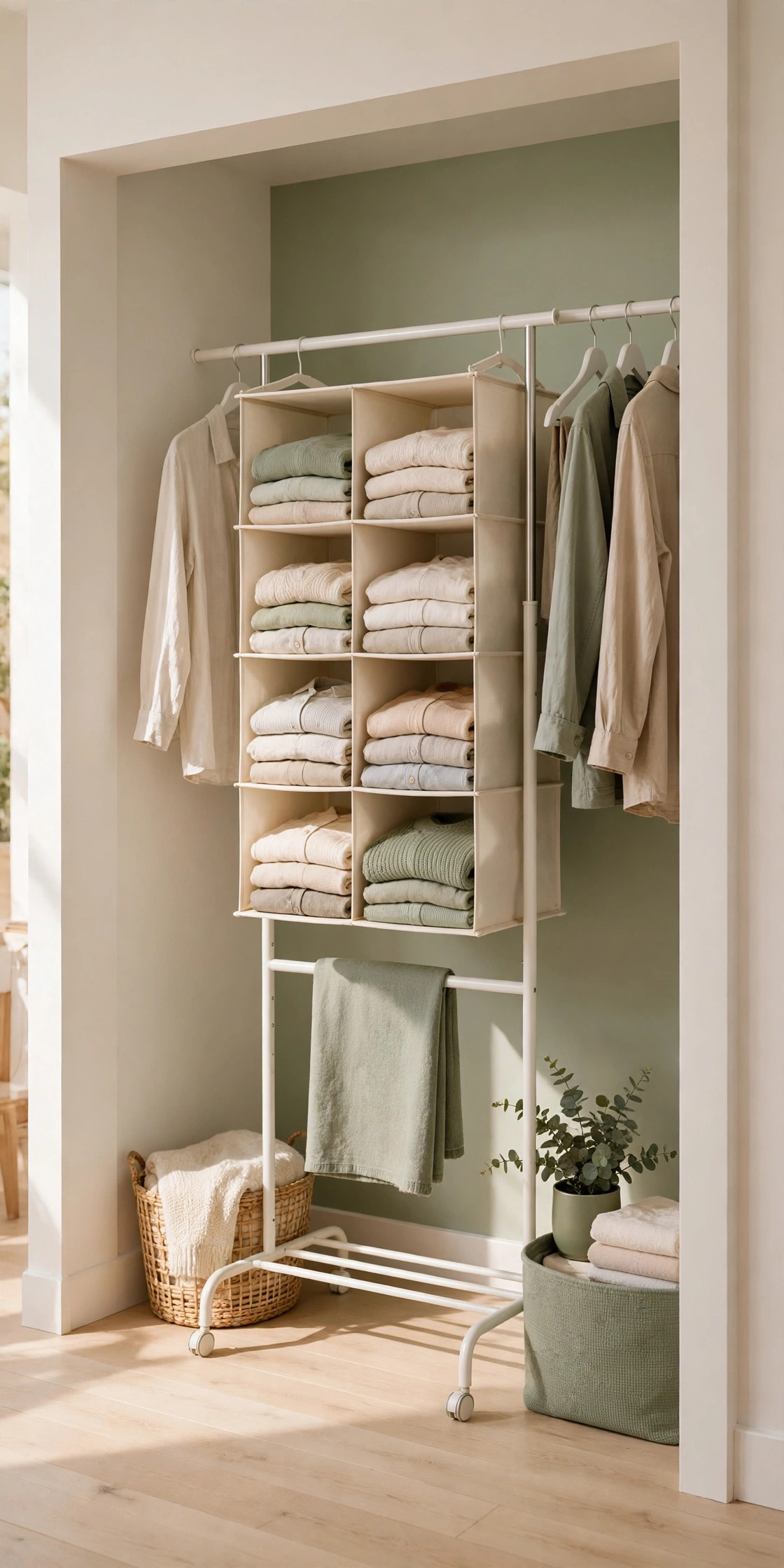
A closet rarely becomes messy in one day. It fills up a few hangers at a time, until one morning nothing is easy to find. A 20 minute closet edit fixes that pattern with a short monthly reset instead of a rare, all-day cleanout.
Set a timer and work in order. The goal is not perfection. It is to remove what no longer belongs, return daily clothes to easy spots, and leave the closet ready for the next four weeks. A standard single closet, about 4 to 6 feet wide, fits this timing well.
1. Minutes 0–3: Set Up the 20 Minute Closet Edit
1. Lay out three landing spots. Place a donation bag, a laundry basket, and a small trash bag just outside the closet door. Having a spot for each choice stops piles from forming on the bed and stalling the timer.
2. Gather the strays. Collect clothes from chair backs, door hooks, and the top of the dresser. Hang clean items, drop worn items in the laundry basket, and return belts, bags, and scarves to their zones right away.
3. Clear the floor strip. Pull everything off the closet floor for two minutes. Shoes, gym bags, and shopping bags hide how much floor space is actually there, and a clear floor makes the rest of the edit faster.
2. Minutes 3–8: Work the Hanging Rod From Left to Right
4. Do one slow hanger pass. Slide every hanger along the rod and look at each piece once. Pull out anything not worn in the last month, aside from true seasonal or special-occasion clothes, and set it by the donation bag.
5. Put daily clothes in the middle. Keep work, school, and weekend basics in the center 24 inches of the rod, where they are easiest to reach. Push formal and seasonal pieces to the far ends, grouped by type and length.
6. Fix hanger traffic jams. Space hangers roughly 1 inch apart so clothes can be pulled out without tugging three others with them. Swap bulky wooden hangers in the tightest section for slim ones, and face every hook the same way.
3. Minutes 8–13: Straighten Shelves, Stacks, and Shoes
7. Refold one shelf at a time. Limit sweater and T-shirt stacks to 4 or 5 pieces, about 8 to 10 inches tall, so lower items stay visible. Move anything that does not belong on that shelf instead of tucking it behind a stack.
8. Reset shoes and bins. Line up the 4 to 6 pairs worn most often in the front row. Move seasonal shoes to a labeled bin on the top shelf, and shake out fabric bins so each one holds a single category, such as workout clothes or pajamas.
4. Minutes 13–17: Make the Keep-or-Go Calls
9. Ask three quick questions. Does it fit now? Has it been worn in the last 60 days, season aside? Does it need a repair that has waited more than a month? Two no answers mean the item goes in the donation bag.
10. Fill the donation bag first. Bag donations before putting anything back. Tie the bag, set it by the front door, and plan to drop it off within 7 days. A bag that stays in the closet almost always gets unpacked again.
11. Box the maybes with a date. Genuine maybes go in one small box or bin, marked with next month's date. If the box stays unopened at the next edit, its contents move straight to donations without a second debate.
5. Minutes 17–20: Finish the 20 Minute Closet Edit Reset
12. Put daily items at eye level. Use the final minutes to move this week's clothes, shoes, and accessories to the front 12 inches of each shelf and rod section. Tomorrow's easiest grab should never be behind rarely used items.
13. Log gaps and book the next edit. Note any real needs, such as 10 slim hangers or one replacement bin, instead of guessing later. Hang 5 empty hangers together at the end of the rod, and set next month's edit for the same date.
What to Buy
Fabric folding bins, 3-pack give shelves a uniform look and hold folded clothes, linens, or accessories in standard 11-inch cubes. They fold flat when empty, but soft sides slump if overfilled. Typically $20–$30.
Velvet slim hangers, 50-pack free up rod space and grip straps and silky tops better than smooth plastic. The trade-off is slower one-handed hanging, and they can snap under very heavy coats. Typically $25–$40.
Clear shelf dividers, 6-pack keep sweater, jeans, and bag stacks upright on shelves 12 to 16 inches deep, with no tools needed. Skip if shelves are wire, since most dividers grip solid boards best. Typically $15–$22.
Hanging closet organizer, 5–6 shelves adds instant folded storage where rod space is spare, and folds flat for moves. Skip if the rod is already packed, since it uses about 12 inches of hanging width. Typically $18–$28.
Over-door laundry and donation bag keeps a donation spot ready all month, which is the habit this whole routine depends on. The con is door clearance, so test that the door still closes fully. Typically $15–$25.
Mistakes to Avoid
- Skipping the timer and turning a 20-minute edit into a draining full cleanout.
- Sorting onto the bed with no donation bag, laundry basket, or trash bag nearby.
- Keeping clothes that do not fit now in the prime center section of the rod.
- Letting a full donation bag sit in the closet instead of dropping it off within a week.
- Buying bins or hangers mid-edit instead of noting real gaps and shopping after.
Frequently Asked Questions
What if the first edit takes longer than 20 minutes?
A closet that has not been edited in a year may need 35 to 40 minutes the first time. Work the same blocks in order, stop when the timer ends, and keep the monthly date. Later edits get faster as pile-ups shrink.
Which day of the month works best for this routine?
Pick a date that is easy to remember, such as the 1st or the last Sunday. Laundry day works well, since most clothes are clean, hung, and in one place, which makes keep-or-go calls more honest.
How does this routine work in a shared closet?
Give each person one side of the rod and one donation bag. Run the timer together, but let each person make their own keep-or-go calls. Shared shelves, such as linens, can be handled in the shelf block by either person.
What should happen to the donation bag after each edit?
Tie it, move it out of the closet the same day, and drop it off within 7 days. Keep one fresh bag hanging on the door afterward, so donations have a home from day one of the next month.
A calm closet is mostly a timing habit, not a big purchase. Twenty focused minutes a month keeps the rod, shelves, and floor from sliding back into chaos. Save this post to your closet organization board on Pinterest, so the timed checklist is ready on edit day.