Learning how to organize a small closet starts with one honest fact: most small closets hold more clothes than they can store well. When every inch is packed tight, clothes wrinkle, outfits are hard to find, and getting dressed takes longer.
This guide gives a clear order of steps. First comes an honest edit, then measuring, then simple zones that match daily life. The full process takes about two to three hours for a typical small closet, and it can be split into two shorter sessions.
No closet needs to look perfect to work well. The goal is simple: see most clothes at a glance, reach daily items without a struggle, and keep the floor clear.
1. Start With an Honest Edit
Take everything out by category. Pull out all tops first, then all pants, then dresses and jackets. Sorting by category shows the true count in each group. Many closets hold far more of one type, like t-shirts or jeans, than daily life needs.
Use three clear piles. Make a keep pile, a donate or sell pile, and a repair pile. Set a firm target, such as removing 20 to 30 percent of the total, before anything goes back in.
2. Measure the Closet Before Buying Anything
Write down the key sizes. Measure the rod length, the shelf width and depth, and the floor space in inches. A common small closet rod is 36 to 48 inches long, and many shelves are 12 to 16 inches deep.
Count the hanging space honestly. As a rough guide, slim hangers take about 0.5 inches each, while thick wooden or plastic hangers can take 1 inch or more. On a 48-inch rod, that difference can mean room for 30 to 40 extra items.
3. How to Organize a Small Closet by Zones
Give daily clothes the best spot. Place work and daily outfits at eye level, in the center of the rod, where they are easiest to reach. Put special-occasion clothes at the far ends.
Hang clothes in a simple order. Group items by type, then by length. Short items, like shirts, can hang over a bin or a low drawer unit, which creates useful space below. Long dresses and coats need one section with at least 55 to 60 inches of clear drop space.
4. Switch to Slim, Matching Hangers
Use one hanger style for most clothes. Matching slim hangers create even spacing, so clothes stop bunching and sliding. Velvet-style hangers also grip straps and silky fabrics better than smooth plastic.
Skip bulky hangers for daily items. Thick hangers still suit heavy coats, but they waste prime rod space on light shirts. Keep five or six sturdy hangers for coats and blazers, and use slim hangers for the rest. This single swap often frees 6 to 10 inches of rod space.
5. Use Vertical Space From Top to Bottom
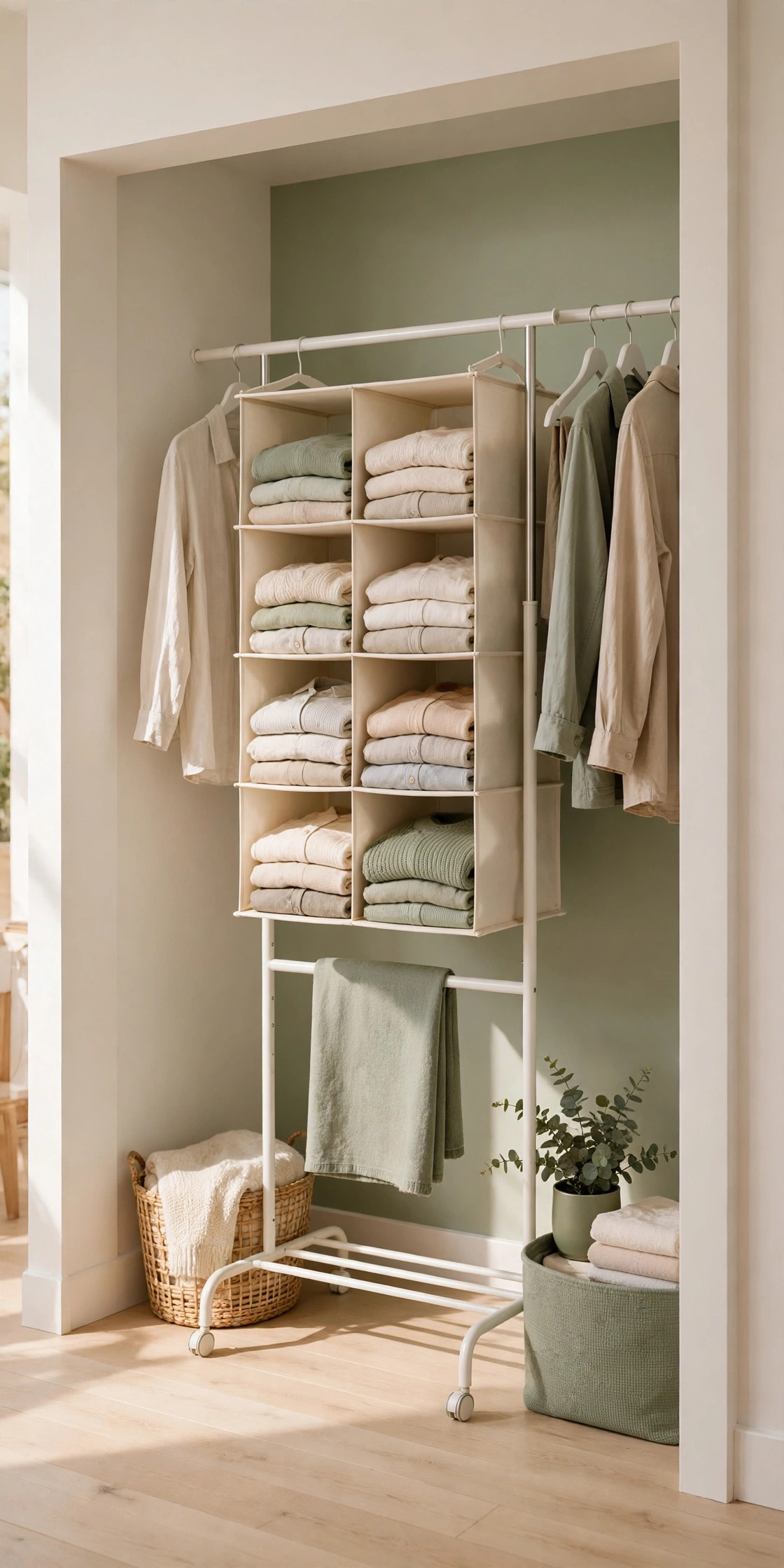
Add a hanging shelf unit for folded clothes. A hanging organizer with five or six shelves turns empty rod space into storage for sweaters, jeans, and t-shirts. Each shelf, often about 12 inches wide, holds a small stack of four to five folded items.
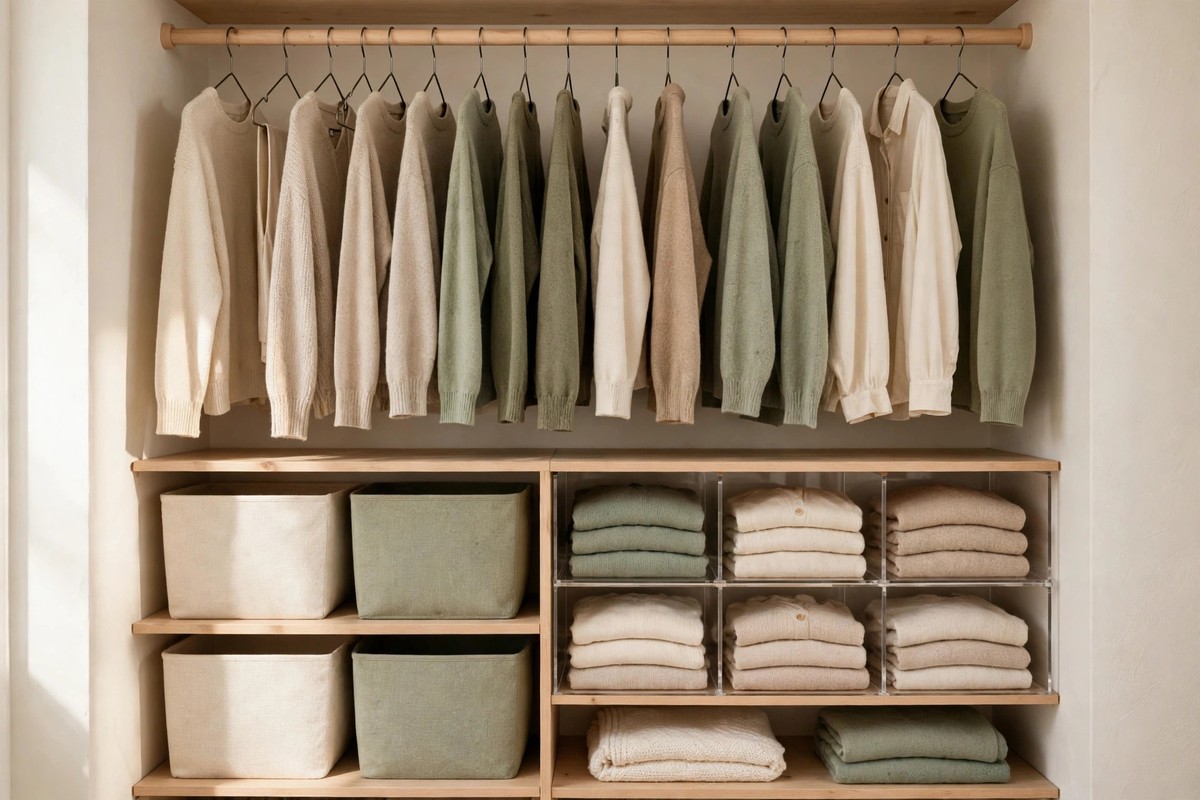
Divide wide shelves into sections. Shelf dividers stop piles of sweaters or linens from tipping into each other. Leave the top shelf, usually above 70 inches, for items used only a few times a year.
6. Store Off-Season Clothes Out of the Way
Rotate clothes twice a year. When warm weather starts, pack heavy coats and thick sweaters away, and bring summer clothes forward. Vacuum storage bags can cut the bulk of winter items by a large amount and fit under a bed or on a top shelf.
Use bins for the overflow that stays. Stackable bins work well for gym clothes, scarves, or spare linens that belong near the closet. A set of bins about 12 by 8 by 6 inches each fits many standard shelves.
7. Keep the System Going With a Weekly Reset
Do a 10-minute weekly tidy. Rehang fallen items, return shoes to their spot, and move one or two unworn items to a donate bag if they no longer fit the plan. This habit is the quiet key to how to organize a small closet and keep it that way.
Use a one-in, one-out rule. When a new item comes in, one similar item goes out. This rule keeps the total count steady, which matters most in a small space. Keep a small donate bag on the closet floor so the rule takes almost no extra effort.
What to Buy
Velvet slim hangers, 50-pack — typically $25–$40. Pro: the slim shape saves real rod space. Con: velvet hangers can snap if forced under a very heavy load, so keep thick hangers for heavy coats.
Hanging closet organizer with 5–6 shelves — typically $18–$28. Pro: it adds folded storage with no tools and no drilling. Skip if the rod is already full from end to end, since this organizer needs about 12 inches of rod space.
Vacuum storage bags, multi-pack — typically $20–$35. Pro: bags shrink bulky winter clothes. Con: deep wrinkles are common after long storage, and delicate fabrics do better folded in a bin.
Stackable closet organizer bins, 5-pack — typically $25–$35. Pro: stacking uses vertical shelf space, and a set keeps small categories apart. Skip if shelves are less than about 10 inches tall, since stacked bins need clear height to open or lift.
Clear acrylic shelf dividers, 6-pack — typically $15–$22. Pro: dividers keep stacks neat and slide on to most standard shelves with no tools. Con: they fit only shelves within their stated thickness range, so measure the shelf edge first.
Pro Tips
- Keep a small step stool nearby if the top shelf is in regular use, rather than stretching and pulling piles down.
- Store the most-worn shoes in the closet and move spare pairs to an entry rack or under-bed box.
- Take a photo of the finished closet; it makes the weekly reset faster, since the target layout is clear.
- Review the closet at each season change, not just once a year, to catch clutter early.
Frequently Asked Questions
How do I organize a small closet if I cannot get rid of many clothes?
Focus on storage order first. Move off-season clothes out of the closet, switch to slim hangers, and use vertical space with shelves and bins. Even with the same total count, daily items become much easier to find and reach.
How many clothes should a small closet hold?
There is no single right number. A useful test is spacing: clothes should hang with a small gap between hangers, not pressed tight. If hangers cannot slide at all, the closet is over capacity.
Should I hang or fold sweaters and jeans?
Fold heavy sweaters, since hanging can stretch them out of shape over time. Jeans can be folded in stacks of four or five, or hung by the waistband if rod space allows. Light shirts, dresses, and blazers usually do best on hangers.
How do I keep a small closet organized long term?
Use a 10-minute weekly reset and a one-in, one-out rule for new items. Rotate clothes by season so the closet only holds what is in current use.
A small closet works best when it holds a realistic amount, in a clear order, with space to breathe. Start with the edit, set up simple zones, and keep the weekly reset short and steady. Save this post on Pinterest for later, so the steps are ready for the next closet clean-out.