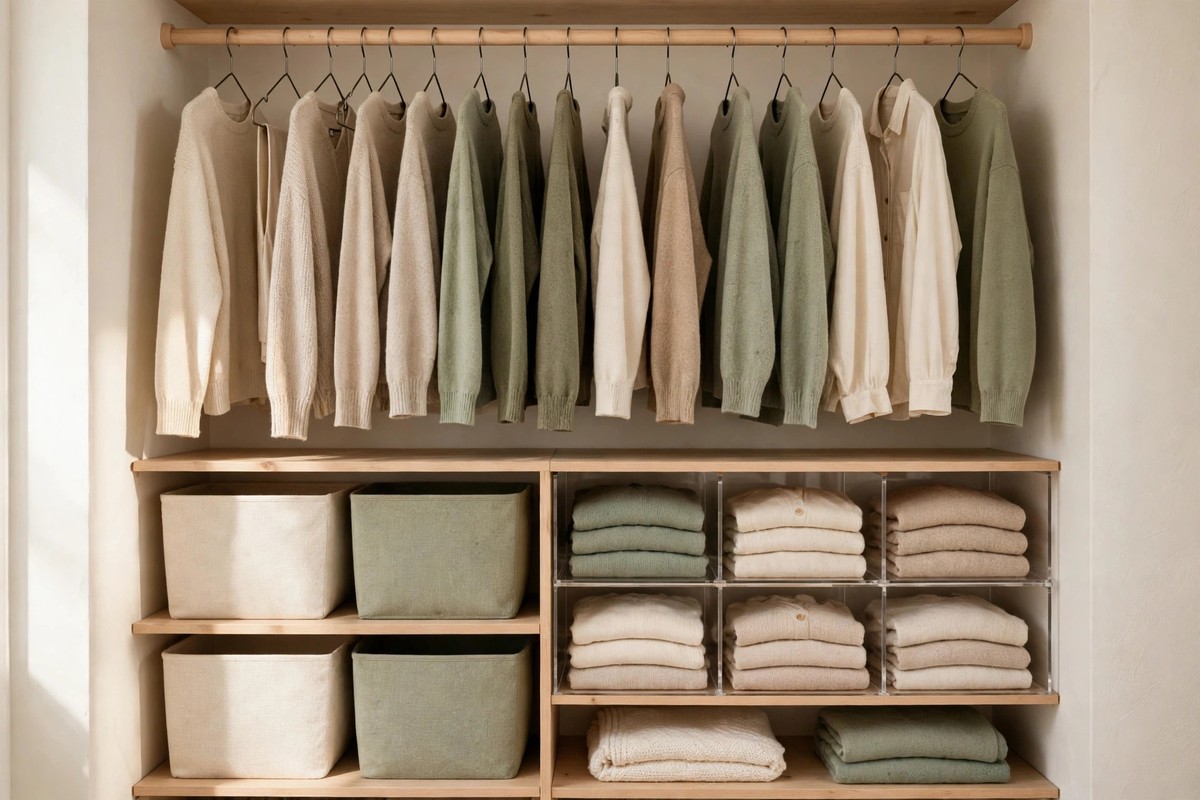
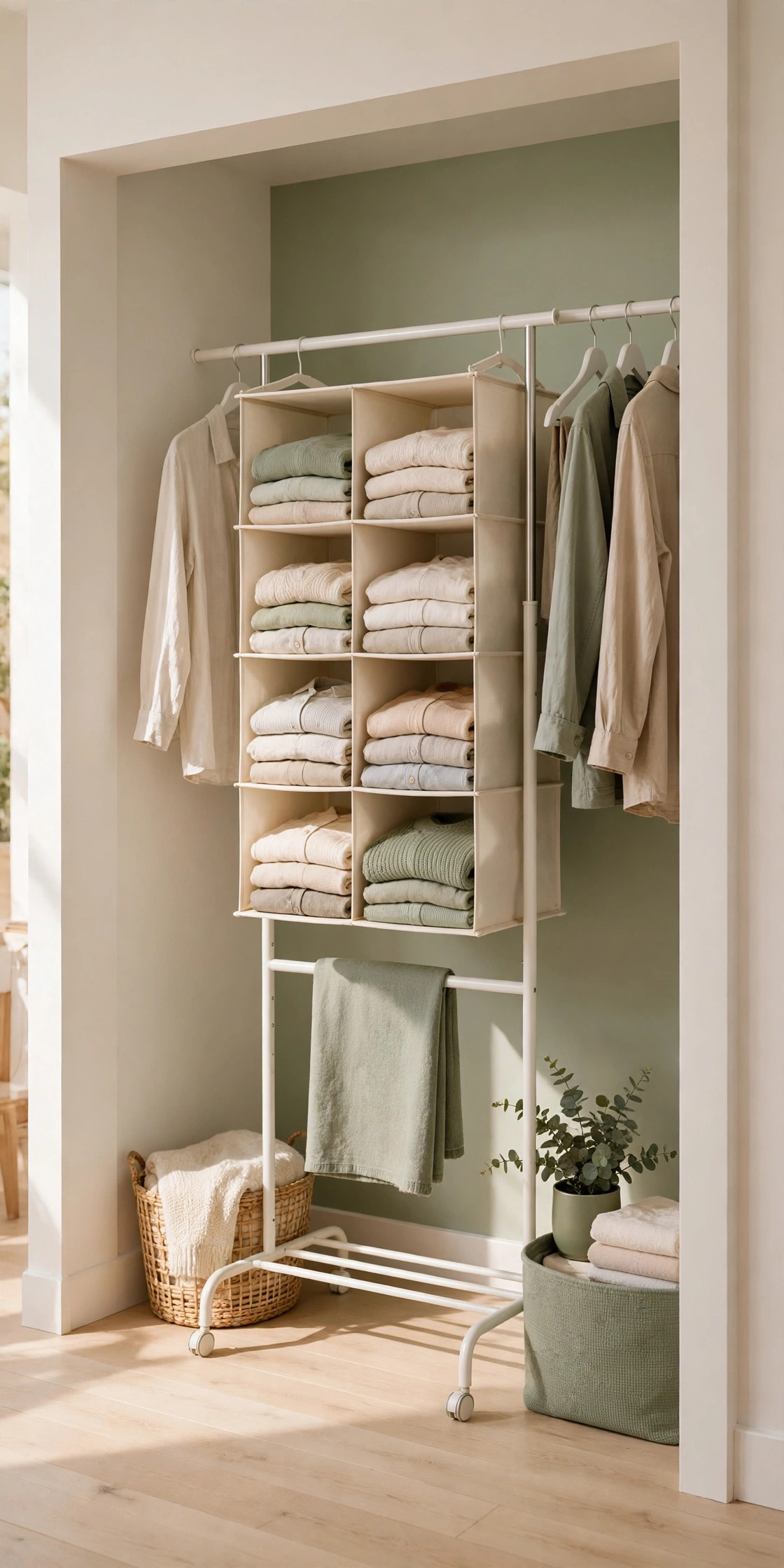
Shoes are bulky, oddly shaped, and easy to trip over, which makes them a top problem in small homes. Good shoe storage for small closets is not about buying a bigger closet. It is about using height, doors, and hidden spots that often sit empty. With the right setup, 15 to 20 pairs can fit in a space that once held 8.
Start by gathering every pair in one place. Toss worn-out shoes, donate pairs that no longer fit, and count what is left. Then measure the closet floor, door, and any entryway wall in inches. That quick count, which takes about 20 minutes, shows which of the ideas below will work best.
1. Start Shoe Storage for Small Closets by Going Vertical
1. Use a tall, narrow shoe rack. A 7-tier rack about 20 to 24 inches wide can hold 14 to 21 pairs while using very little floor space. Place it against a closet side wall or in an unused corner.
2. Stack clear shoe boxes from floor to top. Clear boxes stack safely 5 to 6 high and let every pair stay visible. Standard boxes are about 13 inches long, so measure boots and large sizes before buying a full set.
3. Add shelf risers to double a shelf. A slim riser creates two levels on one shelf, with heels or flats below and sneakers on top. This is a fast fix for a single closet shelf that wastes 8 to 10 inches of height.
2. Use the Door and Walls for Shoe Storage for Small Closets
4. Hang an over-the-door pocket organizer. With 24 to 30 clear pockets, one door can hold 12 to 15 pairs of flats, sandals, and kids shoes. It installs in about 2 minutes and needs no tools.
5. Mount a wall rail or hanging shoe shelves. A rail with clips or a hanging fabric shelf on the wall keeps shoes off the floor entirely. Keep the most-used pairs at eye level, about 48 to 60 inches high.
6. Use the inside of the closet door for daily pairs. Slim hooks or a short rack inside the door holds the 2 to 3 pairs worn most often. Check that the door still closes fully before adding anything bulky.
3. Make the Closet Floor Work Harder
7. Place a low 2-tier rack under hanging clothes. The space under shirts and jackets is often 12 to 18 inches tall and mostly empty. A low rack fits there and keeps shoes in neat rows instead of a pile.
8. Line shoes up in a shallow tray or boot tray. A tray about 24 by 14 inches catches dirt and melted snow while keeping pairs together. This works well on closet floors and right inside an entryway.
9. Store shoes heel-to-toe to save inches. Turning one shoe forward and its pair backward saves about 2 inches per pair. Over 10 pairs, that small change can free room for 2 extra pairs.
4. Move Off-Season Shoes Out of Prime Space
10. Slide off-season shoes under the bed. A flat under-bed bag or box, usually 5 to 6 inches tall, holds 8 to 12 pairs out of sight. Swap shoes twice a year when the weather changes.
11. Put rarely worn shoes on the highest shelf or closet top. Dress shoes and special-occasion pairs belong up high in labeled boxes. Keep a small step stool nearby if that shelf is above 72 inches.
5. Keep Entryway Shoes Tidy Every Day
12. Set a strict limit with a small entry basket or bench cubby. Allow only 1 to 2 pairs per person at the door. A bench with 4 to 6 cubbies hides shoes and gives a place to sit while putting them on.
13. Add a slim shoe cabinet or tilt-out bin by the door. Slim cabinets as narrow as 7 to 9 inches deep hold shoes upright behind closed doors. They keep an entryway looking clean even in a very small hall.
What to Buy
Over-the-door shoe organizer with 24–30 pockets. Lowest cost option, uses no floor space, and clear pockets make pairs easy to spot. Pockets are too tight for boots and bulky high-tops, so skip if most shoes are large. Typically $10–$18.
Vertical narrow 7-tier shoe rack. Holds many pairs in a small footprint and keeps them aired out and visible. Tall racks can wobble on thick carpet, so skip or anchor it if the floor is uneven. Typically $25–$40.
Clear stackable shoe boxes, set. Protects shoes from dust, stacks neatly, and the clear front saves time in the morning. Boxes add up in cost for large collections, so skip if storage is needed for more than 20 pairs on a tight budget. Typically $20–$35.
Under-bed shoe storage bag/boxes. Perfect for off-season pairs and frees prime closet space fast. It is not handy for daily shoes, so skip for pairs worn every week. Typically $15–$28.
Slim shoe shelf risers. Cheap way to double one shelf without tools, and they fit most standard closet shelves. Risers do not help if there is no shelf at all, so skip in a bare closet with only a rod. Typically $12–$20.
Pro Tips
- Keep only current-season, often-worn shoes in the closet. Store the rest under the bed or up high.
- Clean shoes before storing them. Dirt and moisture damage boxes, racks, and nearby pairs.
- Label every box, even clear ones. A label helps other family members put shoes back in the right spot.
- Re-count pairs every 3 to 4 months. A quick 10-minute check stops slow clutter from building up again.
Frequently Asked Questions
How many pairs of shoes fit in a small closet?
With a vertical rack, door organizer, and floor rack combined, most small closets hold 15 to 25 pairs neatly. The exact number depends on shoe size and style. Boots and bulky sneakers take about twice the space of flats and sandals.
How do I store shoes in an entryway with no closet?
Use a slim shoe cabinet, a bench with cubbies, or a wall-mounted rail to keep pairs off the floor. Limit each person to 1 or 2 pairs at the door. Move extra pairs to a bedroom closet or under-bed storage.
What is the best way to store boots in a small space?
Store tall boots upright with inserts or rolled magazines inside to hold their shape. A corner of the closet or a tall box works well. Low ankle boots fit in clear boxes or on a bottom rack shelf.
How do I keep stored shoes from smelling?
Let shoes dry fully for at least 24 hours before putting them in a closed box. Add a small baking soda packet or cedar insert to absorb odor. Open boxes and bags once a month to let fresh air in.
Small spaces can hold more shoes than they seem to at first. The trick is to go up, use the door, and give off-season pairs a home outside the main closet. Save this post to your shoe storage board on Pinterest so these ideas are handy for your next closet clean-out.