A 4-foot closet can feel too small for a full wardrobe, but a well-planned capsule wardrobe closet works differently. Instead of storing as many clothes as possible, it stores a small set of pieces that all mix and match. With the right counts, that small set creates far more outfits than most people expect.
The goal is not a bare closet. The goal is a closet where every item earns its space, pairs with several other items, and can be found in seconds. This guide covers the exact math for 40 outfits, a simple 48-inch layout, and the hanging and folding choices that keep a tiny closet calm.
1. Plan Your Capsule Wardrobe Closet Around What Gets Worn
Start with a full count. Empty the closet and count every top, bottom, dress, and layer. Most small closets hold 60 to 80 pieces, and many are rarely worn. Seeing the real count makes the edit much easier.
Remove what does not earn space. Set aside items that do not fit, feel uncomfortable, or only work with one other piece. They take up inches that useful clothes need.
Keep a tight color palette. Choose two main neutrals, such as black and navy or gray and tan, plus two or three accent colors. When most pieces share a palette, almost every top works with almost every bottom.
2. Use Simple Math to Reach 40 Outfits
The 40 outfits come from one formula: 8 tops multiplied by 5 bottoms equals 40 outfits. Each top only has to pair well with each bottom, which the shared palette makes possible.
The 5 bottoms: dark jeans, black pants, neutral pants, a skirt or dress pants, and one casual pair such as shorts, swapped by season.
The 8 tops: three simple tees or knit tops, three blouses or button-up shirts, and two sweaters or polished tops. Spread across the 5 bottoms, they make the full 40 combinations.
Add 4 flexible extras: two dresses, one blazer or cardigan, and one jacket. Dresses are complete outfits on their own, and the layers stretch the 40 base outfits across cooler days. Keep extras to four so the rod stays manageable.
3. Lay Out a Capsule Wardrobe Closet in 48 Inches
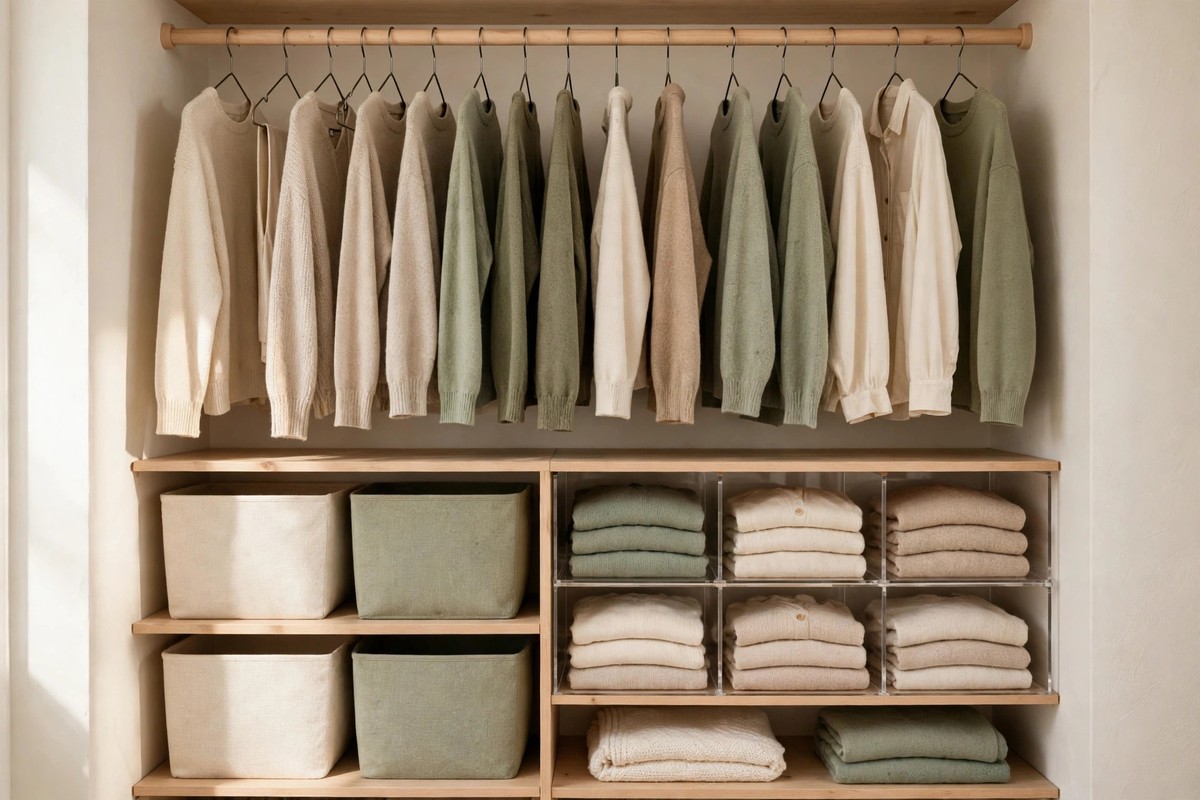
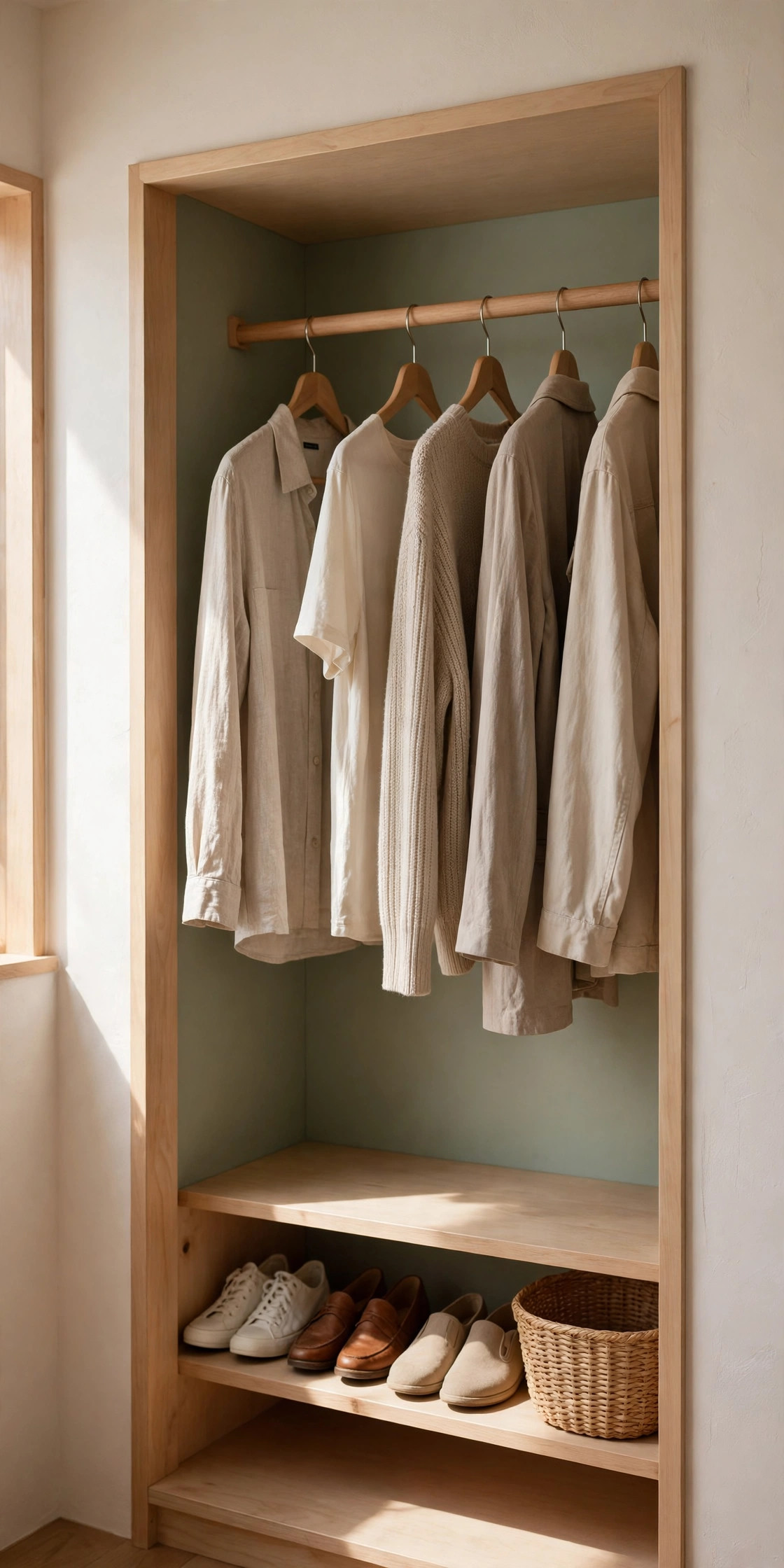
Divide the 48 inches of rod space on purpose. A layout that works well uses about 30 inches for tops and folded-over pants, and about 18 inches for dresses, a jacket, and longer items at one end.
Use the shelf above the rod. The top shelf, often 12 inches deep, suits folded sweaters, jeans, and off-season pieces in bins. Leave at least 2 inches of clearance so bins slide out easily.
Claim the floor carefully. The floor under short clothes can hold a low shoe rack or two bins, about 10 to 12 inches tall. Leave space under dresses open so hems hang freely.
Keep 2 inches of breathing room. A rod packed edge to edge wrinkles clothes and slows mornings. A small gap at one end lets hangers slide.
4. Hang More in Less Space With Slim, Even Hangers
Switch to one hanger type. Mixed hangers waste space because thick plastic and wire hangers sit at different heights. Slim hangers, about 0.2 inches thick, line up evenly and can free several inches across a 48-inch rod.
Hang in a set order. Group clothes by type, then by color: sleeveless tops, short sleeves, long sleeves, pants, then dresses. A fixed order means an outfit can be built in under a minute.
Limit the rod to about 35 hangers. Eight tops, 5 bottoms, 2 dresses, and layers do not need more. When a new piece comes in, an old piece leaves.
5. Fold and Bin the Rest Without Losing Track
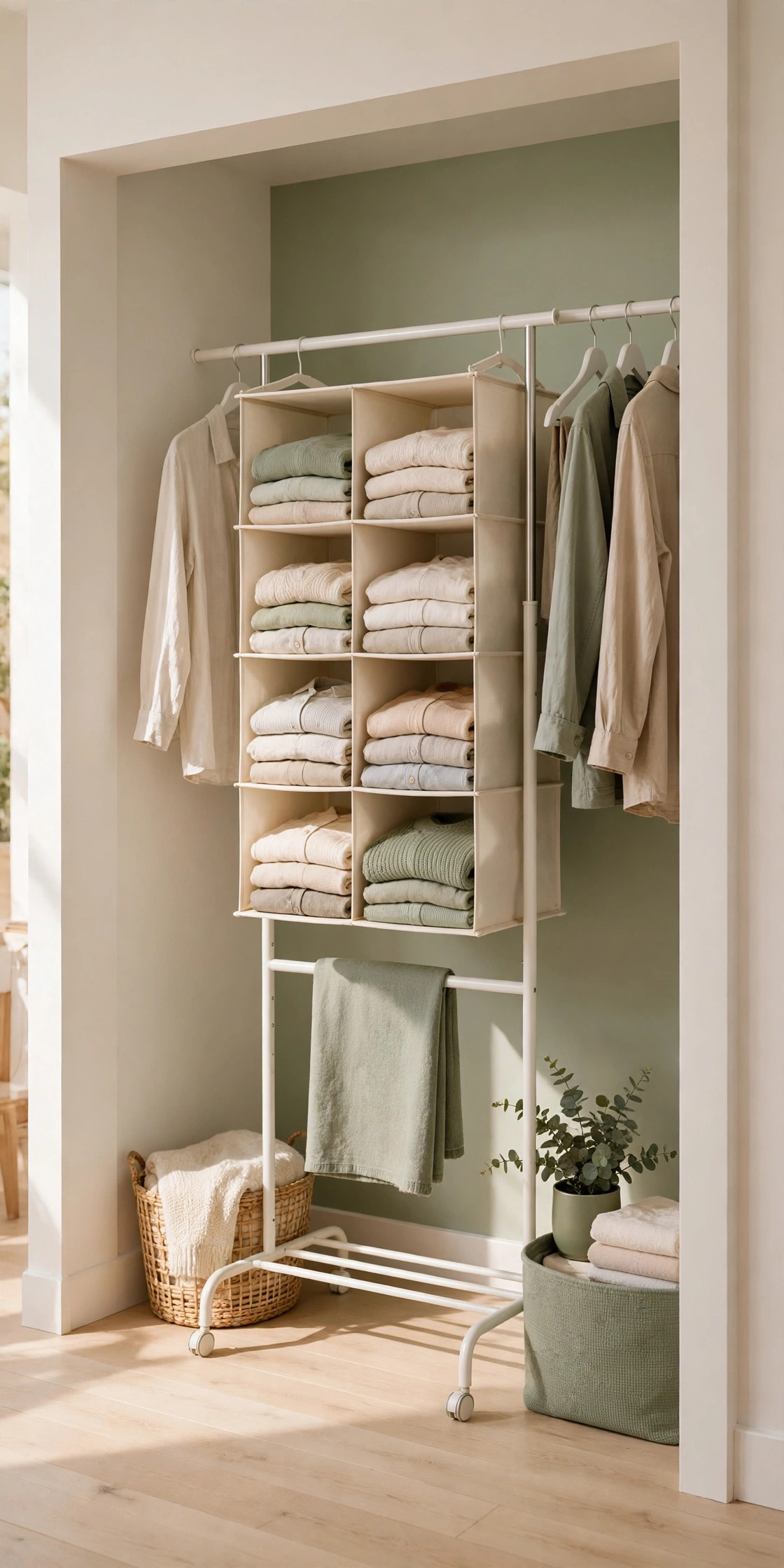
Fold knitwear instead of hanging it. Sweaters and heavy knits can stretch on hangers. Fold them in flat stacks of three or four on the shelf, with the thickest item at the bottom.
Give small items one bin zone. Underwear, socks, belts, and scarves fit well in divided bins. Sections roughly 3 to 6 inches wide keep pairs together and stop small items from spreading.
Rotate by season in one bin. Off-season pieces can share one labeled bin on the top shelf. If they need two bins, the wardrobe has grown past what 4 feet can hold well.
What to Buy
Velvet slim hangers, 50-pack — The slim profile saves rod space, and the velvet surface helps straps stay in place. They are less sturdy for very heavy coats. Typically $25–$40.
Linen/fabric folding storage bins, 3-pack — Soft sides fit shelves well for sweaters and off-season pieces. They hide contents, so labeling helps. Skip if clear bins are preferred. Typically $20–$30.
Clear acrylic shelf dividers, 6-pack — Dividers keep folded stacks upright on a 12-inch-deep shelf. They add no storage alone, so skip if the shelf holds bins instead. Typically $15–$22.
15-piece clear drawer bin set — Varied sizes sort socks, belts, and accessories without wasted gaps. The smallest bins can be too small for bulky items. Typically $10–$16.
Mistakes to Avoid
- Buying bins and hangers before editing, which locks in storage for clothes that should leave.
- Keeping pieces that only match one other item, since they break the mix-and-match math.
- Packing the rod with no sliding room, which causes wrinkles and slow mornings.
- Storing off-season clothes in more than one large bin inside a 4-foot closet.
Frequently Asked Questions
How many clothes do I need for 40 outfits?
Only 13 core pieces are needed: 8 tops and 5 bottoms that all pair together. Adding two dresses and a couple of layers brings the total to about 17 to 19 pieces. Shared colors matter more than a high piece count.
How do I fit a capsule wardrobe in a closet with no shelves?
Use the rod as the main zone and add a small bin stack on the floor under short clothes. Fold sweaters into a bin instead of a shelf stack. Keep the floor zone under 12 inches tall so hanging clothes stay clear.
What if I need work clothes and casual clothes?
Split the counts by use, for example five work tops with three work bottoms and three casual tops with two casual bottoms. Pieces that cross over, like dark jeans or a plain blazer, bridge both groups and keep the total low.
How often should I review a small capsule wardrobe?
A review every three months, or at each season change, is enough for most closets. It takes about 20 to 30 minutes. Remove what went unworn and swap the seasonal bin at the same time.
A 4-foot closet does not need to hold everything. It needs the right pieces, in the right counts, with room to see them all. Save this post to your closet board on Pinterest so the outfit math and layout are easy to find on your next closet reset day.