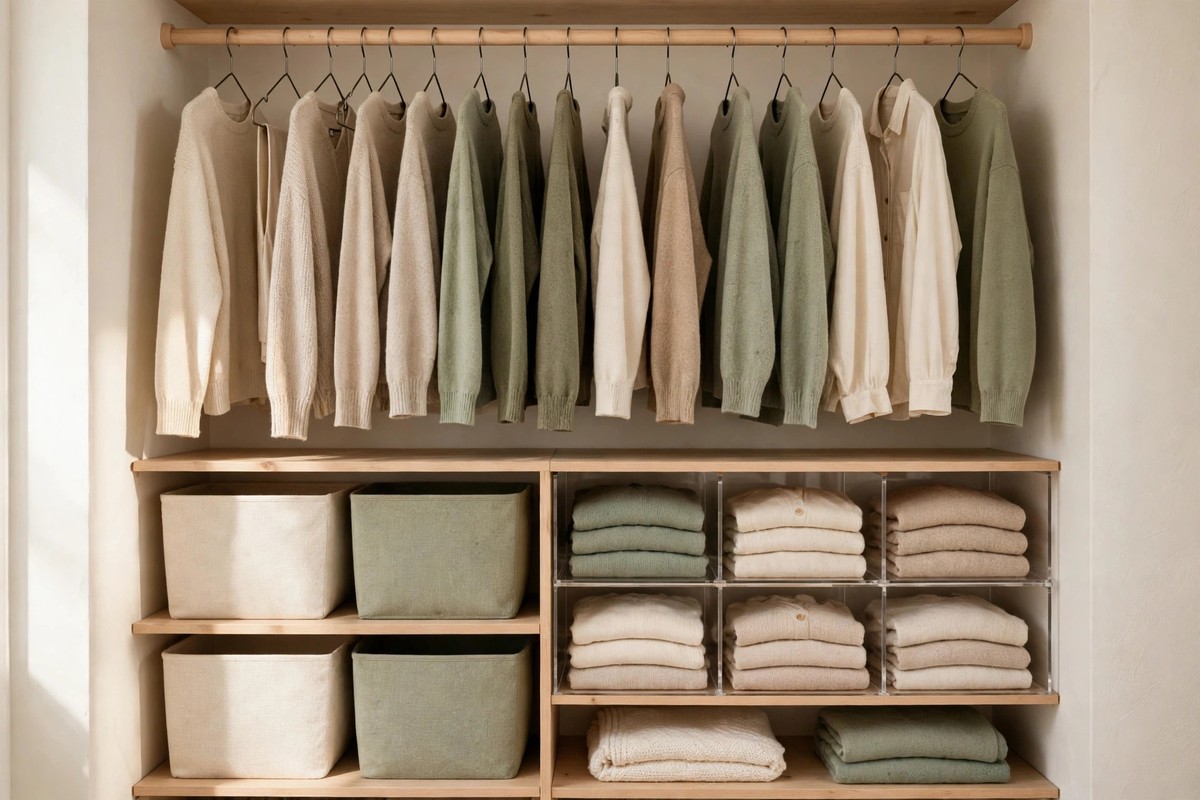
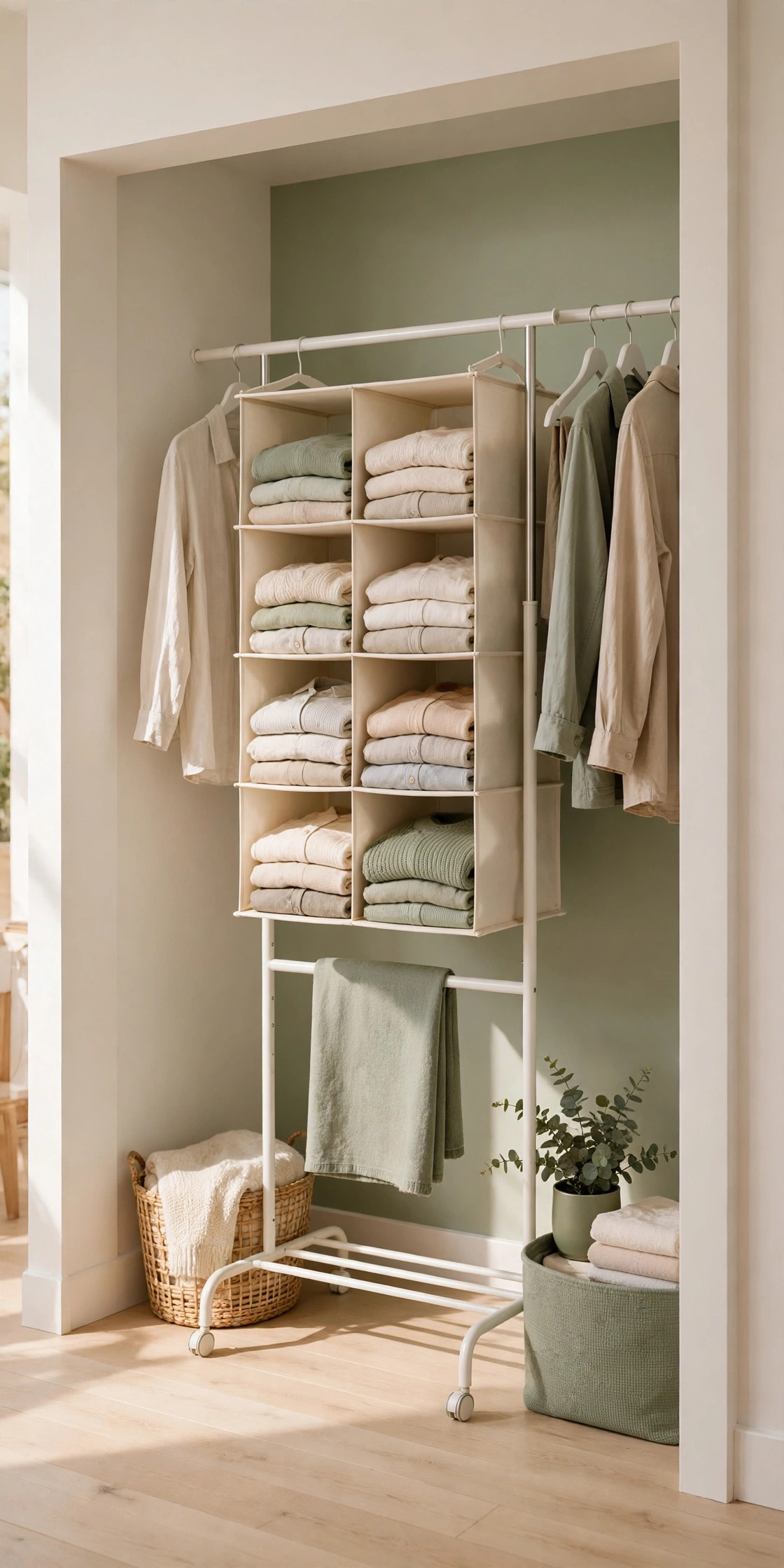
An open closet is always on display, so it needs a different plan than a closet that can hide behind a door. These closet with no door ideas use a curtain option, clear zones, and a uniform look to make the space feel tidy even when the curtain stays open.
Start by deciding how often the closet will be covered. A bedroom closet used twice a day may only need good zoning, while a closet facing a living area usually benefits from a curtain. Measure the opening in inches — width, height, and depth — before choosing a rod, track, or storage piece.
1. Closet With No Door Ideas for Curtains That Work
1. Hang a curtain on a tension rod. A tension rod fits inside the frame with no screws and suits openings about 36 to 60 inches wide. Choose a fabric panel about 1.5 times the width of the opening, so it falls in soft folds instead of stretching flat.
2. Use a ceiling track for a cleaner slide. A ceiling-mounted track lets a curtain glide across the full opening and stack to one side, which helps in tight rooms. It needs basic drilling, so it suits owners or long-term renters with permission, and setup usually takes 30 to 45 minutes.
3. Pick a fabric with some weight. Linen-look or cotton canvas panels block the view better than sheer fabric and wrinkle less than thin polyester. A hemmed bottom edge hangs straighter; in a high-traffic doorway, keep the panel about 1 inch off the floor to prevent dragging.
2. Zone an Open Closet So It Stays Tidy
4. Divide the closet into three clear zones. Use one side for hanging clothes, the center or opposite side for folded stacks and bins, and the top shelf for seasonal items. When each type has one home, the open view reads as ordered instead of mixed.
5. Keep the eye-level band the neatest. The shelf and rod section between about 36 and 60 inches from the floor is what gets seen most. Place the most uniform items there — matching bins and same-color hangers — and move bags and odd shapes to the top or bottom.
6. Leave a small amount of empty space. A shelf filled to about 80 percent looks calmer than one packed edge to edge. Leaving 4 to 6 inches of breathing room on the main shelf also makes bins easier to pull out without disturbing the stack beside them.
3. Create a Display Look With Uniform Pieces
7. Switch to one hanger style. Mixed wire, plastic, and wood hangers make even neat clothes look scattered. Slim hangers in one color create a single line along the rod and can free several inches in a 48-inch closet compared with bulky hangers.
8. Use matching bins on open shelves. Choose bins in one fabric and one color for every visible shelf, and label them on the front edge. Uniform bins hide varied contents — scarves, belts, and chargers — behind a calm, repeated shape.
9. Keep folded stacks short and divided. Limit sweater and T-shirt stacks to about 5 to 6 pieces, and use dividers to keep them upright. Tall stacks lean in an open closet, and a single leaning pile can make the whole opening look untidy.
4. Closet With No Door Ideas for Dust and Daily Upkeep
10. Close the curtain during the day. A closed fabric panel reduces the dust that settles on shelves and shoulders of clothes compared with a fully open closet. Shake or vacuum the curtain every 2 to 3 weeks, using a handheld vacuum for about 5 minutes.
11. Store off-season items in closed bins. Open shelves collect dust fastest on items that sit for months. Move off-season clothes, spare bedding, and keepsakes into lidded or zip bins on the top shelf, and keep only weekly items in open cubes.
12. Do a 5-minute weekly straighten. Once a week, re-hang fallen items, square up folded stacks, and return one stray bin to its zone. Because an open closet has no door to hide drift, short regular resets work better than a rare full reorganization.
What to Buy
Cube storage organizer creates defined zones in an open closet and gives folded clothes and bins a structured frame that looks intentional. Skip if the opening is under 36 inches wide, since the frame can crowd the hanging section. Typically $25–$40.
Linen and fabric folding bins bring a soft, uniform look to open shelves and fold flat when not in use, which suits renters. The con is that light colors show dust and scuffs sooner, so a mid-tone may be more practical. Typically $20–$30.
Velvet slim hangers give the rod a single, consistent line and the non-slip surface helps wide-neck tops stay in place. Skip if most clothing is heavy coats, since slim hangers are better for everyday shirts and pants. Typically $25–$40.
Clear shelf dividers keep folded stacks and bags upright on an open shelf, and the clear finish stays low-profile in a display-style closet. The trade-off is a thickness limit — very deep shelves over 16 inches may need a longer style. Typically $15–$22.
Hanging closet organizer adds shelves where there is only a rod, which is useful for shoes, sweaters, and accessories in a doorless layout. It can swing slightly when loaded unevenly, so balance heavier items toward the bottom. Typically $18–$28.
Mistakes to Avoid
- Choosing a sheer curtain that shows every outline and offers no visual calm.
- Mixing many bin colors, hanger types, and bag shapes on the most visible shelf.
- Filling every inch of shelf space, leaving no empty gap for the eye to rest.
- Ignoring dust by storing seasonal items loose and open on the top shelf.
- Blocking the curtain track or rod with tall storage placed in the opening.
Frequently Asked Questions
What is the cheapest way to cover a closet with no door?
A tension rod and a single fabric panel is usually the lowest-cost and fastest option, with setup in about 10 minutes and no holes to fill later. Choose a panel wider than the opening for full coverage.
How can an open closet look tidy without a curtain?
Rely on zoning and uniformity: one hanger style, matching bins, short folded stacks, and some empty space on the main shelf. If the contents look consistent, many open closets read as intentional storage rather than clutter.
Does an open closet get much dustier than a closed one?
It can collect more dust on open shelves and on the shoulders of hanging clothes, especially near a bedroom or entry. Closed bins for seasonal items, a daytime curtain, and a quick weekly wipe of the top shelf keep it manageable.
When is adding a door better than a curtain?
A door is worth considering for a closet that holds cleaning supplies, valuables, or strongly scented items, or in a home with pets that climb into open storage. A curtain remains the better pick for renters, tight swing space, or a wide opening where doors would block the room.
Without a door, a closet works best as a small display: a curtain for cover when needed, clear zones, and matching basics that make varied contents look calm. Start with the curtain or the hanger swap — either takes under an hour — then zone what remains. Save this post to your closet board on Pinterest so the zone plan is ready for the next reset.