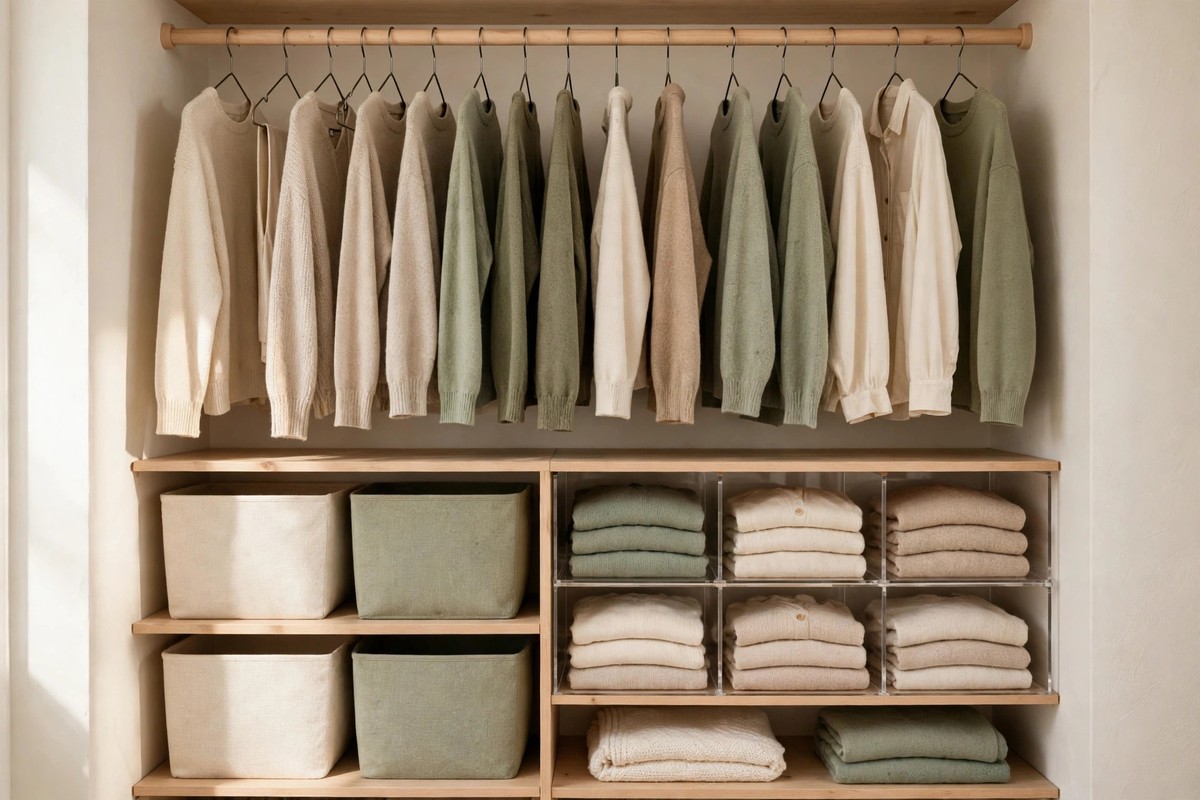
Children outgrow clothes, shoes, and storage needs faster than most closets can keep up with. The most useful kids closet organization ideas are not fixed systems built for one age. Flexible rods, open bins, and labels that can change in minutes let the same closet work for a toddler, a school-age child, and a teen.
A standard kids closet is often only 4 to 6 feet wide, with one high rod that young children cannot reach at all. The 12 ideas below are grouped into six sections, from reach height to size changes.
1. Kids Closet Organization Ideas That Start at Their Height
Idea 1: Add a second, lower hanging rod. A tension or mounted rod at about 28 to 32 inches suits toddlers and preschoolers, while a rod at 36 to 40 inches suits older children. Daily clothes on the low rod can be reached and hung up without help. The high rod stays free for coats and special outfits.
Idea 2: Put everyday clothes in open bins at floor level. Two or three open bins, each about 11 to 12 inches wide, hold pajamas, play clothes, and underwear where small hands can reach.
2. Sort in Ways Young Children Can Understand
Idea 3: Label bins with pictures plus words. A simple picture of a shirt, pants, or socks next to the word helps pre-readers sort correctly and gives early readers practice. Labels on the front of each bin, at child eye level, work better than labels on top.
Idea 4: Keep one category per bin or cube. Mixing tops, pants, and pajamas in one large bin turns every morning into a dig. Small, single-category bins take up the same total space but cut dressing time.
3. Kids Closet Organization Ideas for Sizes That Change Fast
Idea 5: Store the next size up in labeled top bins. Clothes one size ahead belong in 1 or 2 bins on the top shelf, labeled clearly by size, such as 5T or Size 7. When current clothes get snug, the next set is ready.
Idea 6: Keep a small outgrown box in the closet. A box about 12 by 12 inches gives too-small clothes a place to go the moment a tight fit is noticed. When the box fills, it can go to donation, storage, or a younger sibling. The box stops outgrown items from drifting back onto hangers.
4. Make School Mornings and Outfits Easier
Idea 7: Set up a five-outfit row for the school week. Five hangers or five cubbies, one for each school day, can be filled once on Sunday in about 15 minutes. Each spot holds a top, bottom, and underwear together.
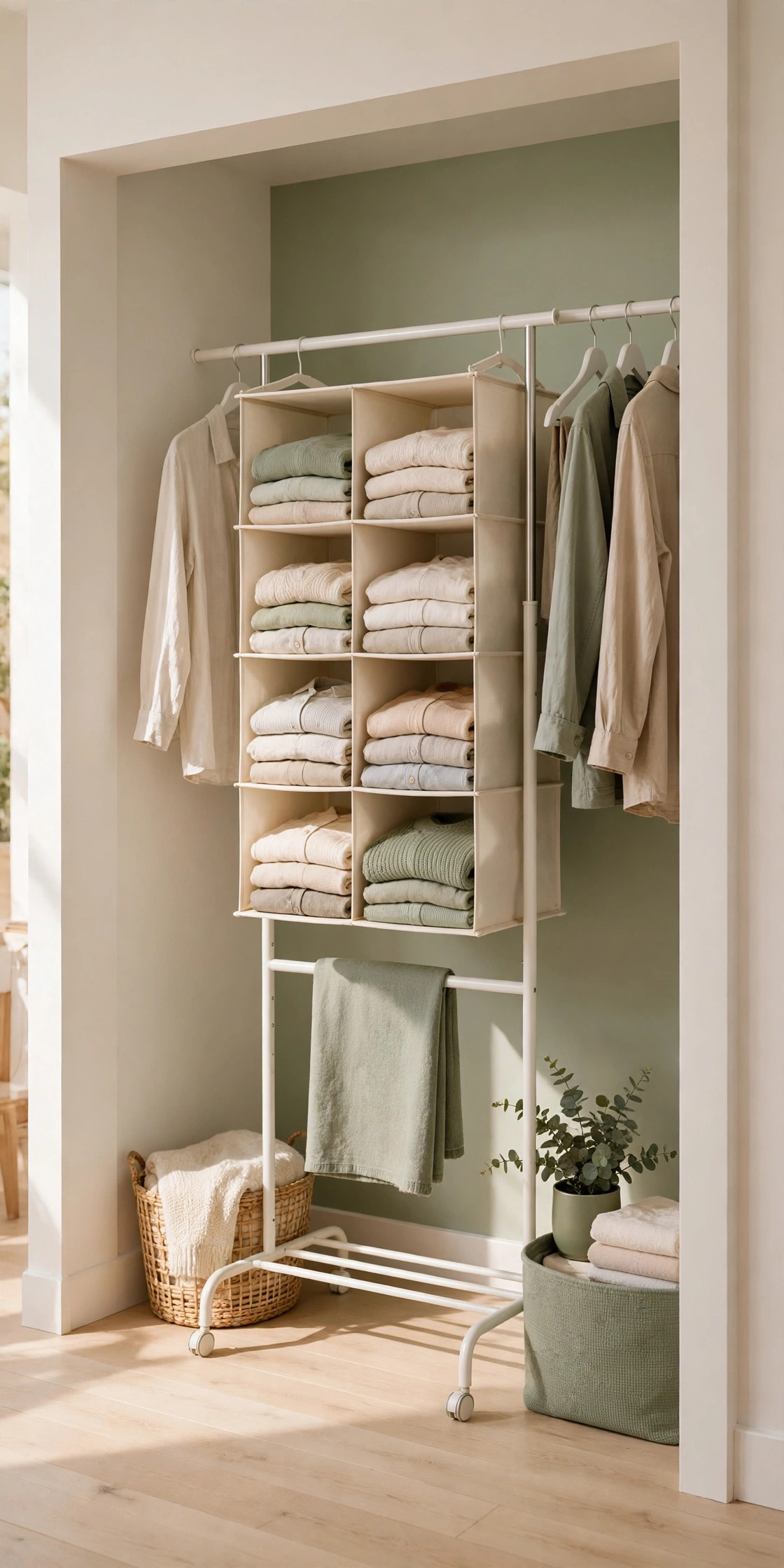
Idea 8: Use one hanging organizer for outfits and extras. A hanging organizer with 5 or 6 shelves, about 12 inches wide, gives each shelf a job: school clothes, sports gear, or weekend outfits. Shelves can be reassigned in minutes when activities change, with no tools and no new furniture.
5. Give Shoes and Small Items a Fixed Home
Idea 9: Limit shoes to one low row of 3 or 4 pairs. A low shelf or floor row fits the pairs in regular use: everyday shoes, school shoes, and one spare pair. Extra and out-of-season pairs belong in a labeled bin up high. A clear limit stops shoes from spreading across the closet floor.
Idea 10: Use door pockets for small, easy-to-lose items. Clear pockets inside the closet door hold socks, hair ties, belts, hats, and gloves in view. Each pocket is only about 5 to 6 inches wide, so items stay separated instead of forming one mixed pile in a drawer.
6. Leave Flexible Space for Changing Interests
Idea 11: Keep one empty growth zone on purpose. Reserve one shelf or cube, roughly 12 by 12 inches, with nothing assigned to it. That empty spot absorbs new hobbies, bulky hoodies, a sports bag, or a growing book collection.
Idea 12: Choose storage that can change jobs. Cubes that held folded baby clothes can later hold shoes, then bags or hats. Adjustable shelves that move in 2- to 4-inch steps and bins without fixed dividers adapt best. A quick review every 6 months, taking about 20 minutes, keeps each piece matched to current needs.
What to Buy
6-cube storage organizer, typically $25–$40. Pro: 11- to 12-inch cubes suit folded clothes, bins, and later, shoes or bags. Pro: cubes can change jobs as a child grows. Con: open cubes show mess, so bins help for small items.
Hanging closet organizer with 5–6 shelves, typically $18–$28. Pro: adds shelves without drilling and suits weekly outfit planning. Pro: it folds away if the closet layout changes. Skip if hanging space is already tight, as it uses about 12 inches of rod width.
Linen/fabric folding storage bins, 3-pack, typically $20–$30. Pro: soft bins fit cubes neatly and are light for children to pull out. Con: fabric sides can slump when bins hold only a few small items.
Kid-size slim hangers, typically $10–$18. Pro: slim shape fits small shoulders and saves rod space compared with adult hangers. Con: skip if a teen wardrobe is only a year away, as adult slim hangers may be the better next step.
Over-the-door pocket organizer, typically $10–$18. Pro: clear pockets keep socks, belts, and hair items visible in a space about 4 inches deep. Skip if the closet door does not close fully with hooks fitted.
Pro Tips
- Review sizes at the start of each season. A 20-minute check catches tight clothes before the closet fills with items that no longer fit.
- Keep special outfits and coats on the high rod, out of daily reach, so everyday tidying stays simple for young children.
- Place a small laundry basket just inside the closet door. Dirty clothes land in one spot instead of on the closet floor.
- Photograph the tidy layout and keep the photo on the closet door as a simple guide for putting things back.
Frequently Asked Questions
How do I organize a kids closet with no extra money for furniture?
Start with height and sorting, which cost nothing. Move daily clothes to the lowest rod or shelf, group clothes by category in any boxes already at home, and add paper picture labels. The outgrown box system alone can free a full shelf in many closets.
What height should a closet rod be for a young child?
A rod at about 28 to 32 inches works for most toddlers and preschoolers, and 36 to 40 inches suits many early school-age children. The right test is simple: a child should reach hangers without standing on toes. Tension rods make later height changes easy.
How can siblings share one small closet fairly?
Give each child a clear zone, such as one rod section and 2 or 3 bins or cubes, labeled by name or color. Shared items like coats go in a middle zone.
How often should a kids closet be reorganized?
A light review every 6 months fits most growth patterns, with a quick size check at each season change. Full reorganizing is rarely needed if bins and shelves can change jobs. Most reviews take 20 to 30 minutes when the outgrown box is already in use.
A kids closet works best when nothing in it is permanent except the habit of reviewing it as needs change. Start with the low rod and one labeled bin, then add the growth zone. Save this post to a kids rooms board on Pinterest for later, so all 12 ideas are ready before the next size change arrives.