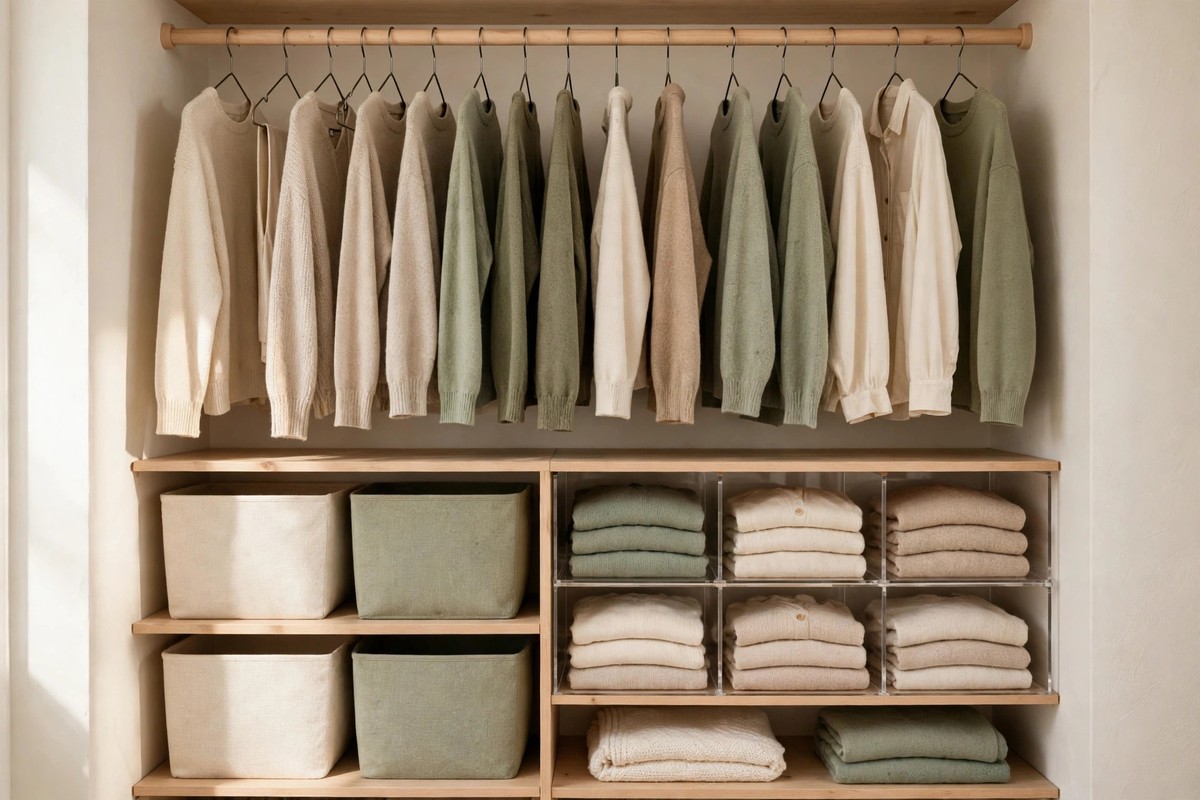
A nursery closet has to hold a lot in a small footprint: clothes in six sizes, blankets, diapers, and bulky gear that does not fit anywhere else. These nursery closet organization ideas sort everything by size and use, so the current size is easy to grab and the next size is ready without a full re-sort.
Start by emptying the closet and grouping clothes by size, not by type or color. Most nursery closets are 4 to 6 feet wide and 24 inches deep. Measure rod length and shelf width in inches before buying bins.
1. Nursery Closet Organization Ideas for Hanging by Size
1. Sort hanging clothes by size first. Group outfits in order: 0–3, 3–6, 6–9, 9–12, 12–18, and 18–24 months. Hang only the current size and the next size on the main rod, and store later sizes in a labeled bin up high.
2. Add a second rod below the first. Baby clothes are only about 12 to 16 inches long, so one tall rod wastes the space below. A tension rod or add-on rod set about 32 to 34 inches from the floor doubles hanging space with no drilling in many closets.
3. Use rod size dividers. Place a divider between each size group, labeled by month range. This prevents a 6-month outfit from getting lost among newborn pieces and makes it clear at a glance what still fits.
2. Make Shelves and Drawers Work for Small Items
4. Divide drawers for socks, hats, and bibs. Small items disappear in a deep drawer. Use trays about 3 to 4 inches wide for socks and hair accessories, and keep one tray per category so pairs stay together.
5. File-fold onesies and sleepers. Fold each piece into a small rectangle and stand it upright in a drawer or bin, like files in a folder. An 11-inch bin holds about 15 to 20 folded onesies, with every pattern visible.
6. Keep only the daily basics at waist height. Place onesies, pants, and sleepers on the shelf or drawer closest to waist level. Move dress clothes, extra blankets, and seasonal items to the top shelf or bottom corners, where slower access is fine.
3. Nursery Closet Organization Ideas for Diapers and Backstock
7. Store diaper backstock on the top shelf. Diapers are bulky but light, which makes the high shelf a good fit. Keep 1 open pack at changing height and store extra packs above, grouped by size so an outgrown size is easy to spot.
8. Give wipes and creams one small bin. Use a single bin about 10 by 6 inches for wipes refills, diaper cream, and nail clippers. Keep small items and any cords stored well away from the crib area, in the closed closet zone only.
9. Use the closet floor for big gear. Reserve the floor, which is often about 24 inches deep, for bulky items such as a spare stroller organizer, carrier, or diaper bag. Keep the center clear so bins above can be reached without moving gear first.
4. Build a Rotation System for Outgrown Clothes
10. Keep one open outgrown bin. Place one empty labeled bin on a low shelf. Each time an outfit feels snug, drop it in right away instead of mixing it back with clothes that fit.
11. Label rotation bins by size range. Use clear labels such as Outgrown 0–6 Months and Next Size 12–18 Months. Store sealed rotation bins on the top shelf or under the crib, and keep only one active bin in the closet at a time.
12. Review sizes every 2 to 3 months. Babies move through early sizes quickly. A short review moves the next size down to the rod, shifts outgrown pieces to storage, and prevents duplicate buying.
5. Choose Systems That Adapt as the Child Grows
13. Pick cube storage over fixed shelves. An 11-inch cube unit can hold folded clothes now, then books, toys, and shoes later. The same unit can shift to toddler use without replacement.
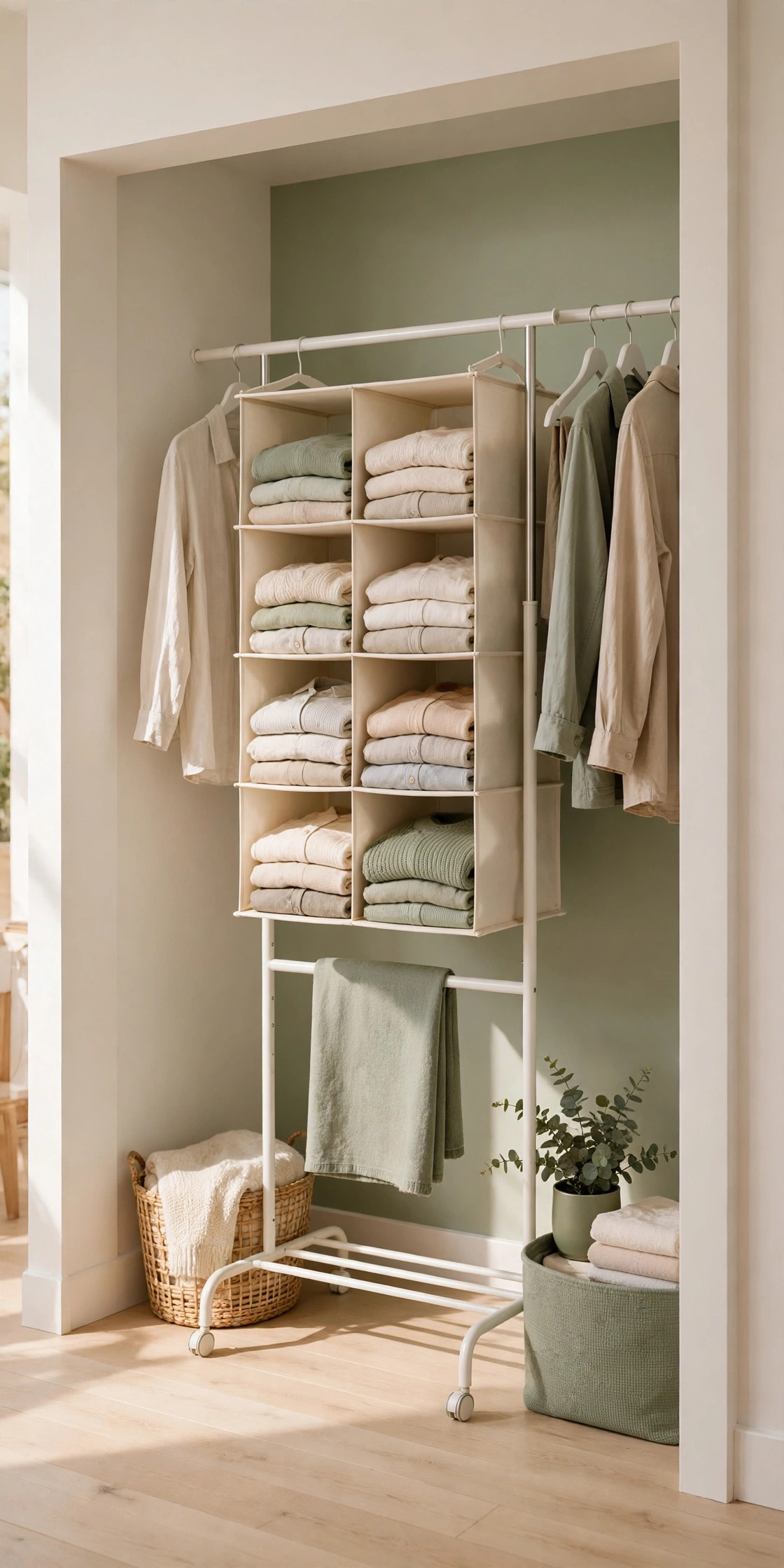
14. Use a hanging organizer for soft items. A 5- to 6-shelf hanging organizer, about 12 inches wide, holds blankets, burp cloths, and sleep sacks. As the child grows, the same shelves can hold sweaters, bags, or folded jeans.
15. Leave one zone empty on purpose. Keep about 12 inches of rod or one shelf free for growth: larger coats, dress clothes, and eventually hangers in a bigger size. A closet packed to 100 percent has no room for the next stage.
What to Buy
Hanging closet organizer, 5–6 shelves adds instant vertical storage for blankets, sleep sacks, and folded clothes, and it hangs from the existing rod with no tools. The con is sagging under heavy items, so keep it to soft goods only. Typically $18–$28.
Cube storage organizer gives flexible 11-inch cubes that work for clothes now and toys or books later, which makes it a longer-term buy. Skip if the closet is under 36 inches wide, since the frame will crowd out hanging space. Typically $25–$40.
Fabric folding bins with labels keep rotation and backstock tidy, and the label window makes size groups easy to identify at a glance. The trade-off is a softer shape that can bulge when overfilled. Typically $20–$28.
Acrylic drawer trays set separates socks, bibs, and small accessories inside a dresser or closet drawer, and the clear sides make contents easy to see. Skip if drawers are shallower than 3 inches, since taller trays will not close. Typically $15–$25.
Closet rod size dividers for baby clothes mark each month range directly on the rod, which keeps the size system working even after laundry day. The con is a limited label range, so check that the set covers 0 to 24 months. Typically $8–$14.
Mistakes to Avoid
- Sorting by color or outfit type instead of by size, which hides what actually fits.
- Buying bins before measuring shelf depth — most nursery shelves are 12 to 16 inches deep.
- Packing every size onto the rod at once, leaving no room to see the current size.
- Storing outgrown clothes loose with no labeled rotation bin.
- Placing small items, cords, or loose accessories within reach of the crib instead of in a closed closet zone.
Frequently Asked Questions
How many clothes should stay on the nursery closet rod?
Keep the current size and the next size on the rod, usually about 20 to 30 pieces. Later sizes make daily dressing slower, so store them in a labeled bin.
What is the best way to store outgrown baby clothes?
Use one open bin in the closet for pieces as they are outgrown, then transfer full bins to labeled storage by size range. This avoids a large sorting job later and keeps a clear record of what is saved.
Can a nursery closet work without a dresser?
Yes, if hanging space is doubled with a second rod and folded items go into cubes or a hanging organizer. Add drawer trays on a shelf for socks and small items to replace the top dresser drawer.
How can a nursery closet adapt for a toddler?
Lower one rod to about 30 inches so a toddler can reach a few everyday outfits, move bins to the floor level, and shift the cube unit to toys and shoes. The same organizers can stay in place.
A good nursery closet is really a size system, not just storage: current clothes within reach, the next size labeled and ready, and outgrown pieces rotating out in one bin. Set up the zones once, then maintain them in short 10-minute reviews. Save this post to your nursery board on Pinterest so the full checklist is ready before the next size change.