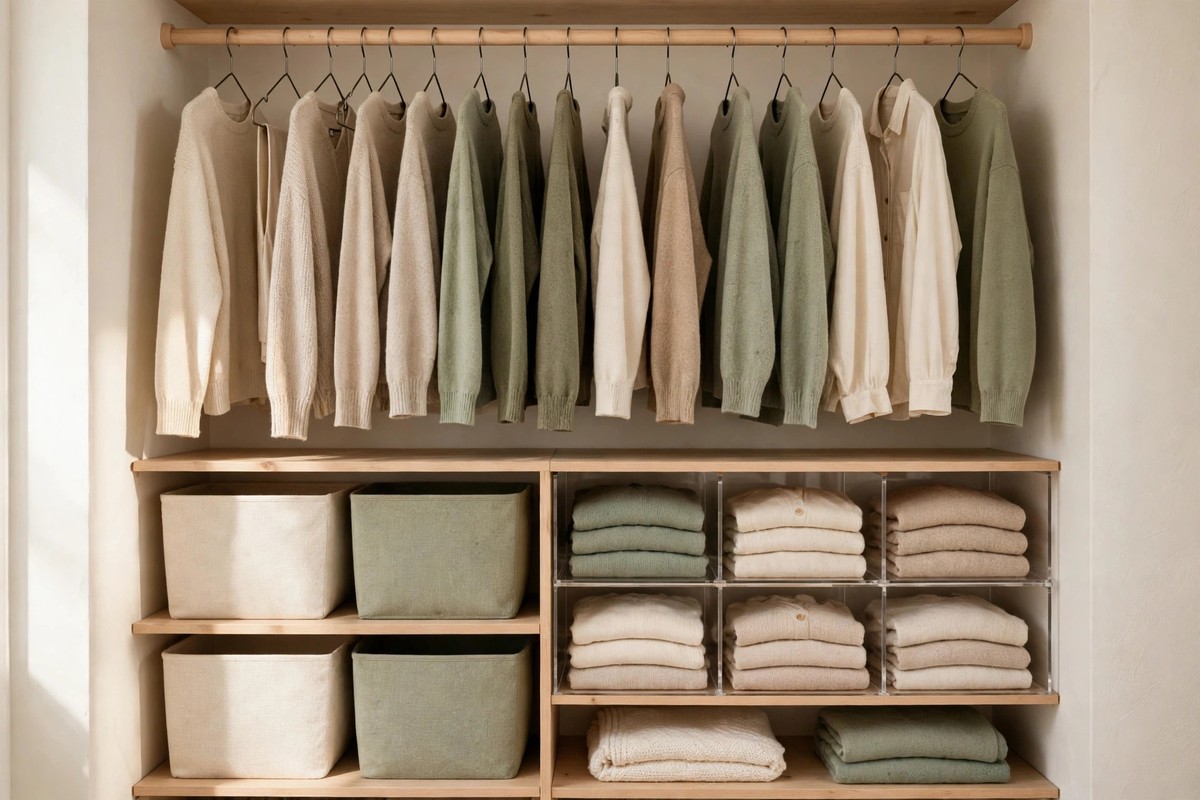
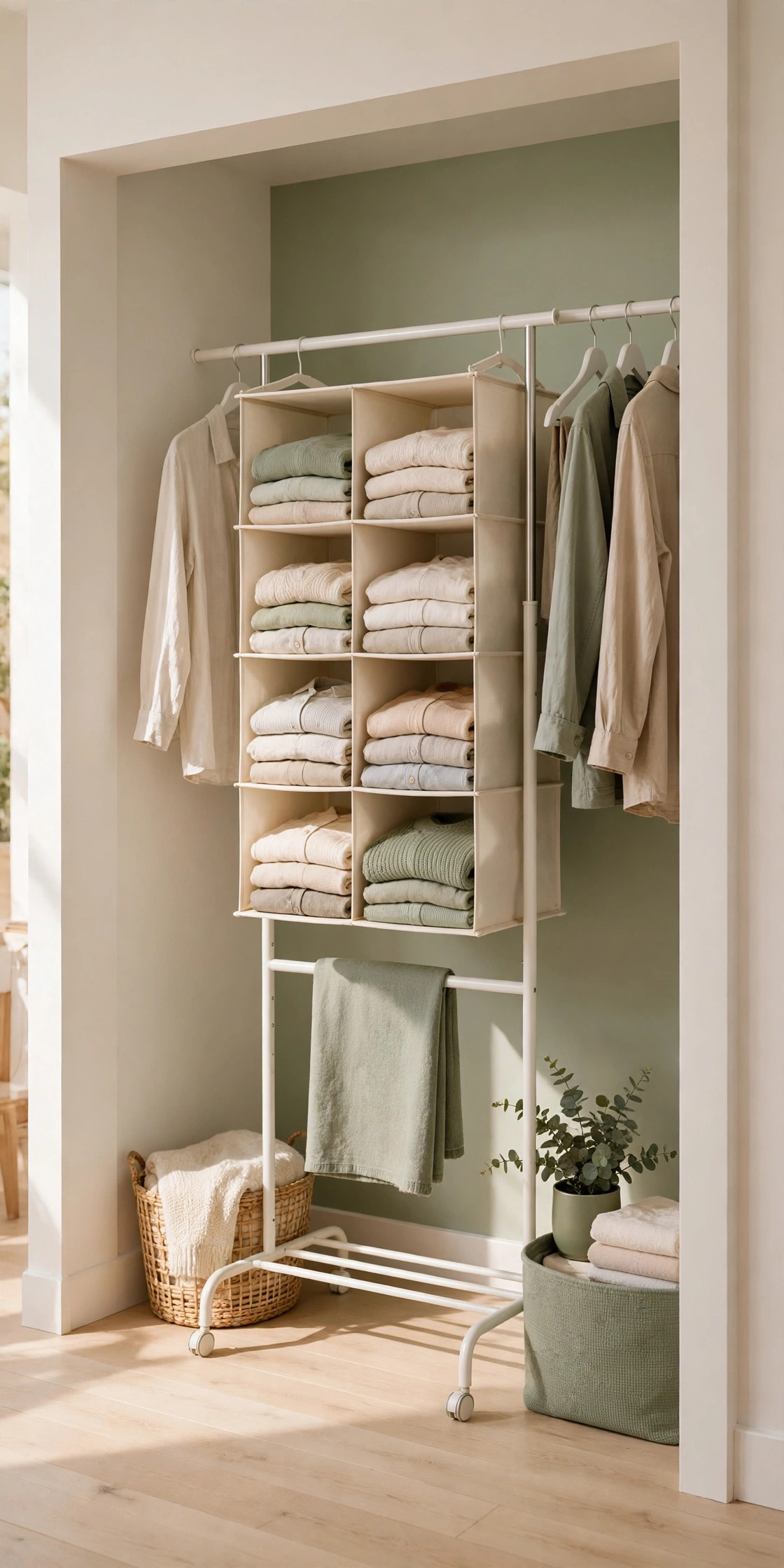
A hallway linen closet that is only as wide as a door, often 24 to 30 inches across, can feel too small for towels, sheets, and spare bedding. Learning how to organize a linen closet like this is less about adding more storage and more about folding to the right size, giving each shelf one clear job, and keeping rows short so nothing gets buried at the back.
Most narrow closets are also shallow, about 12 to 16 inches deep. Deep piles waste that space and hide the bottom items for months. A full reset usually takes 90 minutes to 2 hours, and a tidy-up after that takes about 10 minutes.
1. Measure First and Empty the Closet Completely
Measure in three places. Record the inside width, shelf depth, and the height between shelves, in inches. That small gap decides whether a bin slides in or gets stuck.
Empty every shelf onto a bed or table. Sorting is faster when all towels and sheets are visible at once. Group items into keep, wash, and donate piles.
2. How to Organize a Linen Closet Shelf by Shelf
Use the top shelf for rare items. Spare duvets, extra blankets, and guest bedding belong up high because access is hardest there. Store only 1 or 2 bulky items on this shelf so lifting stays safe and nothing overhangs the edge.
Put daily items at eye and waist level. Bath towels, hand towels, and the sheet sets in regular use fit best on the middle 2 shelves. Reaching these shelves takes no stool and no stretching, so items are more likely to be put back neatly.
Keep heavy and cleaning items low. The bottom shelf or floor area suits bulk packs of tissues, cleaning cloths, and a small first-aid box.
3. Fold Everything to Fit the Shelf Width
File-fold bath towels. Fold each towel into thirds lengthwise, then in half, to make a neat packet about 10 to 11 inches wide. Stand packets side by side in a row instead of stacking 6 or 7 high.
Bundle each sheet set together. Fold the flat sheet, fitted sheet, and one pillowcase, then tuck the bundle inside the matching pillowcase. One bundle per set, about 10 by 12 inches, ends the search for missing pieces and saves real shelf space.
Roll small items in a shallow tray or bin. Washcloths and hand towels roll into rows of 6 to 8 in a bin about 5 inches high. Rolling stops small items from sliding into corners and makes low stock easy to spot.
4. Group by Job, Not Just by Item Type
Create a bath zone. Keep bath towels, hand towels, and washcloths together on one shelf section, sorted by person or by bathroom. A simple limit helps: 2 bath towels and 2 hand towels per person is enough for most laundry routines.
Create a bed zone. Store sheet bundles by bed size, with a small label for twin, queen, or king on the shelf edge.
Make one small guest and sick-day kit. A single bin can hold 1 spare sheet set, 1 towel, tissues, and extra toothbrushes.
5. How to Organize a Linen Closet Door and Side Walls
Add slim storage inside the door. Hooks or a shallow pocket strip under 4 inches deep can hold a lint roller, small scissors, and mesh wash bags. Check clearance first by closing the door with items in place, so pockets do not press into folded linens.
Use one side wall for flat items. A narrow wall strip of 6 to 8 inches can hold a hanging organizer for batteries, light bulbs, or sewing basics.
6. Keep Rows Short, Labeled, and Easy to Maintain
Follow a one-row-deep rule. On a shelf 12 to 16 inches deep, keep folded linens in a single front row with at most a short second row for spares. If an item cannot be seen, it rarely gets used and often gets bought twice.
Label shelf edges and bins. Plain labels such as Bath Towels, Queen Sheets, and Guest take about 15 minutes to add and remove guesswork for the whole household.
Reset for 5 minutes on laundry day. Return stray items, refold the top 2 or 3 pieces, and note anything running low. A short weekly reset prevents the slow slide back into mixed piles.
What to Buy
Foldable fabric storage bins, 6-pack, typically $20–$28. Pro: soft sides squeeze into a 24- to 30-inch width better than rigid boxes. Pro: bins fold flat when not in use. Con: soft walls sag when overfilled with heavy towels.
Cabinet shelf risers, typically $15–$25. Pro: a riser splits one tall shelf gap into two useful levels for hand towels and washcloths. Con: skip if shelf spacing is already under 10 inches, as each level becomes too short for folded towels.
Woven-look baskets, set, typically $18–$30. Pro: sturdy shape suits the guest and sick-day kit on an open shelf. Pro: handles help with sliding baskets out of a narrow space. Skip if exact width matters most, as basket walls are thicker than fabric bins.
Waterproof labels, typically $8–$15. Pro: labels survive damp towels and bathroom humidity without peeling. Pro: erasable styles allow quick changes when zones move. Con: small label packs may not cover every shelf and bin.
Vacuum storage bags for spare bedding, typically $20–$35. Pro: a spare duvet can shrink to about one-third of its folded size for the top shelf. Con: skip for bedding in weekly use, as sealing and reopening takes extra time.
Mistakes to Avoid
- Buying bins before measuring. A bin just 1 inch too wide will not fit a door-width closet, no matter how good the price looks.
- Stacking towels more than 4 or 5 high. Tall stacks lean, hide the bottom items, and topple when one towel is pulled out.
- Storing cleaning chemicals next to clean linens. Strong scents soak into fabric, and leaks can stain folded sheets.
- Keeping every spare set just in case. Extra sets beyond 2 per bed usually fill the shelves needed for daily items.
Frequently Asked Questions
How many towels and sheet sets does a household really need?
A practical target is 2 sets of sheets per bed and 2 bath towels per person, plus 1 guest set. That level covers laundry gaps without filling every shelf.
How do I stop fitted sheets from making a messy pile?
Fold the fitted sheet into a flat packet by tucking the corners into each other, then bundle it with the matching flat sheet inside a pillowcase. The bundle stays about 10 by 12 inches and stacks neatly. Labeling the bundle by bed size also helps.
What goes on the top shelf of a narrow linen closet?
Rarely used and light items fit best up high, such as spare blankets, guest bedding, and out-of-season duvets. Heavy boxes belong low down for safety. Keeping the top shelf to 1 or 2 bulky items prevents overhang and hard lifting.
How can a linen closet stay tidy when several people use it?
Clear zones and labels do most of the work, because everyone can see where an item belongs. Short rows help too, since there is only one obvious place to put a towel back. A 5-minute reset on laundry day fixes small messes before piles rebuild.
A door-width linen closet holds more than it first appears to, once folding, zones, and labels all match the actual width. Start with one shelf, then repeat the same system shelf by shelf. Save this post to a closet board on Pinterest for later, so the measurements and folding steps are ready on organizing day.