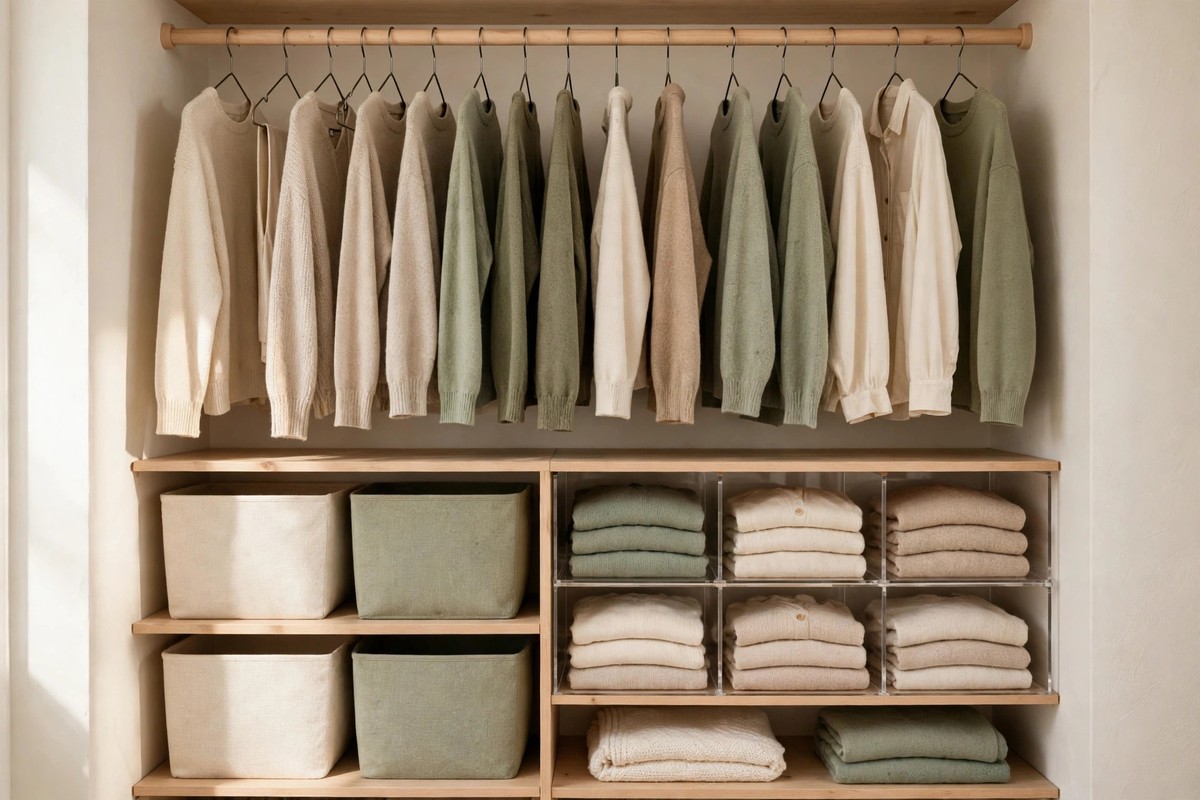
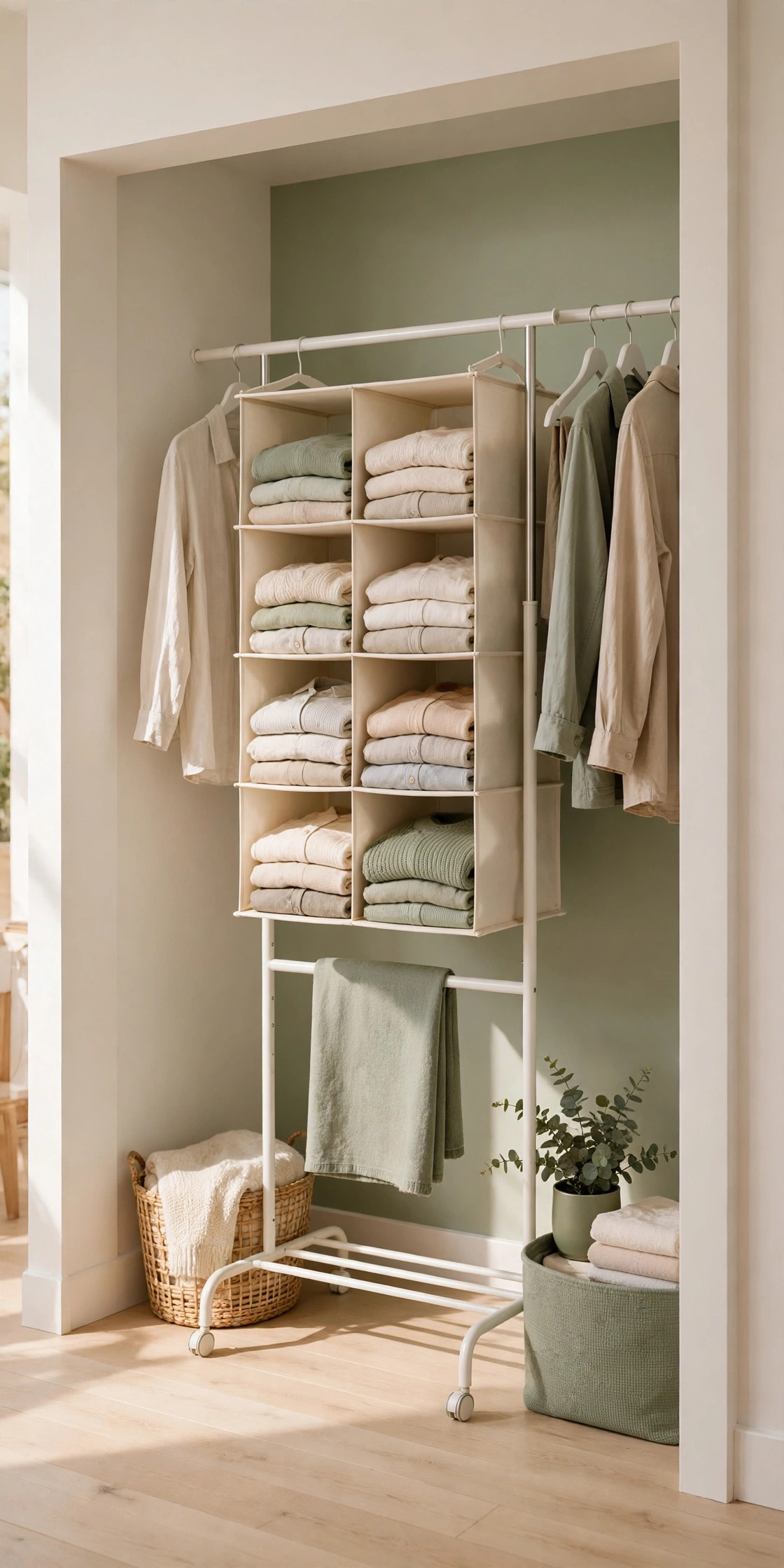
One closet, two wardrobes, and two different ideas of tidy is a common source of morning stress. Clothes creep across the rod, shoe piles merge, and one person ends up with three shelves while the other gets a corner. Learning how to organize a shared closet is less about perfect folding and more about a fair split that both people can keep up.
Start by emptying the closet fully, which usually takes 45 to 60 minutes for a standard 6- to 8-foot reach-in. Measure the rod length, shelf width, and drawer depth in inches before buying anything, then agree on the zones below before a single item goes back in.
1. How to Organize a Shared Closet Starts With Clear Zones
1. Split the closet into named zones. Give each person a defined side, such as left and right, and mark the boundary with a different hanger color or a strip of painter's tape on the rod. A visible line ends most debates about whose space is whose.
2. Protect the prime zone. The easiest space to reach is between waist and eye height, roughly 30 to 60 inches from the floor. Split that section evenly first, then assign high shelves and low floor space second, so neither person gets only the hard-to-reach spots.
3. Create one small shared zone. Reserve 12 to 18 inches for truly shared items, such as a steamer, spare hangers, or seasonal accessories both people use. Keep it narrow, since an oversized shared area quickly becomes a no-owner clutter zone.
2. Divide Rod, Shelf, and Drawer Space Fairly
4. Split the rod by inches, not by guess. Measure the full rod, then divide it based on what each person actually hangs. A wardrobe with 20 shirts and 10 dresses needs more rod than one with 15 T-shirts, so a 60/40 split can be fairer than an even one.
5. Use double hanging where height allows. If the ceiling side of the closet is about 80 inches or taller, two short rods hold shirts and pants in half the width of one long rod. Leave the long-hang section, about 60 inches of drop, for dresses and coats on one agreed side.
6. Assign shelves and drawers as whole units. Whole shelves are easier to respect than half shelves. If there are 4 shelves and 3 drawers, one workable split is 2 shelves each, with drawers divided by count of folded items, and the odd drawer used for shared linens or accessories.
3. How to Organize a Shared Closet for Shoes, Folded Clothes, and Small Items
7. Give folded clothes a height limit. Stacks of sweaters and jeans stay stable at 4 to 5 items high, about 8 to 10 inches. Taller stacks lean, mix across the boundary, and are hard to pull from the bottom.
8. Separate shoes by owner and frequency. Keep 3 to 4 pairs each in the closet for daily use, and move extra pairs to an over-the-door organizer or an under-bed bin. Mixing all shoes in one floor pile is the fastest route to a shared-closet argument.
9. Use one bin per person per category. Matching bins for gym clothes, scarves, or pajamas keep small items from drifting. Two bins per person is usually enough for a reach-in closet, and a simple name label takes about 10 minutes to add to every bin.
4. Shared Rules That Keep the Peace
10. Follow the no-creep rule. If an item crosses the boundary, it moves back the same day, no comment needed. Treat it like a parking line: quiet, consistent returns work better than a weekly complaint about one stray sleeve.
11. Agree on one-in, one-out. When a new shirt, pair of shoes, or bag comes in, a similar item leaves the closet. In a shared space, total volume matters more than whose item it is, because overflow always lands on both sides.
12. Do a 10-minute weekly reset together. Once a week, return strays, straighten stacks, and check the floor. Ten minutes at the same time each week prevents the slow slide that turns a working system back into a shared mess.
What to Buy
Hanging closet organizer shelves add 5 to 6 cubbies from the rod with no tools, which suits folded clothes when drawer space runs out. The trade-off is lost hanging length, so skip if rod space is already tight. Typically $18–$28.
Velvet slim hangers, 50-pack create a uniform, thin line of hangers that saves several inches of rod space and stops shirts slipping off. The con is that heavy coats can bend them, so keep sturdy hangers for outerwear. Typically $25–$40.
Clear acrylic shelf dividers clip onto shelves to keep sweater and bag stacks upright and inside each person's zone. Skip if shelves are thicker than the clip opening or made of wire, where dividers may not grip. Typically $15–$22.
Fabric folding bins with labels give each person matching storage for small categories, and the label slot makes ownership clear at a glance. The downside is soft sides, so they hold folded items better than heavy shoes. Typically $20–$28.
Over-the-door shoe organizer moves 12 to 24 pairs off the floor into clear pockets, freeing the most argued-over space in the closet. Skip if the door cannot close with the hooks fitted, and test the clearance first. Typically $10–$18.
Mistakes to Avoid
- Claiming space item by item instead of agreeing on zones before anything goes back in.
- Splitting every shelf in half, which creates two cramped halves instead of usable whole units.
- Storing one person's overflow on the other person's side "just for now."
- Buying matching organizers before measuring rod length, shelf width, and drawer depth.
- Letting the closet floor become shared storage for shoes, bags, and laundry at once.
Frequently Asked Questions
What is a fair way to split a shared closet?
Split by need, not just by half. Count hanging items and folded items for each person, then divide rod inches and whole shelves in a similar ratio. A 60/40 split based on real wardrobe size usually holds up better than a strict 50/50 line.
How can roommates organize a shared closet without buying furniture?
Use the existing rod and shelves, mark a clear boundary, and add only low-cost helpers such as slim hangers, bins, and a door organizer. Most reach-in closets can be zoned in under an hour with no tools and no new furniture.
What should go in the shared zone of a closet?
Keep it small and truly shared: spare hangers, a lint roller, a steamer, or extra bedding. If only one person uses an item, it belongs in that person's zone, even if space there is tighter.
How often should a shared closet be reset?
A joint 10-minute reset once a week is enough once zones are set. Add a bigger swap at each season change to move off-season clothes out and free prime space for daily items.
A shared closet stays calm when the split is visible, the rules are simple, and both people can reach their daily clothes without moving the other person's things. Measure first, agree on zones, and keep the weekly reset short. Save this post to your closet board on Pinterest for later, so the zone plan is ready before the next closet clean-out.