The best mug and dish storage ideas start with a simple truth: most cabinets are half empty, even when they look packed. Glasses sit in a single row under 6 inches of wasted air, mugs crowd one shelf, and plates stack so high that the bottom one is never used.
The 15 ideas below fix that without a remodel. Most take 10 to 30 minutes and many cost nothing. Measure cabinets in inches before buying anything, then work through the ideas in order.
1. Mug and Dish Storage Ideas That Start With Less
1. Count what is actually used each week. Set out the mugs, glasses, and plates used in a normal week. In many homes that is 4 to 6 mugs and 6 to 8 glasses. Keep the weekly set in the main cabinet.
2. Move extras and duplicates out of the prime zone. Party glasses, holiday mugs, and spare plates can go in a labeled bin on a high shelf or in a closet. This one step often frees 8 to 12 inches of shelf width in the everyday cabinet.
2. Add a Second Layer Inside the Cabinet
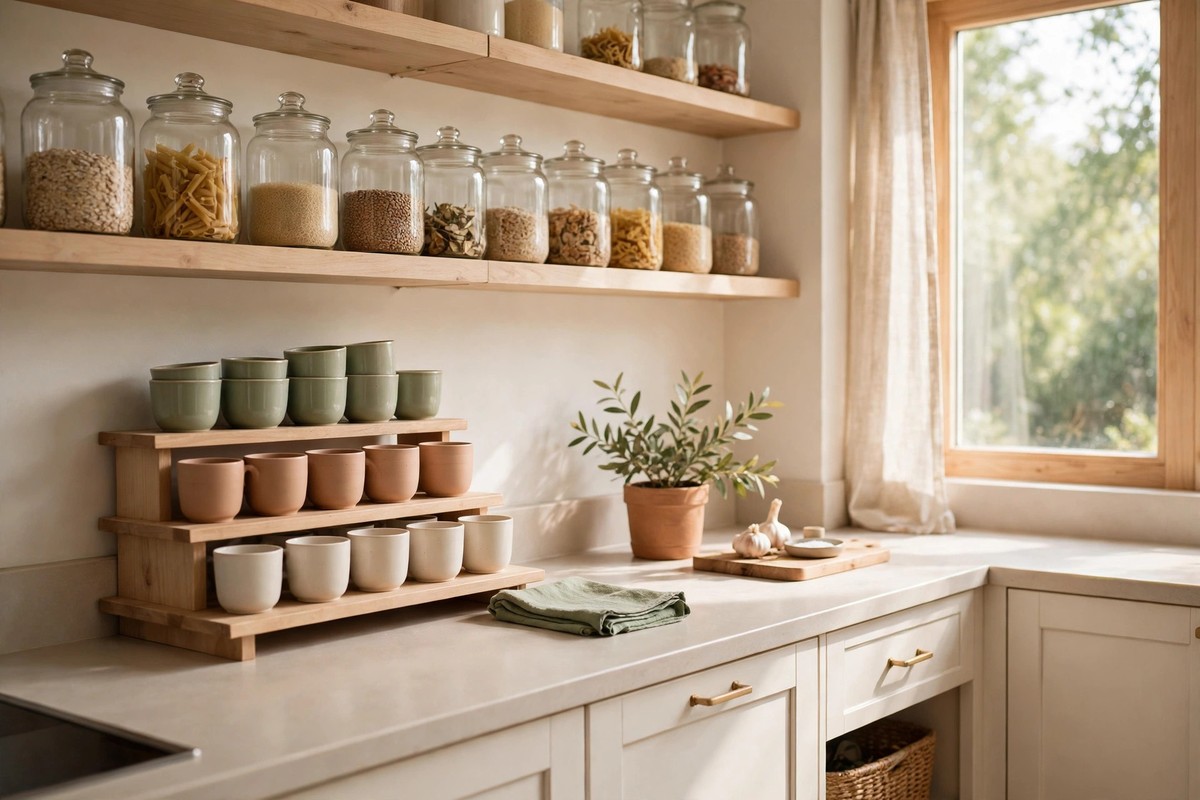
3. Use a shelf riser for glasses. A riser about 10 to 12 inches wide creates two levels in a tall cabinet. Short tumblers go underneath and taller glasses on top. Measure first, since riser legs need about 6 to 7 inches of clearance below.
4. Double-stack only sturdy, same-size items. Small bowls and identical mugs can stack two high safely. Mixed sizes and delicate glass should not be stacked, since uneven weight causes chips. A stack of two is the practical limit for daily use.
5. Turn plates on their side in a vertical rack. A file-style holder stores plates upright in slots about 1 to 2 inches apart. Plates slide in and out one at a time, and 8 plates take roughly 8 to 10 inches of width instead of a tall, heavy stack.
3. Mug and Dish Storage Ideas for Walls and Doors
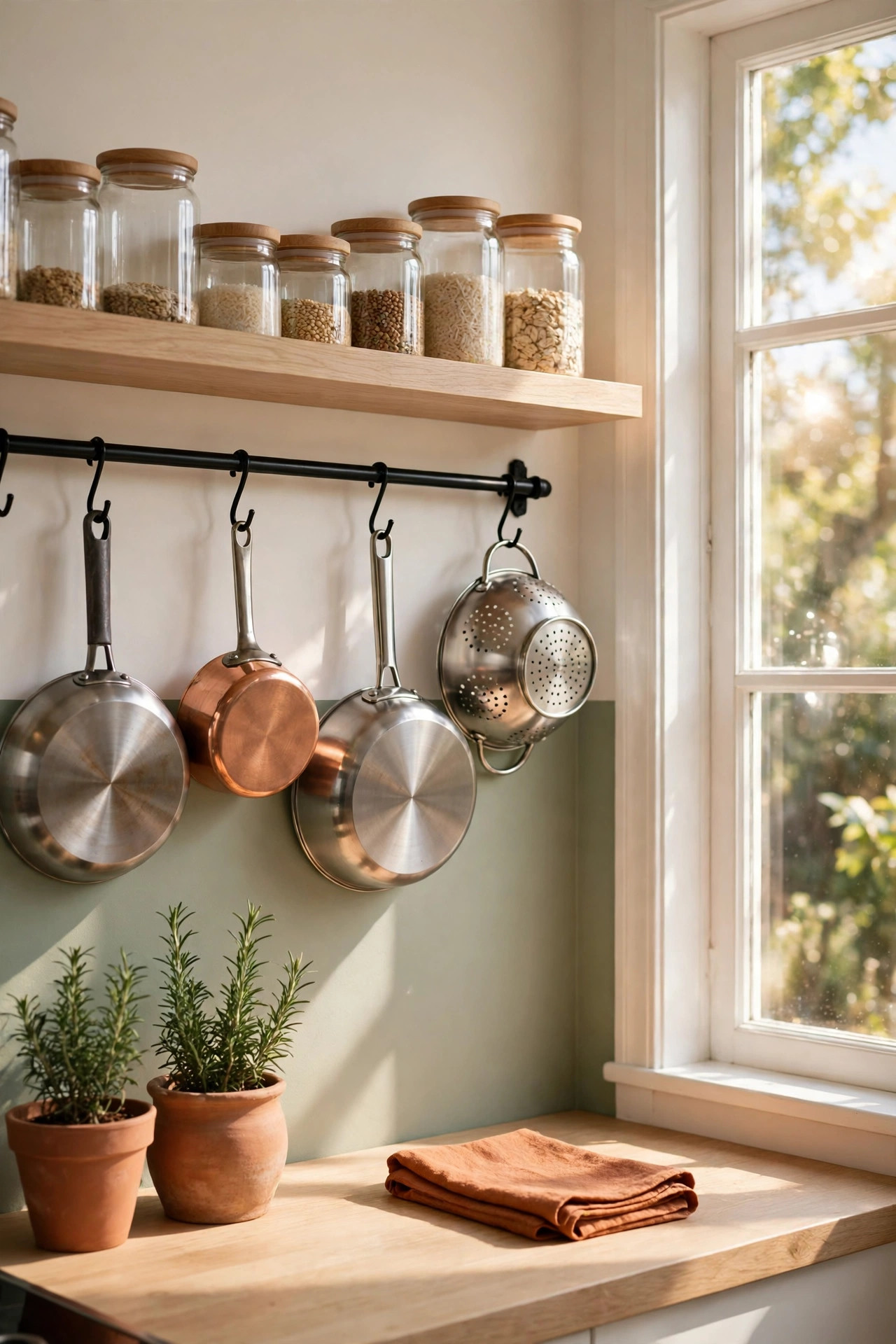
6. Hang mugs on an under-cabinet hook rail. A rail under a cabinet holds 4 to 6 mugs in space that is normally empty. Hang mugs by the handle with about 3 inches between hooks so they do not knock together when removed.
7. Use the inside of a cabinet door for small items. A slim door rack or a few adhesive hooks can hold bottle openers or lightweight lids. This clears the shelf edge so plates and glasses sit deeper and safer.
8. Add a short wall shelf for daily mugs. A shelf 18 to 24 inches long near the coffee or tea area holds the 4 mugs used most. Keeping daily mugs out of the cabinet leaves more room for glasses and plates inside it.
4. Store Glasses So They Stay Safe
9. Store everyday glasses rim-up in a single layer. A single layer on a riser or shelf is easier to grab and less likely to chip than a double row. Leave about 1 inch between the top of the glass and the shelf above for a safe grip.
10. Keep stemware separate and upright. Wine glasses take more room and break more easily than tumblers. Give them one back section of a shelf, stored upright, with at least 1 inch between glasses. If stemware is rarely used, a padded box on a high shelf is safer.
11. Line the shelf with a non-slip liner. A cut-to-fit liner keeps glasses and plates from sliding when a door closes hard. Most cabinets need one roll cut into 12-inch sections, a job that takes about 15 minutes.
5. Fix the Dish Zone Near the Sink
12. Use an over-sink drying rack as daily storage. Dishes washed daily can live on the rack instead of going back into a crowded cabinet. A rack over a standard 30- to 36-inch sink holds plates in upright slots and cups on side hooks, and the cabinet gains a full shelf.
13. Keep one clear landing zone for unloading. Leave a 12-inch section of counter or shelf empty beside the dishwasher or sink. An empty landing zone stops clean dishes from being stacked on stored ones, where many chips happen.
6. Mug and Dish Storage Ideas for Deep Cabinets
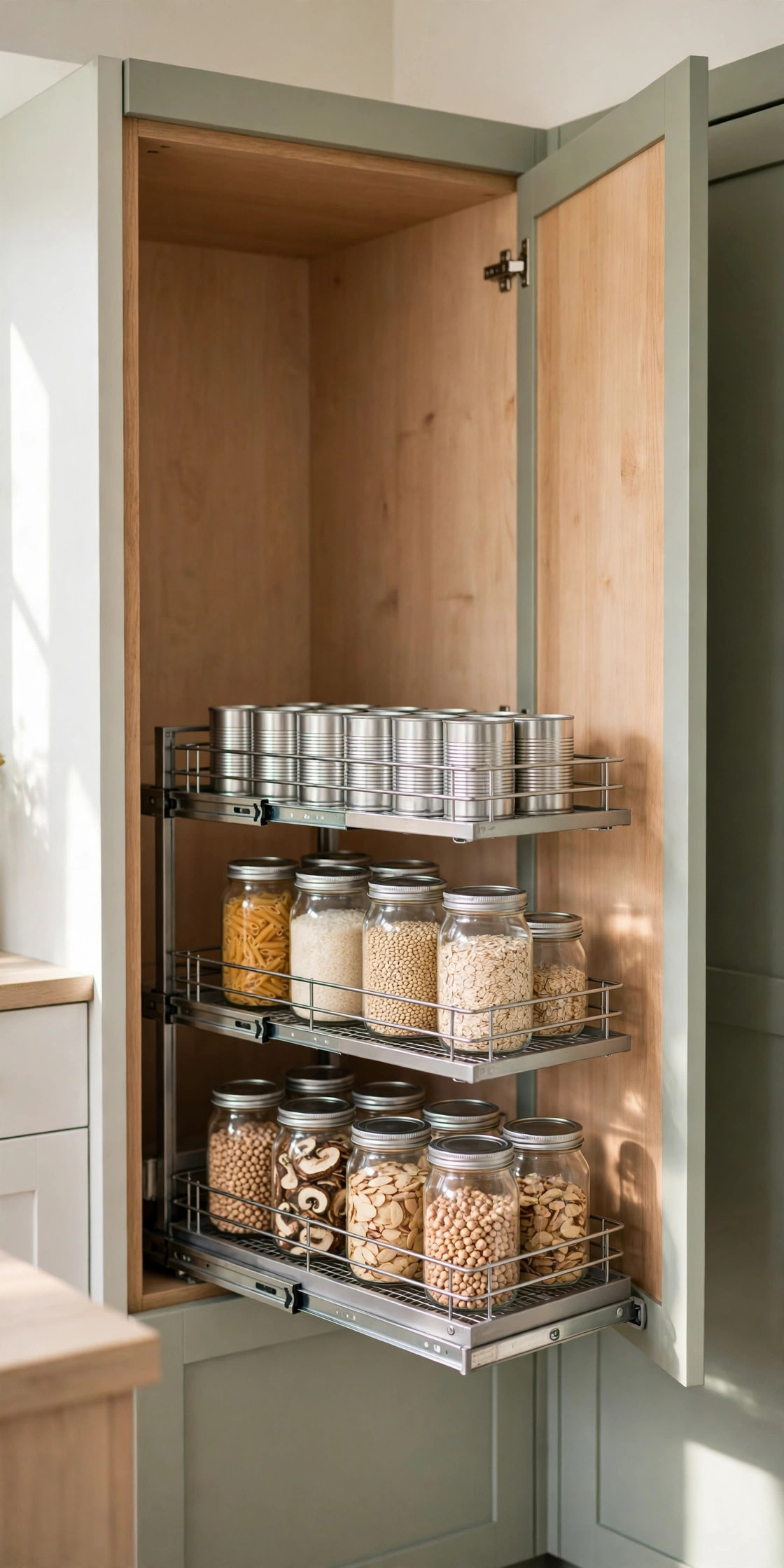
14. Use clear drawers or bins for deep shelves. In a deep cabinet, a clear pull-out drawer or bin about 12 inches deep brings back items to the front. Use one for kids' cups, water bottles, or spare glasses that otherwise vanish at the back.
15. Place daily items between waist and eye level. Heavy plates and the main glass set belong on the easiest shelf to reach, roughly between 24 and 60 inches from the floor. Light, rarely used items go high, and heavy stacks never go above shoulder height.
What to Buy
Cabinet shelf risers — The fastest way to add a second level for glasses and bowls, and easy to move when needs change, typically $15–$25. Con: a riser that is too tall wastes the space above it, so measure shelf height first.
Under-cabinet mug hook rail — Holds 4 to 6 mugs in unused air space and keeps counters clear, typically $12–$22. Skip if cabinets sit low over the counter, since hanging mugs need about 6 inches of clearance.
Stackable clear storage drawers — Clear sides show contents, and the pull-out design suits deep cabinets, typically $20–$30. Con: plastic drawers can flex under a full load of heavy plates.
Vertical plate rack / file-style dish holder — Plates are easier to lift out one by one and stacks stay shorter, typically $15–$25. Skip if plates are oversized, since many racks fit plates up to about 11 inches wide.
Over-sink dish drying rack — Doubles as daily dish storage and frees a cabinet shelf, typically $25–$40. Con: it needs an accurate sink measurement and will not fit every faucet height.
Pro Tips
- Measure cabinet width, depth, and shelf height before ordering any rack or riser.
- Store the heaviest plates on the lowest shelf for safer lifting.
- Keep one empty slot in a plate rack so dishes can be removed without forcing.
- Review the mug count every few months and move new extras out of the main cabinet.
Frequently Asked Questions
How many mugs should stay in the main cabinet?
A good starting point is the number used in a normal week, often 4 to 6 mugs for a small household, plus 2 spares for guests. Extra and seasonal mugs store better in a bin on a high shelf, where they do not crowd daily items.
Is it safe to hang mugs by their handles?
Yes, for standard ceramic mugs on a sturdy rail with hooks spaced about 3 inches apart. Very heavy stoneware mugs and mugs with cracked handles should stay on a shelf instead, since the handle carries the full weight when hanging.
Should glasses be stored rim-up or rim-down?
Everyday tumblers do well rim-up on a clean, lined shelf, which avoids pressure on the thinnest part of the glass. Rim-down storage can trap moisture and odors inside the glass, so rim-up is the simpler, safer default for daily use.
What is the best way to store plates in a small cabinet?
Upright storage in a vertical rack is usually best, since each plate can be removed without lifting a stack. If plates must be stacked, keep stacks to 6 to 8 plates and place the set used most on the lowest, easiest shelf.
Full cabinets usually need layers, not more furniture, and small changes like one riser or one mug rail can free a surprising amount of room. Start with the daily set, then save this post to your kitchen board on Pinterest to work through the rest later.