When cabinets are full and counters are crowded, the only direction left is up. That is why vertical storage ideas for small kitchens work so well. Walls, doors, and the empty height inside cabinets can hold a lot, without taking any floor space.
Most ideas below take 15 to 30 minutes each and need basic tools or none at all. Before starting, measure each wall, door, and shelf in inches, and check where doors swing so new storage does not block movement.
1. Vertical Storage Ideas for Small Kitchens That Start With the Walls
1. Mount a magnetic knife strip. A strip 14 to 18 inches long holds 5 to 6 knives flat on the wall. It frees the 6 to 8 inches of counter depth a knife block uses. Keep it away from the sink splash zone.
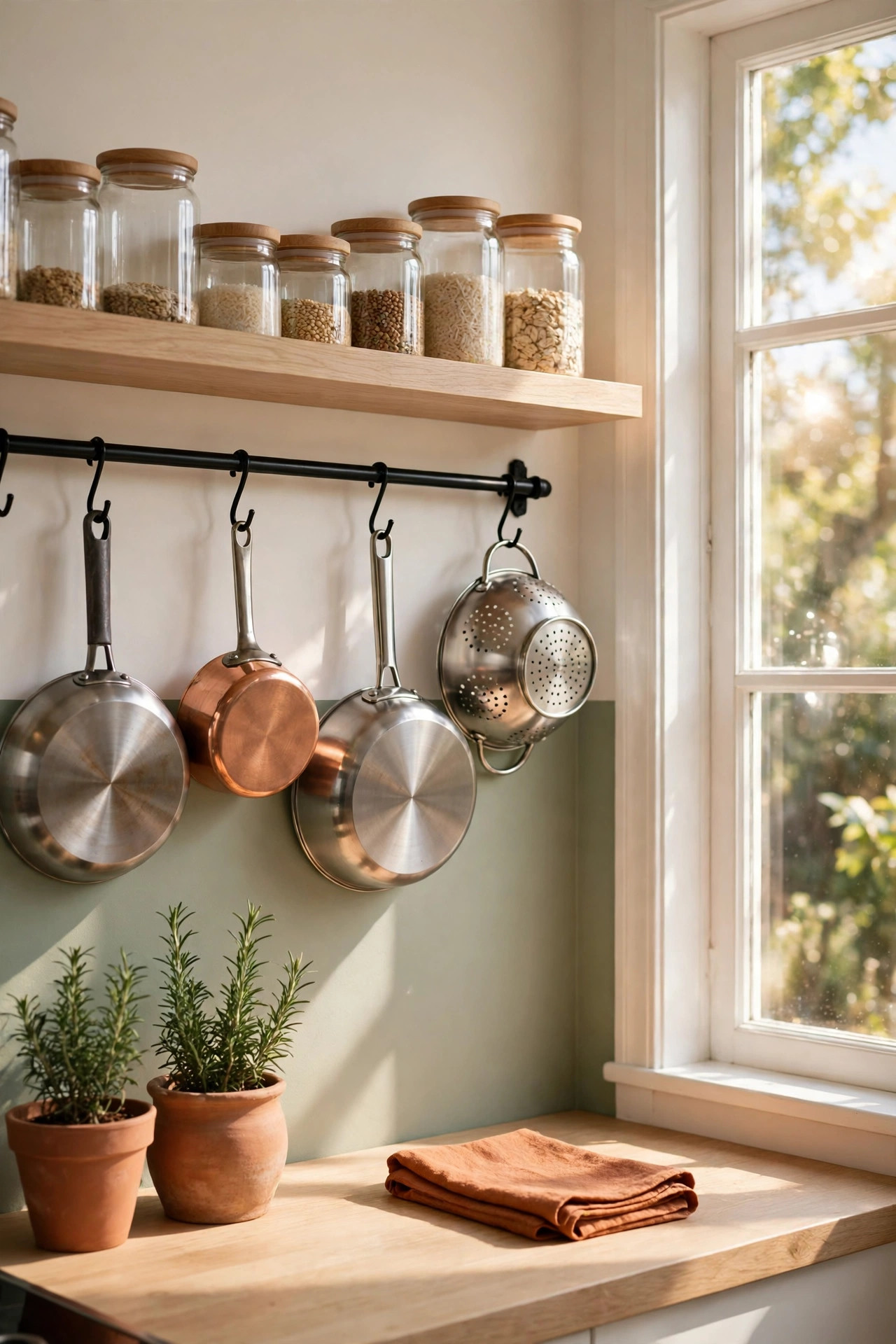
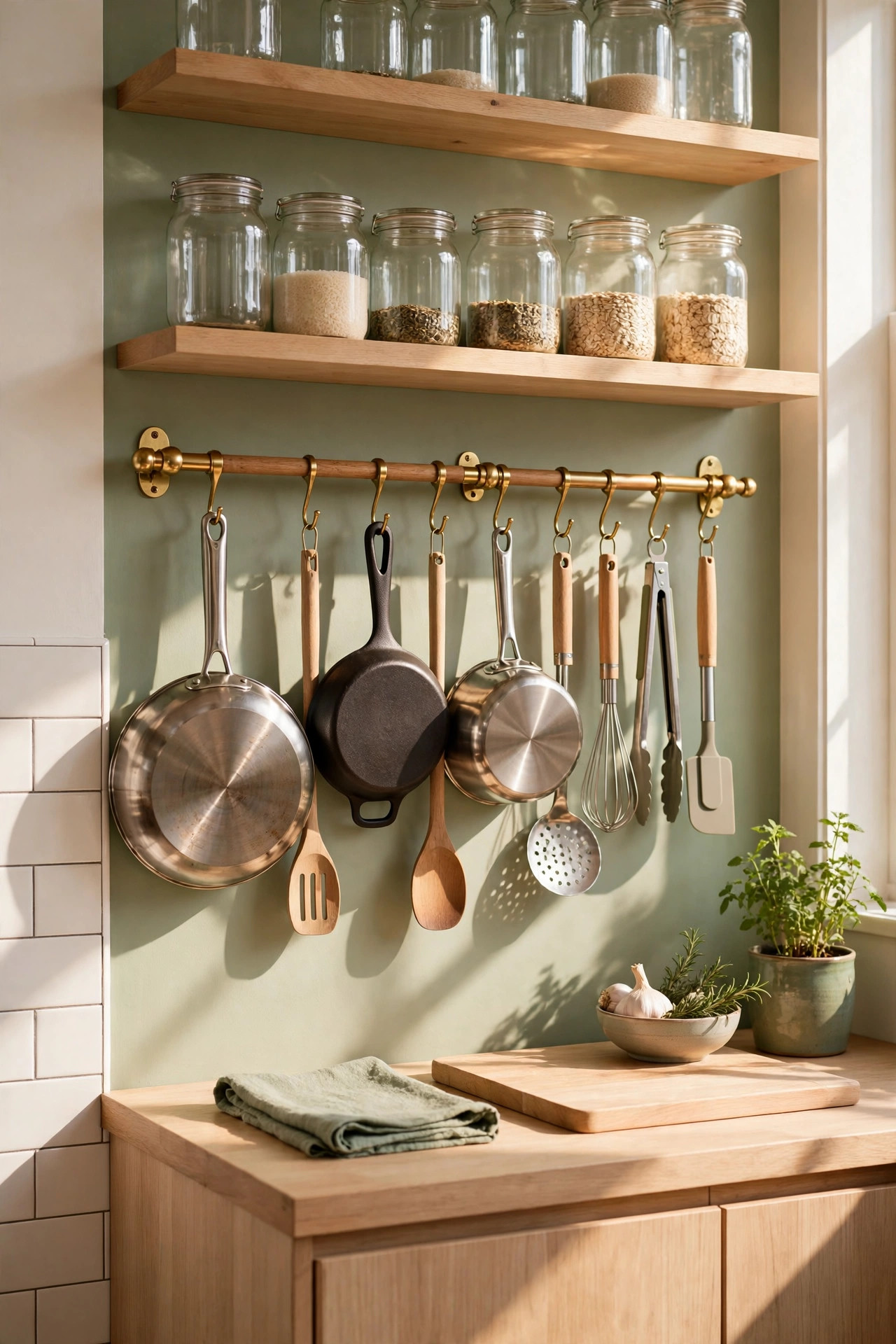
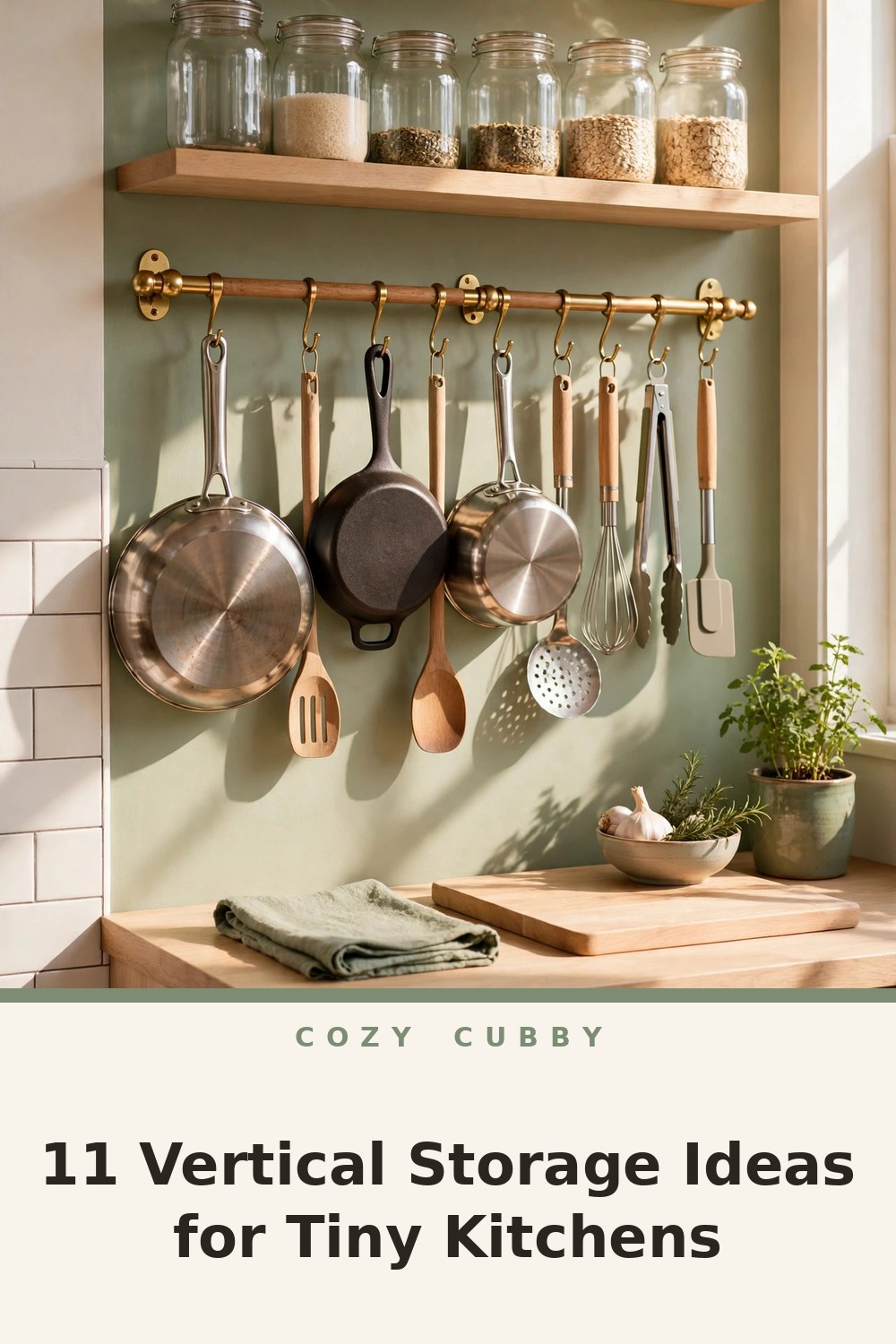
2. Hang a wall rail with S-hooks. A rail 24 to 36 inches long holds ladles, spatulas, tongs, and measuring cups. Plan for 6 to 8 hooks, with about 3 inches between items. Near the stove is the most useful spot.
3. Add under-cabinet hooks for mugs. Four to 6 hooks under an upper cabinet put mugs above the counter instead of on it. Mugs need about 4 inches of hook spacing and 6 inches of clear height. This can free 12 inches of counter.
2. Use Doors as Storage on Both Sides
4. Fit an over-cabinet-door rack. A rack over a cabinet door holds foil, wraps, cutting boards, or cleaning bottles. Choose one under 3 inches deep and test that the door closes fully. Felt pads stop rattling.
5. Hang a clear pocket organizer on a door. An organizer about 24 inches wide with 12 to 24 clear pockets sorts spice packets, sauce mixes, and snack bars. Keep the load light, since door hinges are not built for heavy jars.
6. Stick adhesive hooks inside cabinet doors. Two or three hooks hold measuring spoons, a small brush, or a pot lid. Items need 1 to 2 inches of clear space so the door still shuts over shelf contents.
3. Vertical Storage Ideas for Small Kitchens Inside Cabinets
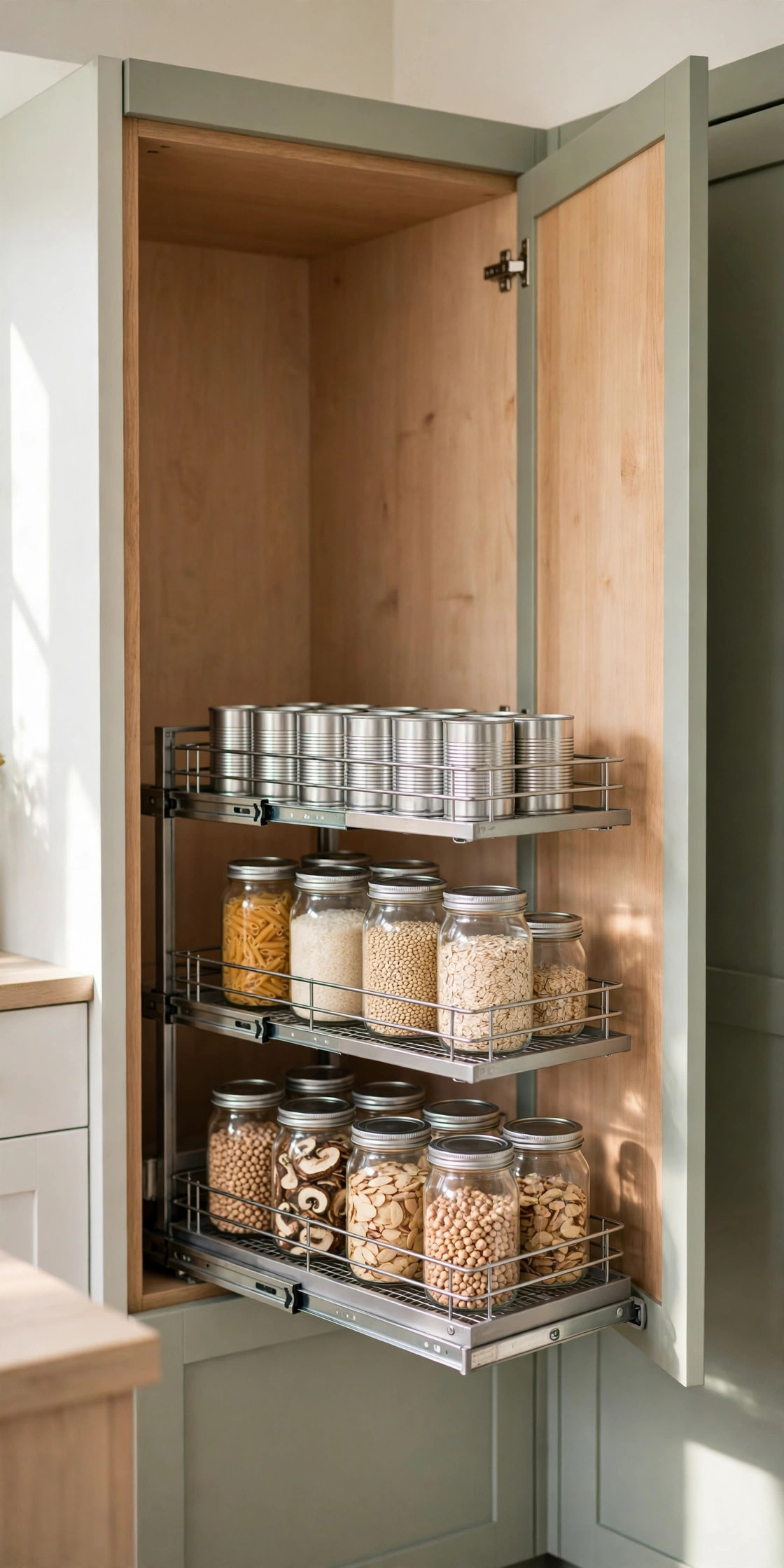
Many cabinets waste half their height. A shelf often has 12 to 15 inches of vertical space, while plates and cans use only 4 to 6 inches of it.
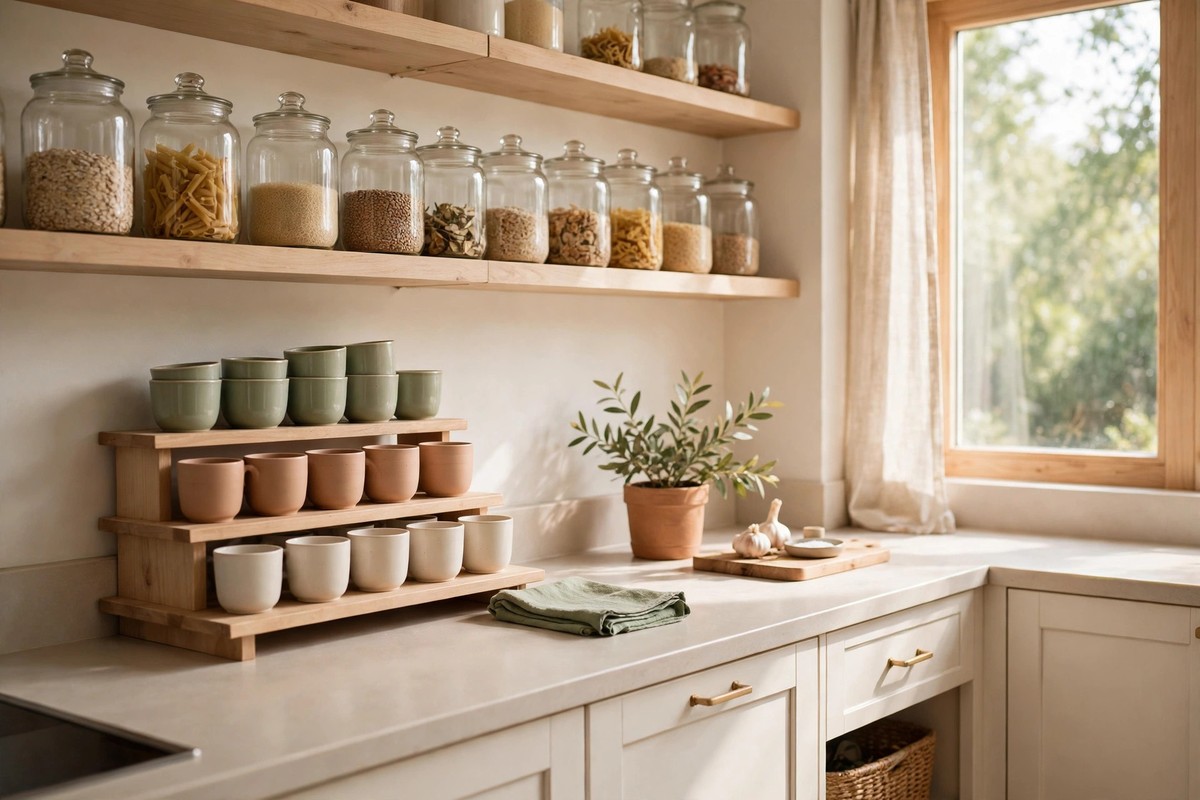
7. Add cabinet shelf risers. A riser 10 to 13 inches wide creates a second level for mugs, bowls, or cans. Leave at least 5 inches above it so items lift out easily. Setup takes about 5 minutes.
8. Use a tiered spice rack. Three steps raise the back row of jars, so labels stay readable. A rack about 10 inches wide holds 15 to 20 standard spice jars near the cooking zone.
9. Clip on under-shelf baskets. A basket that slides onto a shelf adds a shallow layer below it for wraps, packets, or cloths. Most hold items up to about 4 inches tall. Keep the load light and flat.
4. Claim the Forgotten High and Side Spaces
10. Use the side of the fridge. Magnetic shelves and hooks hold spices, paper towels, or oven mitts. A shelf about 10 inches wide holds 4 to 6 spice jars. Use 3 to 4 pieces at most, and check the door still opens fully.
11. Store rare items on top of the cabinets. The space above upper cabinets often has 12 or more inches of height. Use labeled bins, about 12 by 16 inches, for a roasting pan or holiday dishes used a few times a year.
5. Plan the Layout So Vertical Storage Stays Calm
Put daily items between waist and eye level. Tools and foods used every day belong in the easiest reach zone. Weekly items can go higher, and rare items belong at the very top.
Match storage to the weight. Heavy items, such as cast iron pans and large jars, belong low. Light items, such as mitts, wraps, and packets, are the right load for doors, hooks, and high rails.
Leave some space empty. A wall or door filled edge to edge looks busy and is hard to clean. Leaving about one third of a rail or organizer empty keeps the kitchen calmer.
Check fixings before loading up. Screws into studs hold far more than adhesive strips. Rails holding knives or pans need firm fixings. Adhesive suits light loads only and needs a full day to set.
What to Buy
Over-cabinet-door rack adds storage for wraps, boards, or cleaners in about 2 minutes, with no tools and no holes. The con is added door weight, so skip if cabinet doors are loose or misaligned. Typically $15–$25.
Magnetic knife strip frees counter space and keeps blades visible and dry. It needs secure wall fixings, so skip if drilling is not allowed and no firm mounting spot exists. Typically $15–$25.
Wall rail with S-hooks holds many tools in one line and can grow hook by hook. It can look busy if overloaded, so skip if the only wall space sits in a main walkway. Typically $15–$30.
Tiered spice rack makes 15 to 20 jars readable at once, which cuts time spent hunting for one bottle. Skip if spices already sit neatly in a flat drawer. Typically $15–$30.
Cabinet shelf risers double the useful level of a tall shelf with no tools, for mugs, bowls, and cans. Skip if shelf height is under 8 inches, where a second level will be too tight. Typically $15–$25.
Over-the-door clear pocket organizer sorts many small packets in full view and installs in about a minute. It suits light items only, so skip if the plan is to store jars or cans. Typically $10–$18.
Pro Tips
- Measure wall, door, and shelf space in inches before buying, and check door swings twice.
- Start with one zone, live with it for a week, then add the next spot only if needed.
- Keep heavy items low and light items high, so doors, hooks, and rails stay safe.
- Use matching bins and clear pockets, since a uniform look makes a small kitchen feel bigger.
Frequently Asked Questions
How can renters use vertical storage without drilling?
Over-door racks, pocket organizers, shelf risers, under-shelf baskets, and magnetic fridge pieces need no screws. Adhesive hooks handle light items well. Keep knives and heavy pans off adhesive fixings.
What is the best first idea for a very small kitchen?
A wall rail or magnetic knife strip near the stove gives the fastest win, clearing a drawer or counter block in 20 to 30 minutes. A shelf riser is best if cabinets are the main problem.
How much weight can cabinet doors hold?
Door storage should stay light: wraps, packets, lids, and small tools, not jars or cans. A slim rack under 3 inches deep with a few light items suits most doors. If a door sags, the load is too heavy.
Small kitchens grow when storage climbs the walls, doors, and cabinet height that already exist. Pick two or three ideas, measure first, and keep daily items within easy reach. Save this post to a kitchen board on Pinterest for later, so the full list is ready for the next session.